5 paradisiacal coves on the gorgeous Costa Brava
• Fascinating Spain
• Catalonia
The closest area to the city ofBarcelonaand the provinces of the Meseta are the regions ofLa SelvaandBaix Empordà. There you can find dozens of coves and excellent beaches, so you can change bathing and napping places every day. On the maps there is sometimes some confusion, as some coves appear as beaches. Cove is asmall bay, it is a geographical feature where there is a shelter from the wind and waves, as it represents an entrance to the mainland. Thecoves of Costa Bravacan be very small, and so narrow that they do not even give rise to the formation of a beach (like the Cala Ametller that we mention here) or spacious (like a bay, which is a wide inlet, the case of Llorell). Now we present you some of the most beautiful ones from the south and towards the north. In which cove of the Costa Brava are you going to spend the day?
Costa Brava’s most peaceful coves
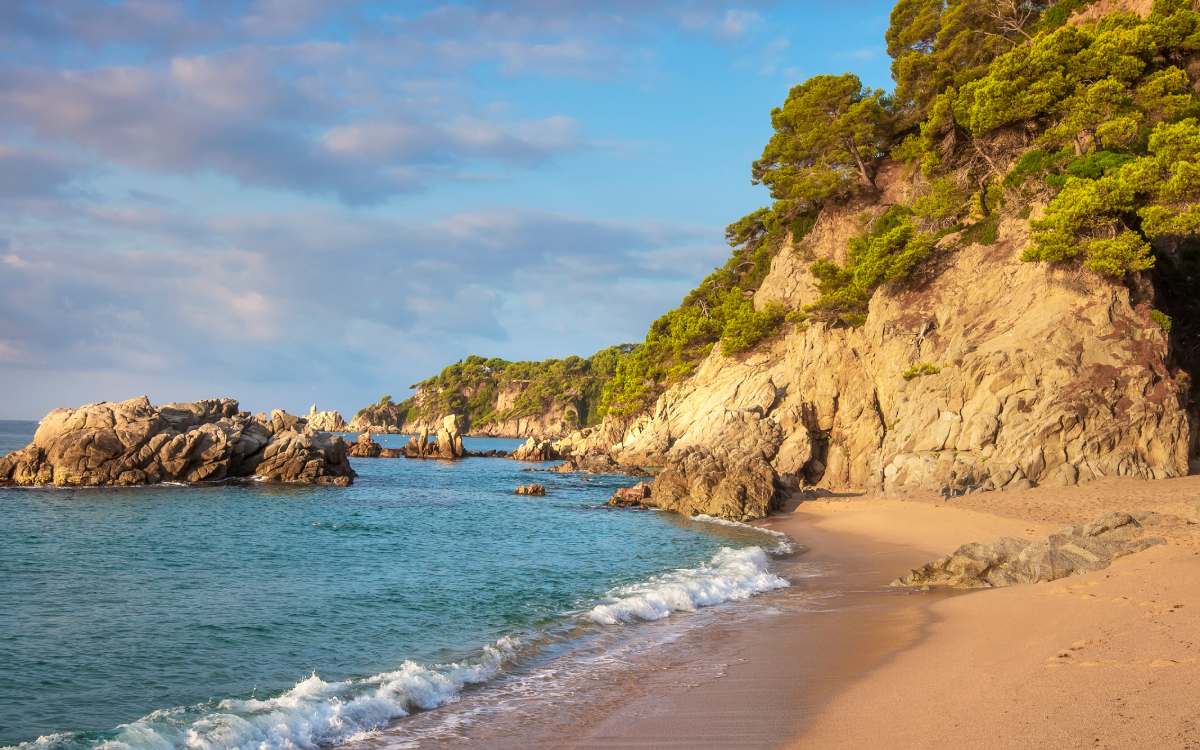 Sa Boadella Cove. | Shutterstock
Costa Brava’s most peaceful coves
Sa Boadella Cove
Sa Boadella Cove. | Shutterstock
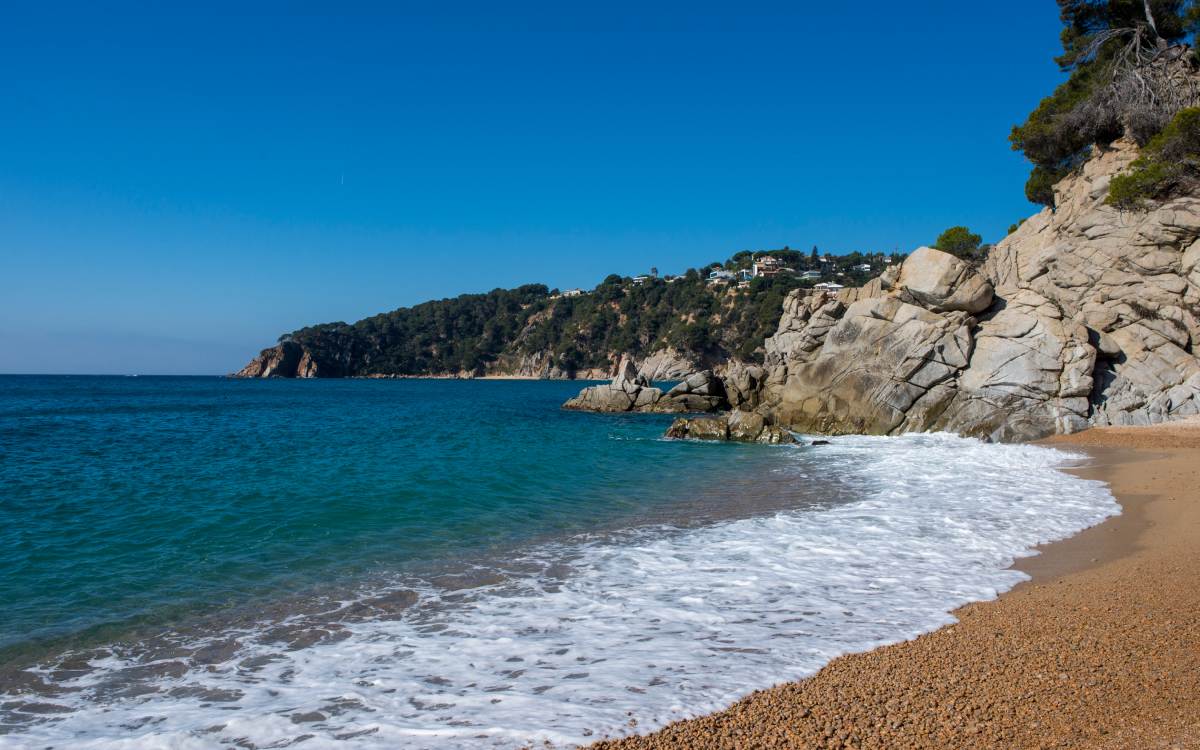 Llorell Cove. | Shutterstock
Between the lively towns ofBlanesand Lloret de Mar is this cove which is sometimes known asLa Boadella beach. It can be reached on foot by crossing a beautiful pine grove and has a minimal infrastructure (a bar and showers). It is only about 200 metres long, and the sand is usually about 25 metres deep. In summer it gets crowded quickly. In addition to thegentle slopethat allows walking, it has the particularity of its submerged rocks in which todiveto see marine life. Due to the aforementioned rocks and its size it is usually only used as an anchorage for small boats. A cove of Costa Brava perfect for relaxing.
Llorell Cove
Llorell Cove. | Shutterstock
To the south ofTossa de Maris one of the widest and deepest coves in the area, a common place for boats to anchor. It has a wide beach of about five hundred meters longby fifty meters wide, with all the services (it is next to two urbanizations and there is parkings nearby). Its beach is divided in two by the so-called “roca plana” —a large crag about four metres high that people like to climb—. It is a very popular place to rent light boats and water sports courses.
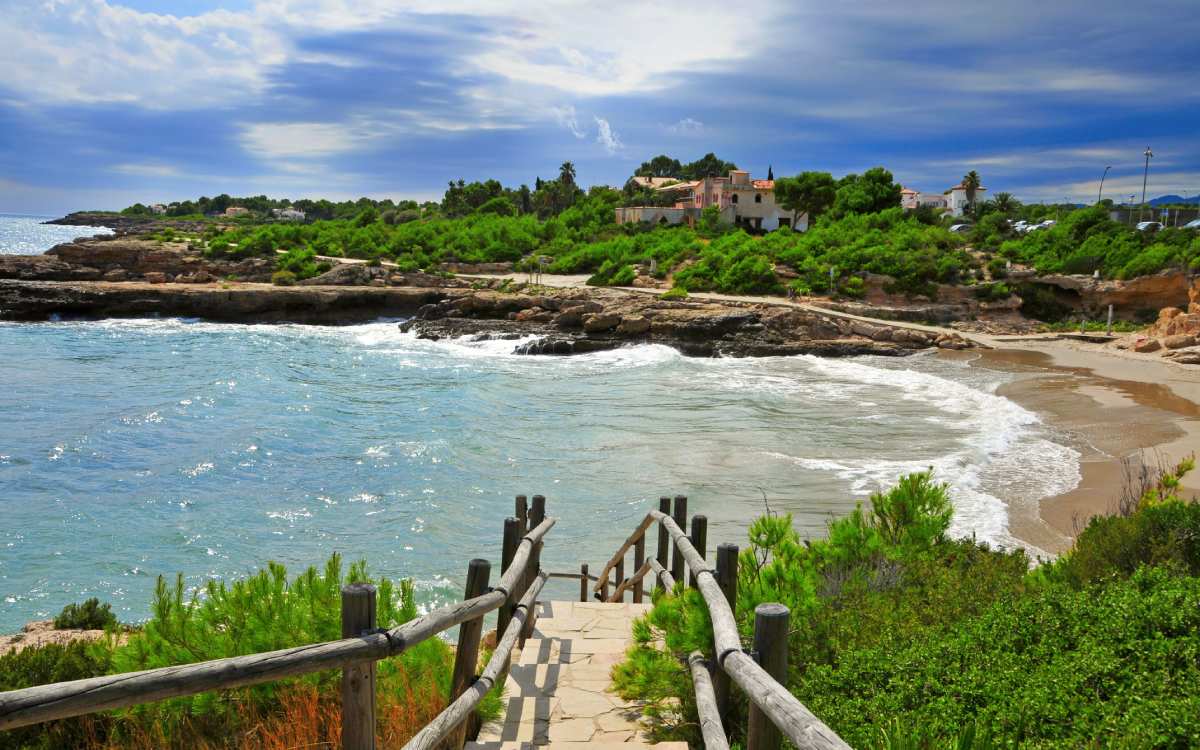 Ametller Cove. | Shutterstock
Ametller Cove
Ametller Cove. | Shutterstock
Within the Volta de l’Ametller natural area ofSant Feliu de Guixolsis this tiny cove formed by rocks. Its 30 metres wide have meant that it hasalmost no sand, with only a dozen metres of pebbles to throw in the towel. As it is located in a protected environment, it lacks the services of the larger coves. The beauty and tranquillity of the surroundings compensate for this limitation. It also has a fairlyrocky seabedon which to dive, which is why it is rare for boats to anchor there.
Cala del Pi
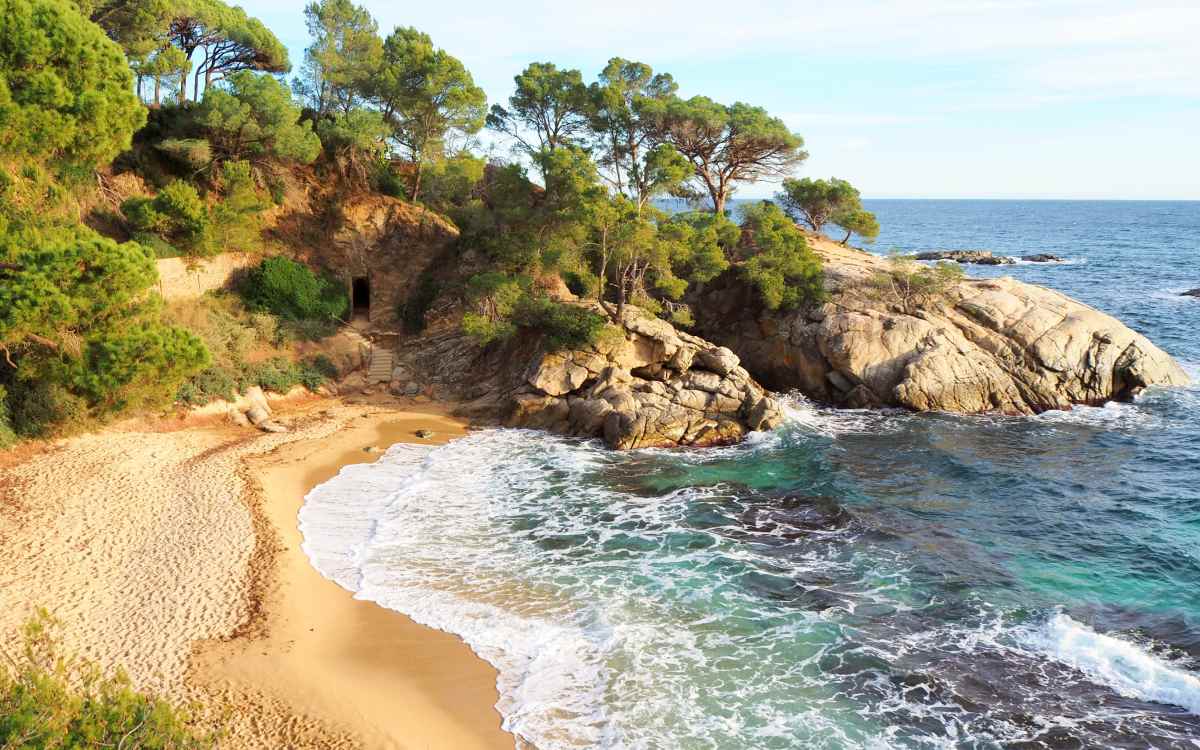 Cala del Pi. | Shutterstock
Cala del Pi. | Shutterstock
To the north ofAro Beach, surrounded by a pine grove that gives it its name (pi means pine grove in Catalan), is this cove on Costa Brava which can be reached by a footpath that even includes a narrow tunnel. It includes a small beach only about 65 meters long and about 15 meters wide. As it is a rocky area, there are submerged rocks and even anattractive isletthat can be reached after a short swim. It is a covewithout showers, parking or beach bars(you must take your food and drink with you); and as there areno waste binseither, the civic bather must return with all the food and drink containers he or she has brought with him or her in his or her bag or backpack, as nobody is going to collect them.
Aigua Xelida
Aigua Xelida. | Shutterstock
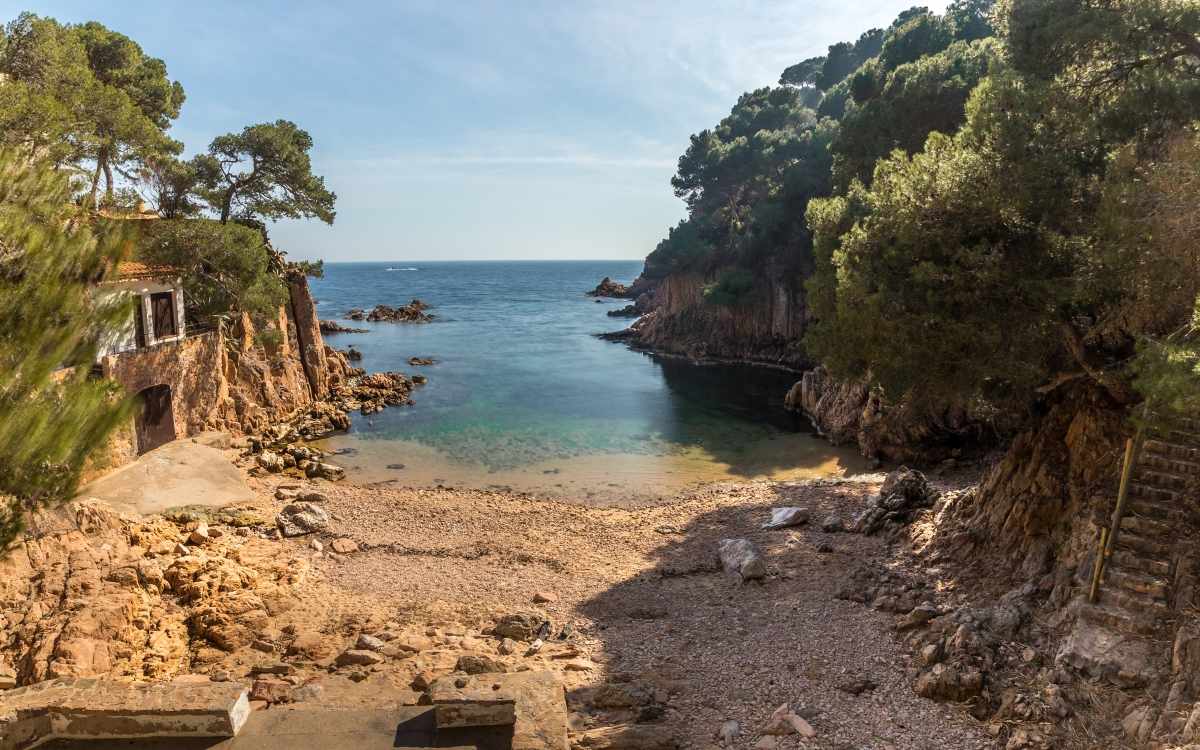 Aigua Xelida. | Shutterstock
To the north of the small town ofTamariu—located betweenBegurandPalafrugell— located between Begur and Palafrugell - is the tiny and remote cove of Costa Brava calledAigua Xélida; so small thatit does not even appear on many maps. It is a deep inlet made by the sea between medium height cliffs crowned by a dense pine forest. The length of its sandy beach is only about 25 meters long and 15 meters wide. Access is on foot, going up from the street of L’Aví Xicú de Tamariu (the nearest place to leave the car). Due to its size and complex access itlacks services, so you have to take the drink with you and return to the car with all the bottles consumed. It is an extraordinarily sheltered cove from the winds and with little swell; but due to the rocky bottom and its narrowness it is only visited by sporadic boats whose crew members come to see its beautiful surroundings and take a quick dip in its crystal-clear water.
Источник: Fascinating Spain