Caballo lighthouse, more than 700 steps to a Cantabrian marvel
• Fascinating Spain
• Cantabria
In the north of the Iberian Peninsula, in the eastern part ofCantabria, 48 kilometers from Santander and very close to theBasque Country, is located the fishing municipality ofSantoña. There you can find the Caballo lighthouse, in the Buciero mountain, a spectacular placesurrounded by nature and with a lot of charm. Its varied gastronomy drinks from the sea. It is a must stop visit for any tourist who comes to thenorth of Spain.
The lighthouse of the 700 steps
The lighthouse of the 700 steps
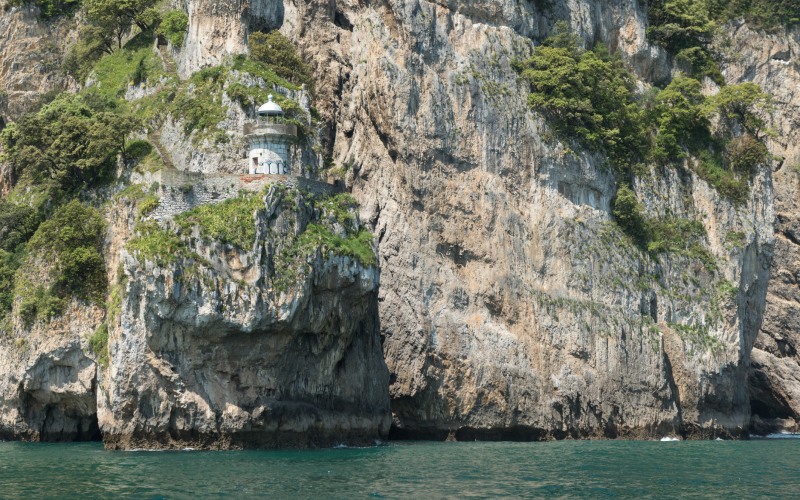 Caballo lighthouse. | Shutterstock
Caballo lighthouse. | Shutterstock
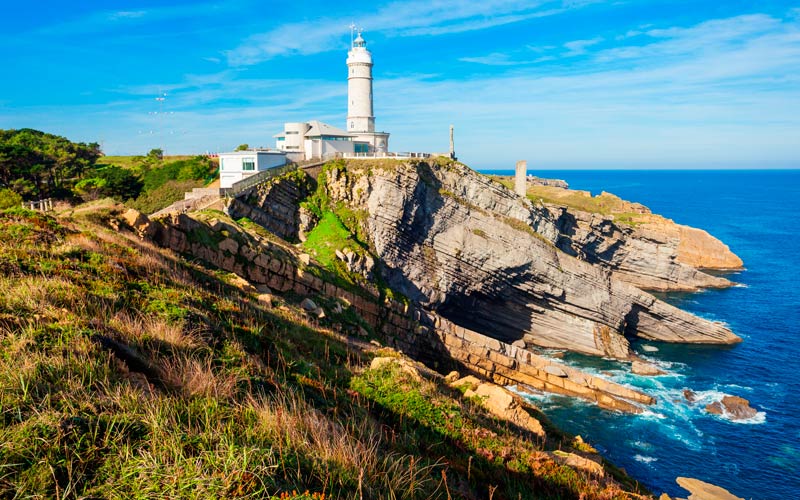
Locatedat the foot of Mount Buciero, in a particularly rocky area, is the Caballo lighthouse (horse lighthouse). Thislighthousebegan operating on August 31, 1863. It originally consisted of a building divided into two blocks. One of them was the lighthouse keeper’s house, with a rectangular floor plan and two floors, but it has not survived to the present day since it was demolished. The second block would be the lighthouse tower, which still exists and is preserved, although in 1993, after 130 years of service, it stopped giving light to the entrance toSantoñaBay.
The surroundings of the Caballo lighthouse are beautiful. | Shutterstock
There are two ways to access thelighthouse, walking and bysea. To access from below, that is to say, from the sea, you have toapproach a stairway that leads directly to the water. To do this you have to wait for the right weather conditions. That is, no waves and high tide.
There are boats and organized kayak routes to visit the lighthouse by sea. The most common is to go down themore than 700 steps of its staircase. This staircase was built by the inmates of a nearby prison, specifically those of theSantoñaprison in the nineteenth century. Curiously, more than a century later, in 2013, another group of prisoners conditioned the area for a visit as part of the Nácar (Nature and Prison) program.
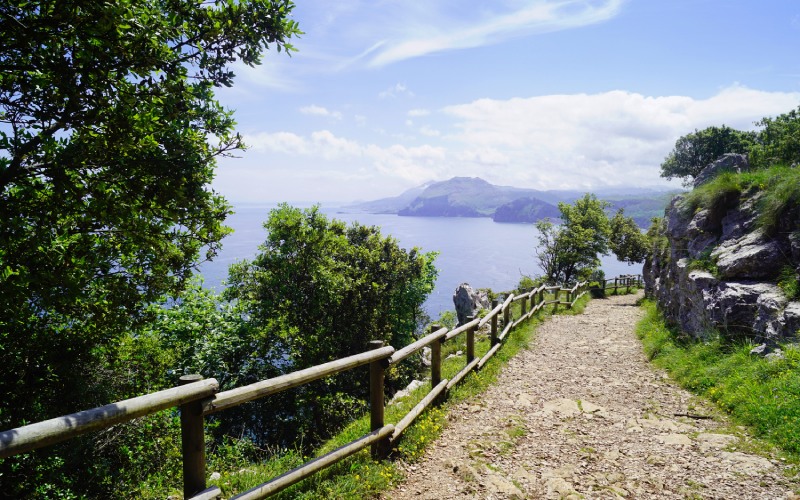 The surroundings of the Caballo lighthouse are beautiful. | Shutterstock
A hiking route to access the lighthouse
A hiking route to access the lighthouse
Punta del Caballo lighthouse, Santoña. | Shutterstock
The Caballo lighthouse route of Santoña is very popular with nature lovers. It starts from the promenade ofSantoña, which is 5 kilometers from the lighthouse. The route is signposted and passes through laurel and hawthorn forests. It then passes by the Fort of San Martín, built in the 17th century and declared anAsset of Cultural Interestwith the category ofmonument. It is currently the Cultural Center and headquarters of the Heritage Rehabilitation Workshop School.
Both the building and four permanent exhibitions on the history of Santoña can be visited. Afterwards, you can follow the coastline alongMountBuciero, passing by viewpoints that allow you to contemplate the impressive view of the cliffs. To finally arrive at the stairway that gives access to the lighthouse. Once there, if you wish, you can continue downwards, descending some 100stepsthat give access to the sea.To return to Santoña you only have to take the same route as on the way out.
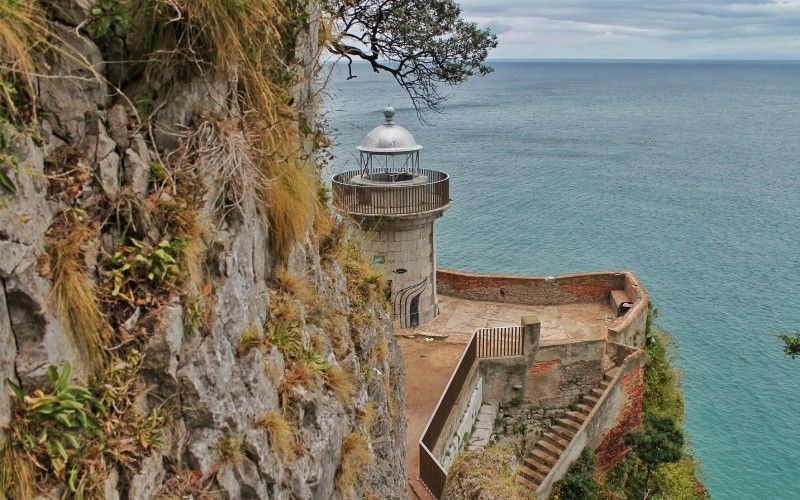 Punta del Caballo lighthouse, Santoña. | Shutterstock
The spectacular Mount Buceiro
The spectacular Mount Buceiro
Mount Buceiro surrounds the Caballolighthouse. It forms part of the Natural Park of theMarshes of SantoñaVictoria and Joyel, which is considered aSPA (Special Protection Area for Birds) and a SCI (Site of Community Importance).
Cantabria, municipality of Liendo, view towards the town of Santoña across the bay | Shutterstock
Protected by the Natura 2000 Network. With more than 600 hectares and a peninsula shape, it enjoys bothMediterraneanand Atlantic flora. With forests of laurel, strawberry trees, oaks, hazelnut trees and wild cherry trees. It stands out for being one of the most important Cantabrianoak forestsin the country, with a maximum height of 376 meters above sea level. It is home to two endangered animal species. The shag and the Egyptian vulture, which can be seen with a bit of luck.Mount Buceiro protects Santoña from the inclemency of the sea, turning the location of this fishing village into a natural harbor.
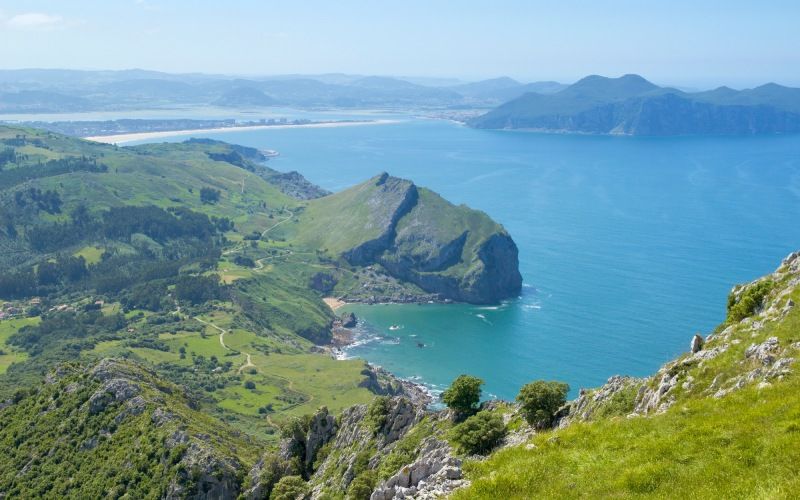 Cantabria, municipality of Liendo, view towards the town of Santoña across the bay | Shutterstock
Natural Park of the Marshes of Santoña, Victoria and Joyel, a unique jewel
Natural Park of the Marshes of Santoña, Victoria and Joyel, a unique jewel
To get to know thisNatural Parkit is highly advisable to first visit the Visitor Center of theNatural Park of the Marshes of Santoña, Victoria and Joyel, mainly for two reasons. The first and most important is that itoffers more than 700 square meters in which to learn about the history, fauna and floraof this Cantabrian coastal natural park, as well as information on the different routes and activities that can be carried out in its more than 6,600 hectares.
Faro del Caballo lighthouse, Santoña. | Shutterstock
And the second reason is that the interpretation center itself is a magnificentviewpoint, with a very unique architecture that simulates an ocean liner. Aspectacular site for photography lovers. It is worth noting that admission is free, as are the various workshops for the whole family.
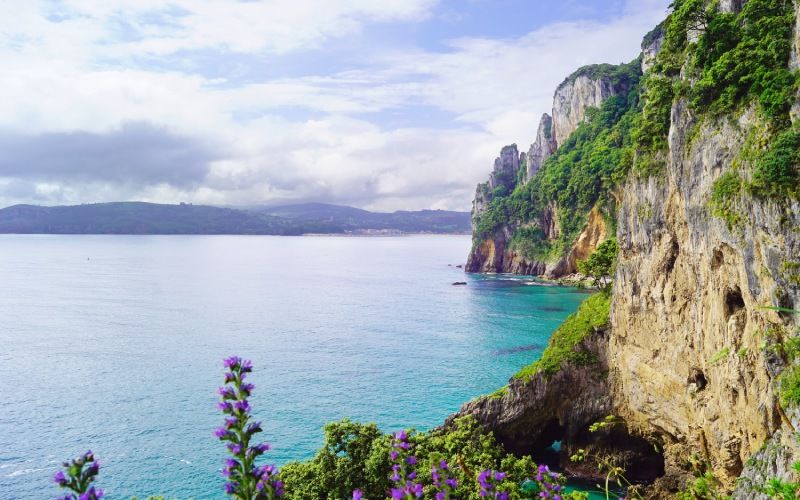 Faro del Caballo lighthouse, Santoña. | Shutterstock
Santoña, the world capital of anchovies
Santoña, the world capital of anchovies
If anything characterizes the gastronomy and way of life of Santoña, it is the sea. Its orographic shape as a natural port and its fishing boats are the hallmark of this region. It is a town known for its cannedtunaandanchoviesin vinegar, but the queen of Santoña is undoubtedly the anchovy.
Portion of anchovies from Santoña. | Shutterstock
We can find from the traditionalanchovypreserved in oil, to the anchovy preserved in butter.The preserved in butter was one of the ways of canning, in the Italian saltedfishcanneries at the end of the 19th century. This is a tribute to the Italians who went to the Bay ofBiscayin search of goods for their factories.
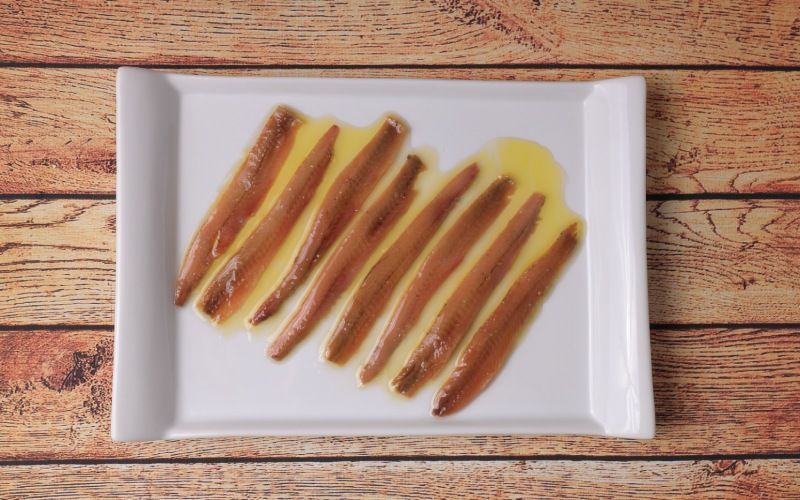 Portion of anchovies from Santoña. | Shutterstock
The best time to get to know the local gastronomy is during the Anchovy and Cantabrian Canned Food Fair.It is a traditional event organized by the Cantabrian Anchovy Guild, to choose, through a blind tasting, which is the best anchovy of the year. In addition to tasting the best canned Cantabriananchovies, you can participate in the various activities related to these products. The Fair is usually held inspring.
Источник: Fascinating Spain