Castellfollit de la Roca, a whole town gazing into the abyss
• Fascinating Spain
• Catalonia
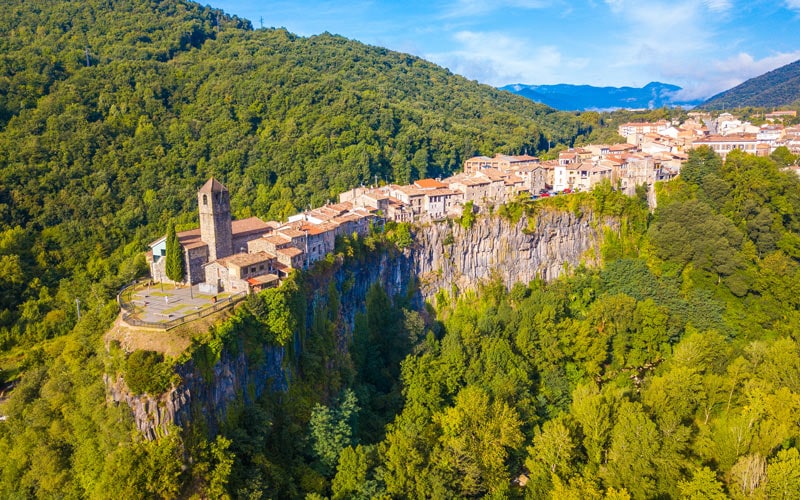
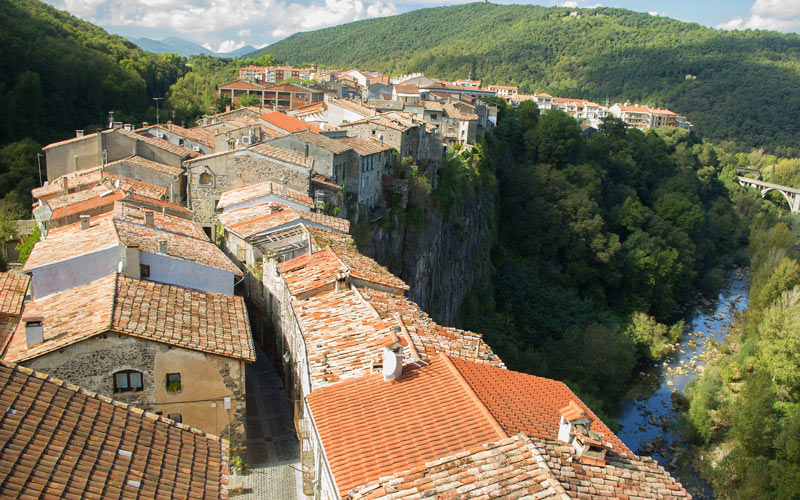
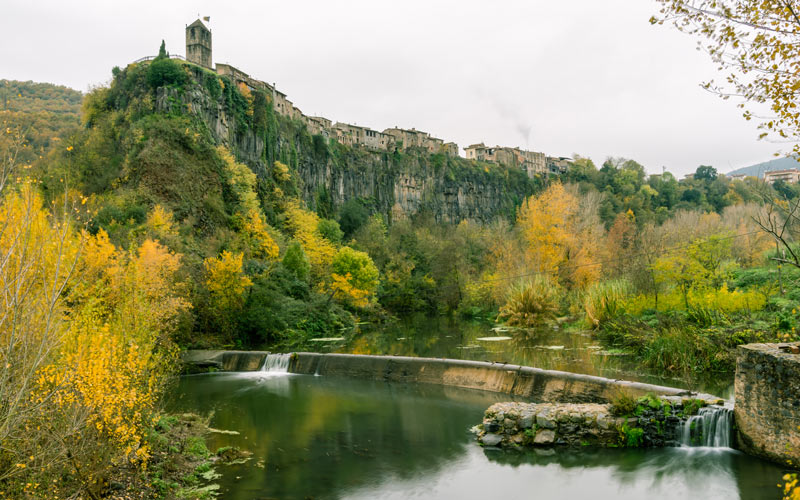
Castellfollit de la Roca is a municipality that belongs to theregion of La Garrocha, in the province ofGirona. It is part of the judicial district ofOlotand has a surface area of barely one square kilometre, making it thesmallest municipality in the provinceand the second inCatalonia. It is worth noting the basalt quarry in this town, as it is theonly one currently activein Spain. The quarry began its activity in 1929, although there are archives that document its existence since 1887.ShutterstockHowever, the most fascinating thing about Castellfollit de la Roca is its location. It is located on a large basaltcliffno less than50 metres high and almost a kilometre long. This cliff is also cut off by the River Fluvià. The town is inside theLa Garrotxa Volcanic Zone Natural Park.
 Shutterstock
A town gazing into the abyss
A town gazing into the abyss
Castellfollit de la Roca, gazing into the abyss| Shutterstock
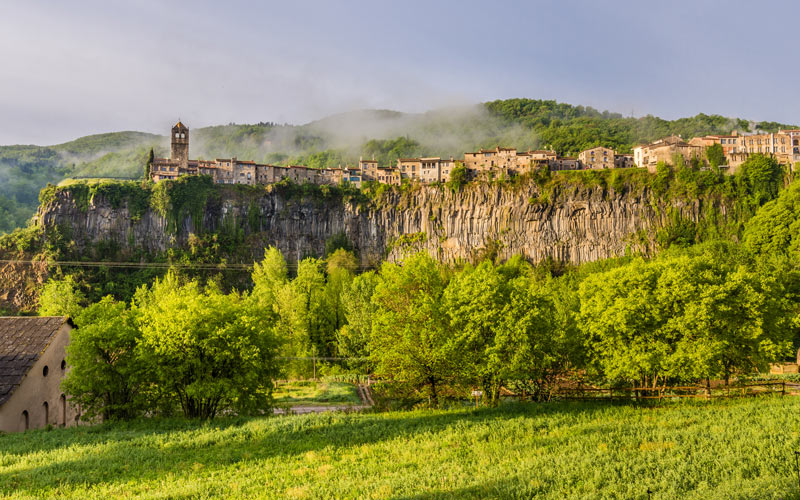 Castellfollit de la Roca, gazing into the abyss| Shutterstock
Castellfullit de la Roca is located within the La Garrotxa Volcanic Zone Natural Park. Set on abasaltic ridge, the location of thistownis quite unique. This cliff, which is more than 50 metres high, is the result of thelayering of two lava flowswhich, when they solidify, give rise to the very hard rock known as basalt. On the one hand, the first one is217,000 years old. It comes from Batet de la Serra, in Olot. On the other hand, the second is192,000 years oldand is the result of the eruption of the San Juan les Fonts volcanoes.
San Salvador Church
Entrance to San Salvador Church | Shutterstock
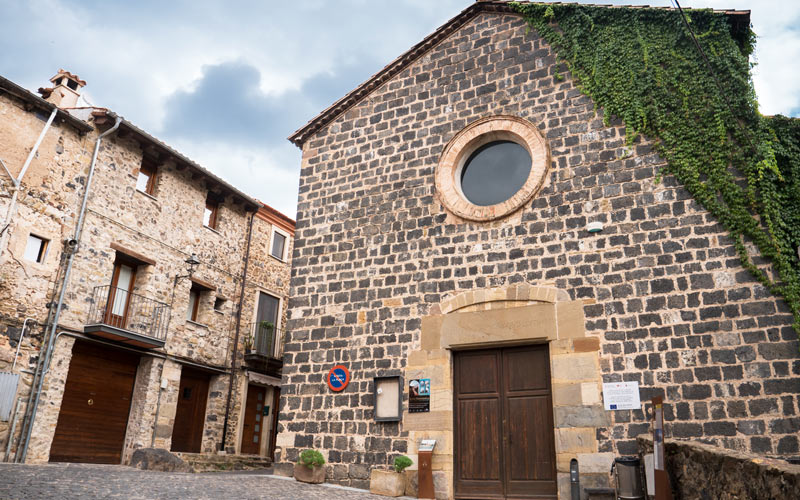 Entrance to San Salvador Church | Shutterstock
Thenarrow streets of the townconverge on the oldchurchof San Salvador, located at one end of the cliff. Here you will also find a viewpoint with privileged views. The church dates from the 13th century, although the current building has undergone several remodelling works. It is built in a lateRenaissance style.San Salvador Church next to the Josep Pla viewpoint | Shutterstock
It has asquare bell towerand has openings on each side. Thebell toweris crowned by a dome decorated with small pilasters. It still preserves several reused basalt ashlars and a late Romanesque window. As for the interior of the church of San Salvador; it should be noted that it iscurrently used as a cultural centrewhere temporary exhibitions are held.
Walking the streets of Castellfollit de la Roca
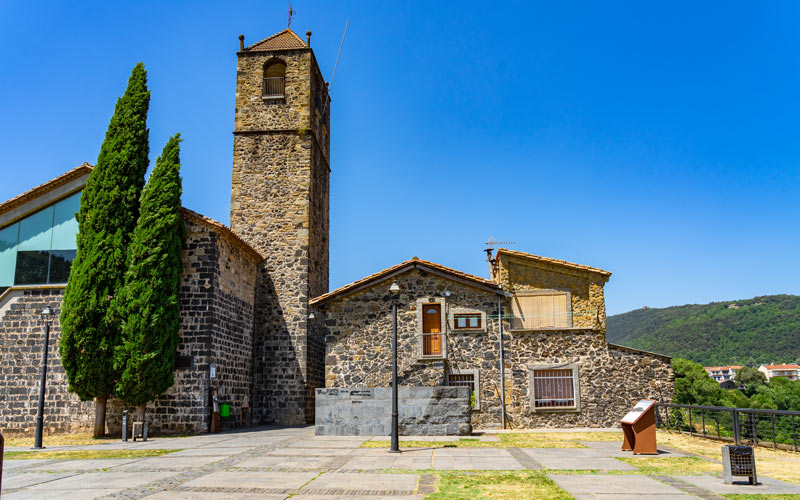 San Salvador Church next to the Josep Pla viewpoint | Shutterstock
Walking the streets of Castellfollit de la Roca
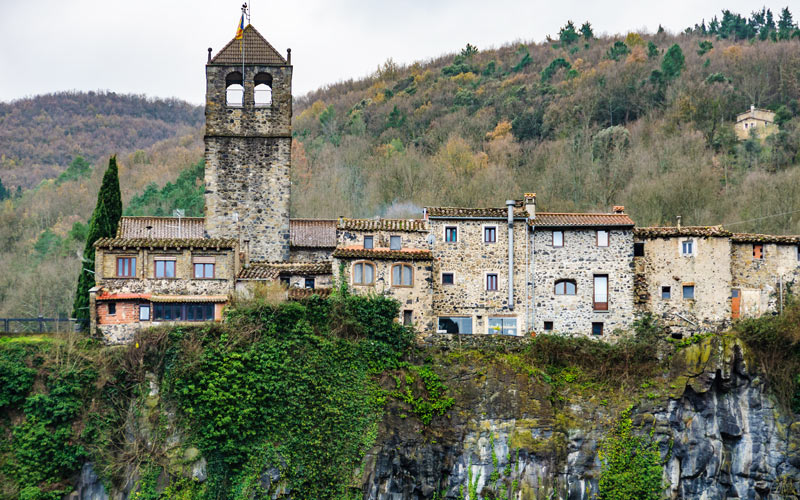
ShutterstockThe old town of Castellfollit de la Roca is ofmedieval originand is located on a basaltic ridge formed by two overlapping lava flows. It is made up of narrow streets of medieval origin. Most of the houses here were built withrocks and volcanic stonesfrom the region.Bridge over the river Fluvià | Shutterstock
From the footbridge over theriverFluvià you can see the magnificent cliff with the town on it. Returning to the walk, various points of tourist interest in the town are signposted in Braille.
 Shutterstock
Privileged are the views from theJosep Pla square-viewpoint, located at the end of the town, once you pass the church of San Salvador. It is perfect to enjoygood panoramic viewsof the area and to understand the strategic situation of the town and its natural characteristics for defense. Thecemeterywas located at this end until 1961, when it was closed and moved.Castellfollit de la Roca streets | Shutterstock
Near the old town, along the rivers Fluvià and Toronell, there is an area ofsmall orchardscultivated by the people of Castellfollit. The route next to these orchards is part of apedestrian routethrough the La Garrotxa Volcanic Zone Natural Park. In it you can get to know the basalt wall and elements of industrial archaeology better. This refers to locks and canals that sendwaterto the Can Xaudiera and Can Mulleras factories with the aim of producing hydroelectric power.ShutterstockSomewhat far from the old town is theclock tower, located inSant Roc Square, where the Town Hall is also located. At the top there is aclock, which marks the rhythm of life in the village, and a bell tower. At the foot of the tower there is a fountain. Thisclock is the result of a promisemade by a monarchist from La Garrotxa who was a member of parliament in 1919-1920. If the people supported him by voting for him, he would give them a clock as a present. The people voted for him and the clock was finished in 1925.
Cold Cuts Museum
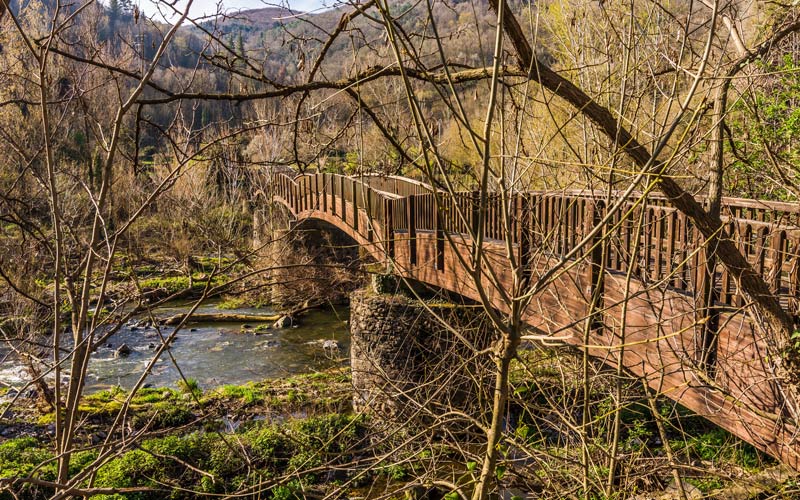 Bridge over the river Fluvià | Shutterstock
In Castellfollit de la Roca it is possible to visit theCold CutsMuseum, opened in 1993. It has a permanent exhibition that explains thehistory of meat preservation. In this way, themuseumdisplays tools used to prepare meat throughout different historical periods, as well as old photographs, old machines, explanations of the home-made slaughter…Entrance to the museum is freeand with it you can enjoy a tasting of some of themost typical productsof the Cormarca.
Vietnam Museum
This isunique equipment in all of Europe. A private collection that includes all kinds of pieces such as uniforms, material and equipment related to theVietnam War of 1960.
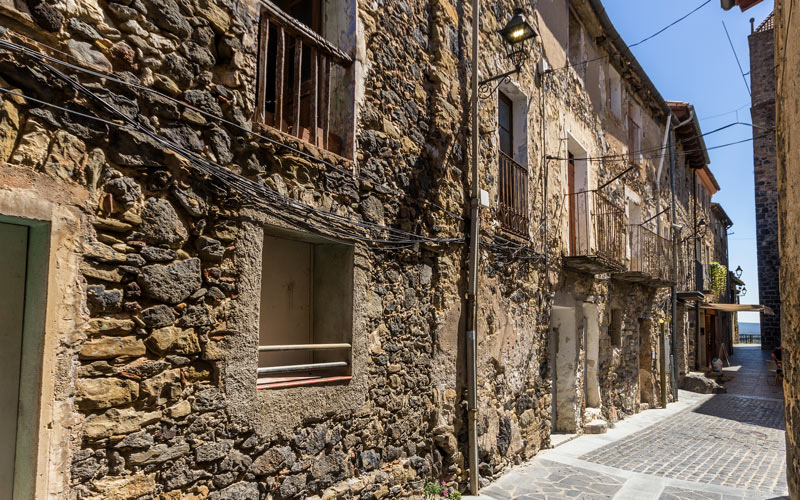 Castellfollit de la Roca streets | Shutterstock
La Garrotxa Volcanic Zone Natural Park
La Garrotxa Volcanic Zone Natural Park
ShutterstockCastellfollit de la Roca is the entrance to theLa Garrotxa Volcanic Zone Natural Park. This park is the best example ofvolcanic landscapefound in the Iberian Peninsula, and also one of the most important in Europe. It covers some 12,000 hectares in which more than 40 volcanic cones and 20 lava flows have been identified. Although it is an inactive volcanic area, it is not extinct, as thelast eruptionsoccurred between 15,000 and 10,000 years ago. That is why it can be considered recent. Known for its landscape, in the natural park of La Garrotxa you can see green forests covering it almost completely.Practical DataPRACTICAL DATA
 Shutterstock
Practical Data
PRACTICAL DATA
 Shutterstock
Girona 49 km, Barcelona 122 km, Madrid 661 km.
961 (in 2019)FESTIVITIESAmongst all the things to see in Castellfollit de la Roca, its festivals stand out. For example, the festival of the Germandat, during the second Easter; the festival of Sant Roc, on August 16 and the Festa Major, on the third Sunday of September. In addition, every Saturday morning the market takes place in the main square, where fresh products are sold.
FESTIVITIES
Источник: Fascinating Spain