Gaudí’s Casa Batlló, a dream of sea and dragons in Barcelona
• Fascinating Spain
• Catalonia
The avenue known as Passeig de Gràcia inBarcelonais home to many outstanding buildings. It makes sense, considering it is the backbone of the Plan Cerdà, an urban plan they developed during the second decade of the 19thcentury. Back then, many illustrious families settled here in new, luxurious homes. So much so, that those buildings started to compete against each other, forming the city block of Illa de la Discòrdia,a place of discord where Catalan Modernism reigned.
Among all those remarkablebuildings, there is one in particular that will attract the traveller’s attention more than the others. 43 Passeig de Gràcia precedes a dream of sea and dragons. The sun gleams on the colourful facade with marine shapes, the balconies resemble masks, and the scales of a dragon crown the building. This isCasa Batlló,whose interior is even more striking than the outside.
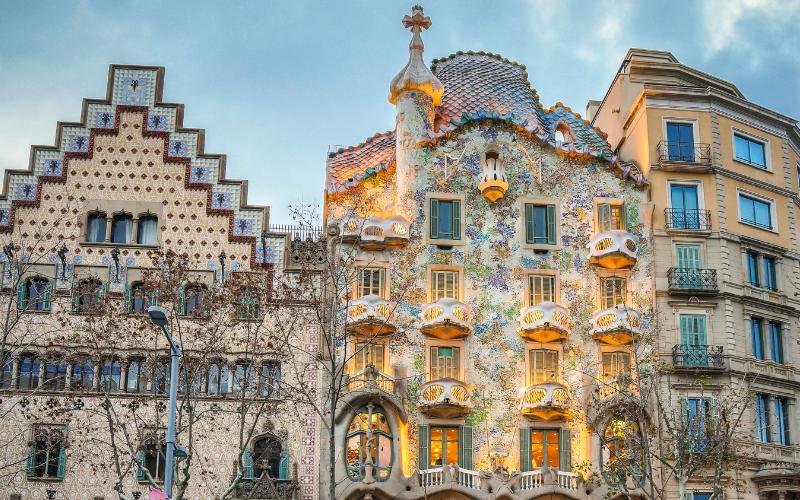 The facade of Casa Batlló is full of details. | Shutterstock
The facade of Casa Batlló is full of details. | Shutterstock
Some seekthe legend of Sant Jordi on its facade. According to the story, Sant Jordi rescued a princess after slaying a dragon. The beast can be seen on the roof of Casa Batlló, stabbed by a sword portrayed by a tower next to it. The uppermost balcony could be a representation of the princess. Then again,Gaudí never confirmed this,so we can only guess.
Brief history of Casa Batlló
Brief history of Casa Batlló
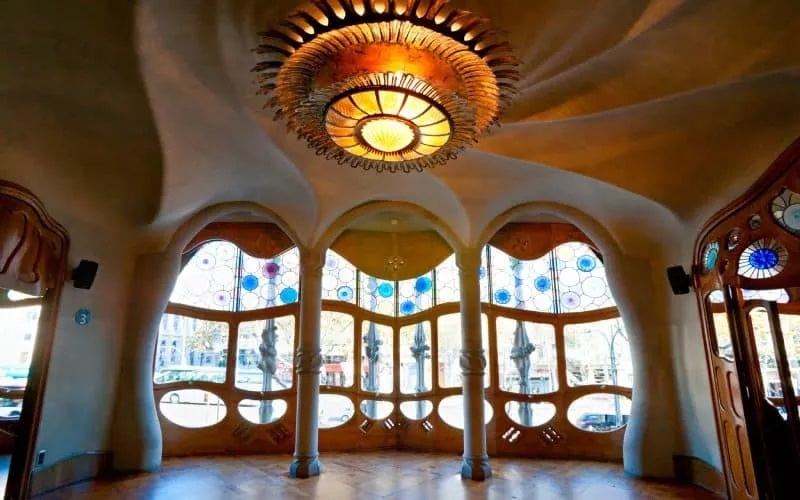 The Noble Floor in Casa Batlló. | Shutterstock
We do know that Casa Batlló was built originally in 1877,designed by architect Emilio Sala Cortés,professor of Antoni Gaudí, when the already-mentioned Plan Cerdà was still going on. Nevertheless, the building we know today was born later, in 1903, when the family of the textile industrialist Josep Batlló i Casanovas bought the place. The businessman hiredGaudíand let him demolish the building. However, the artist managed to reform the property without demolishing it, and he gave Casa Batlló the look we can admire today.
A dive into the depths of the ocean
A dive into the depths of the ocean
The Noble Floor in Casa Batlló. | Shutterstock
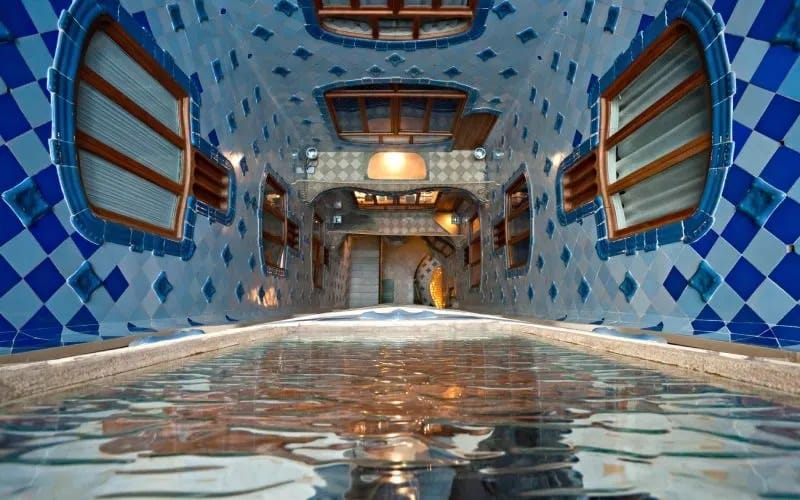 Patio de Luces. | Shutterstock
Once we cross the gates of the building, the aquatic show begins. The first stop is the hall. Shades of white and blue will join the visitor on their journey from now on, as well as the wavy shapes we already saw on the facade. The first floor will take us to the heart of Casa Batlló:the Noble Floor.This area can be seen from thestreet, since it consists of great windows made of wood and coloured glass. The wavy ceiling reminds us of the undulating motion of the sea.
One can hear the natural sounds that inspired Gaudí. Literally. Indeed, each visitor will havean audio guide with both music and informationthat activates when we reach certain places, contributing to the immersive experience. After the Noble Floor, the interiorgardenawaits us. Actually, it is apatiomade of ceramics intended for enjoying the last hours of the day.
Patio de Luces. | Shutterstock
Another remarkable place in Casa Batlló would be itsstaircase. The whole structure of the building grows around it. The staircase is so beautiful, that we will not even want to take the lift.Light reaches the place through the Patio de Luces,an interiorpatiodesigned to make the most of the hours of sunshine. It is widely known that Antoni Gaudí mastered the art of functionality. The aim of thispatiois making sure that natural light reaches all the rooms equally, and it works thanks to the size of the windows, which gets bigger as they are placed lower.
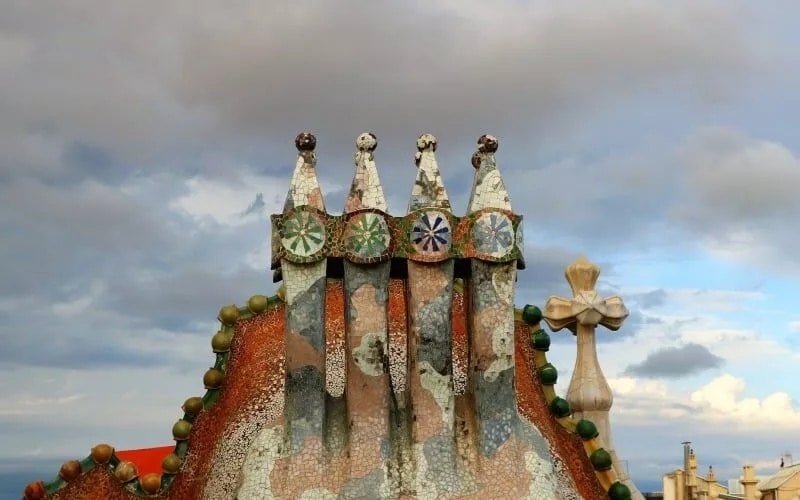 Chimneys of Casa Batlló. | Shutterstock
Reaching the surface in Casa Batlló
Reaching the surface in Casa Batlló
Chimneys of Casa Batlló. | Shutterstock
The journey is not over yet. The whole visit to Casa Batlló goes upwards, from the depths of the ocean to the light that awaits us on the surface.The sunshine will meet us on the roof of the building,bathing the signature chimneys of Gaudí. We are now over the water, admiring the views of Barcelona from above.
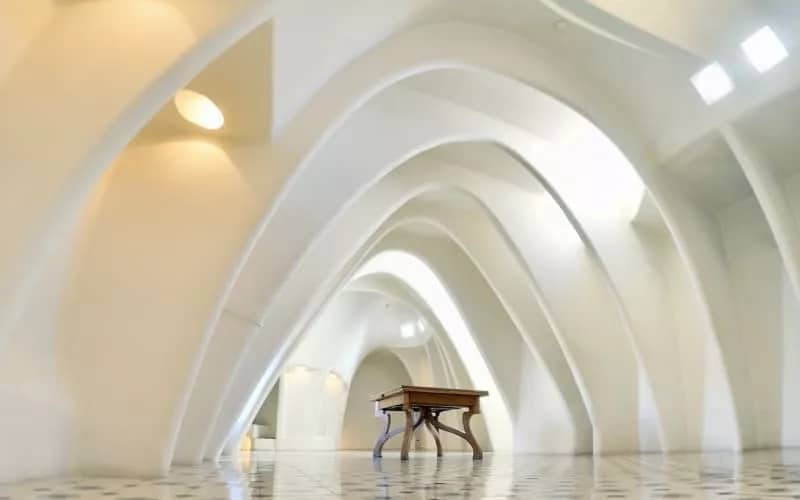 The attic of Casa Batlló. | Shutterstock
The attic of Casa Batlló. | Shutterstock
The visit will end in the attic, a diaphanous space intended to be used as a service floor. Here, design meets functionality again. The white colours recall theMediterraneanlandscape, andthe 60 catenary arches decorating the place resemble the ribs of an animal.Perhaps the inside of a dragon resting on a building that has been declared a UNESCO World Heritage Site.
Источник: Fascinating Spain