Mogrovejo, a village worthy of Heidi in the heart of Cantabria
• Fascinating Spain
• Cantabria
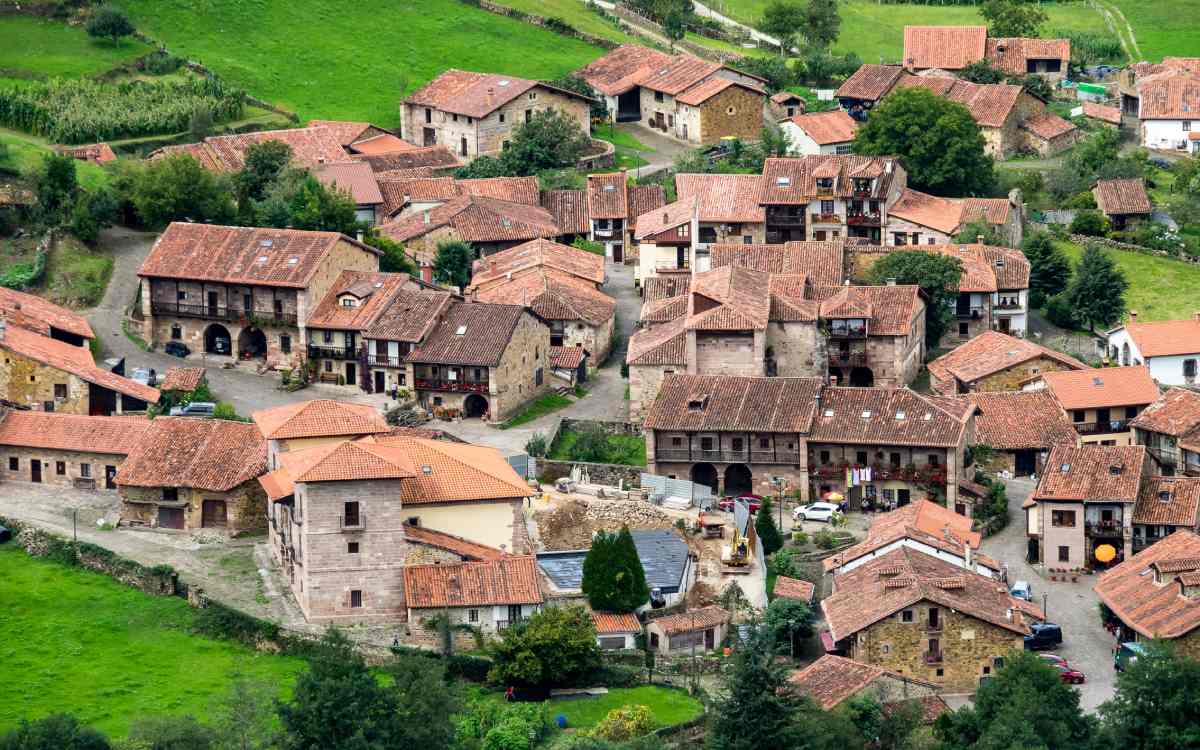
TheLiébanaValley, inCantabria, hides real treasures in the form of villages. Mogrovejo is one of them. Thissmall townin the municipality of Camaleño,just ten kilometers from Potes, is an obligatory stop if you visit the area. It holds the qualification ofAsset of Cultural Interestand was named “Town of Cantabria 2017” and since 2020 “Most Beautiful Town of Spain”.
Popular architecture of the town | Shutterstock
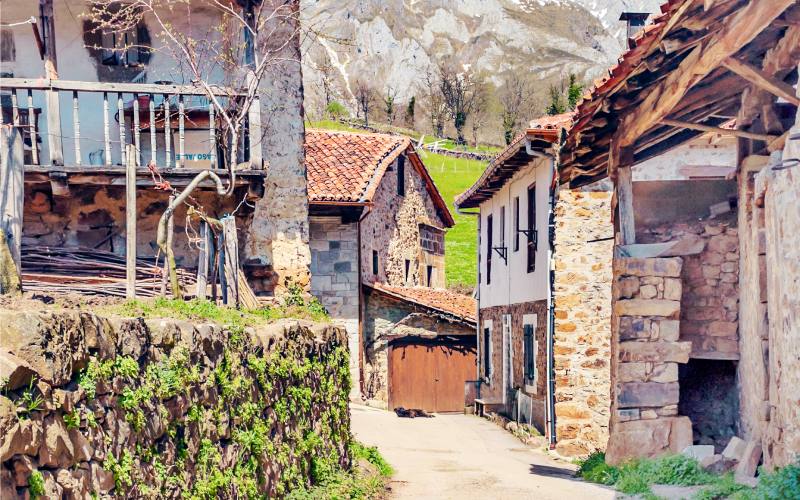 Popular architecture of the town | Shutterstock
The natural environment andpopular architecturethat surround Mogrovejo has made it becomethe perfect setting to emulate the Swiss Alps in a movie about Heidi. But the charms of this village do not end there, its old town with a stately tower of the thirteenth century and thechurchof Nuestra Señora de la Asunción are more than worthy of mention. So it is not surprising that one of the most important Jacobean routes passes through it.
History of the village
History of the village
Almost no information is known about the origin of the town or its first settlers. The only thing that is known is that it was previously calledLuarca, taking its present name in the 13th century. Precisely in this century the construction of the tower of Mogrovejo was carried out by the lords of this mountain village. To this lineage belonged the bishop of Lima, Toribio Alfonso de Mogrovejo, canonized by theCatholic Church.
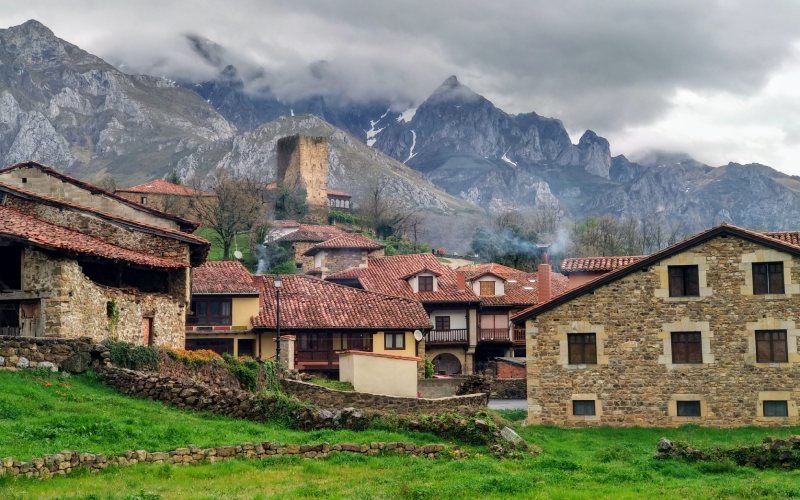 The lord of these lands was the standard bearer of the army of Don Pelayo | Shutterstock
The lord of these lands was the standard bearer of the army of Don Pelayo | Shutterstock
The story goes that the lord of these lands was the standard bearer of Don Pelayo’s army in the battle ofCovadonga. The flagpole was preserved for a long time in the now disappearedhermitageof San Martín.The lords of Mogrovejo also received the royal privilegeof naming the mayors of the municipality of Camaleño, then known as Valle de Baró.
Tower of Mogrovejo
Thetowerof Mogrovejo was built at the end of the 13th century by the lords of Mogrovejo, distinguished in 1248 by King Sancho with the concession of themonasteryof San Martín de Mogrovejo. At the end of the 14th century, this lineage became related to theLeónfamily Álvarez de Miranda, who are the current owners of the monument. It isprotected by the royal decreeof April 22, 1949 and was declared a historic site in 1985.
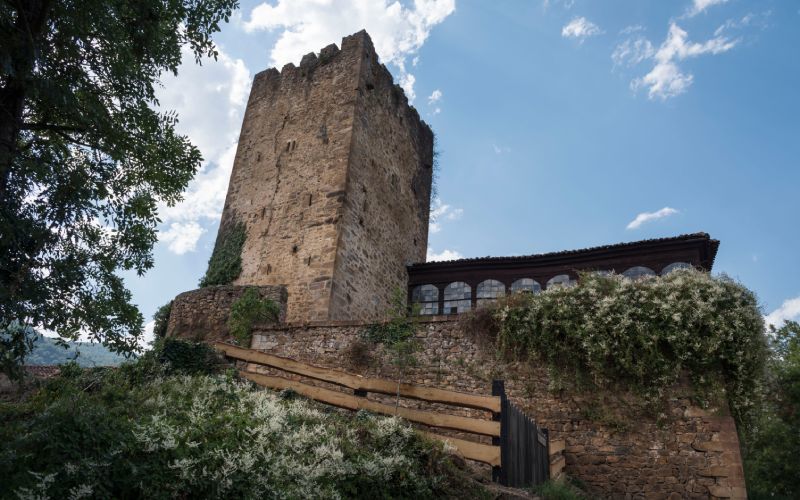 The tower is crenellated and is 21 meters high. | Shutterstock
The tower is crenellated and is 21 meters high. | Shutterstock
The construction is on a farm surrounded by a high perimeter wall. It has a square floor plan, is crenellated and is 21 meters high. It has a series of twin windows, of which the original shutters are still preserved. Today, thetoweris empty, without floor divisions, and isundergoing a restoration process. The wall also contains several buildings in ruins, including the mansion built at the same time, as well as the chapel built between the 17th and 18th centuries.
The church and popular architecture
The church and popular architecture
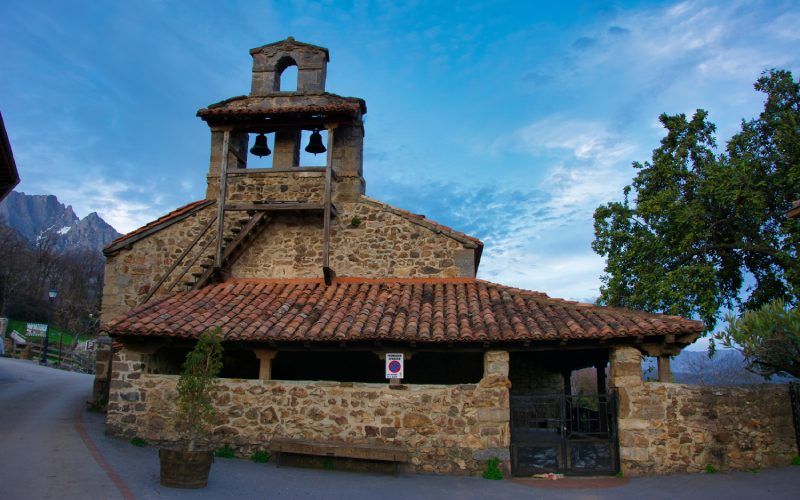 The church keeps a Flemish image of La Milagrosa. | Shutterstock
Thechurchof Nuestra Señora de la Asunción is located in the epicenter of the old town. It is a 17th century building with a single rectangular nave. In its interior the main altarpiece of baroque style stands out, with the coats of arms of the Mogrovejo family. It also keeps an image of Santo Toribio and another Flemish image of the Virgin of the XV century,known as La Milagrosa. The interior of thistemplecan only be accessed during mass hours.
The church keeps a Flemish image of La Milagrosa. | Shutterstock
Another of the great attractions of the town are thetraditional housesof theLiébanaregion. For its part, the upper floor remains open to the outside. You can also see otherbaroque stylemansions dating from the 16th to 18th centuries, many of which retain the stately coats of arms on their covers.The mansion of Vicente de Celis stands out, with a monumental Estrada coat of arms.
Routes from Mogrovejo
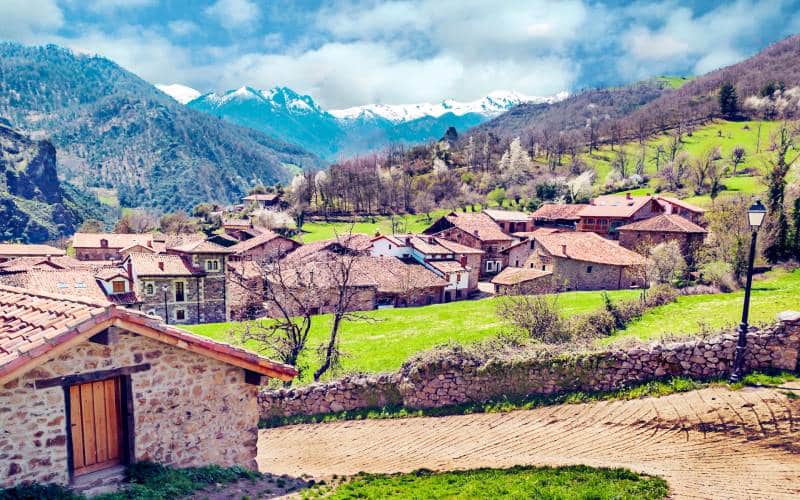 Many routes leave from this place| Shutterstock
Routes from Mogrovejo
Thehistoric centeris one of the main attractions of this town, but it is not the only one.Many of the visitors who come annually to Mogrovejo are pilgrims who follow the Vadiniense Way. This Jacobean route that links theNorthern Waywith the French Way.
Many routes leave from this place| Shutterstock
Itsnatural environmentcauses great interest amonghikersand therefore, from the town begin severalhiking trailsthat allow to know closely the flora and fauna of the area, both the valley and the highCantabrianmountains. For example, the route of Bajo los Picos is a circular route of about four hours. For its part, the route to PeñaOviedoconsists of a trail ofabout 7 kilometers that can be extended up to 14.5 if you reach El Cable.
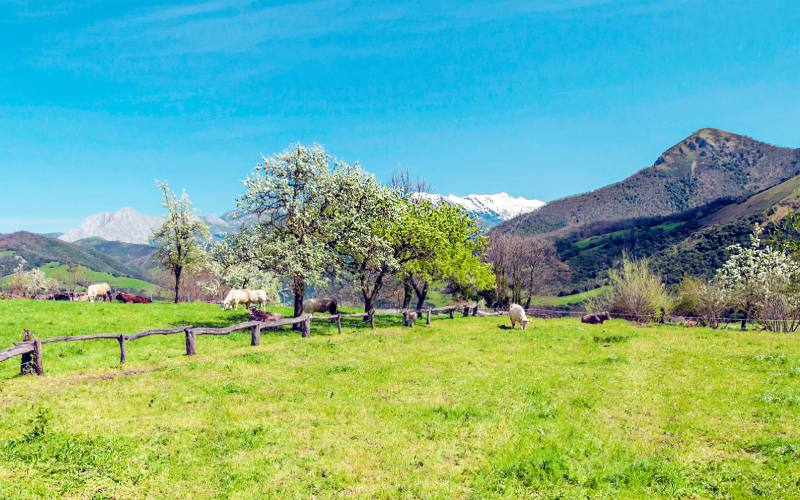 It was chosen as the setting for filming the movieHeidi, queen of the mountain. | Shutterstock
A film village
It was chosen as the setting for filming the movieHeidi, queen of the mountain. | Shutterstock
Mogrovejo has recently made it to thebig screen. In 2016 it was chosen as the setting for filming the movieHeidi:the queen of themountain.This is the first part of a trilogy that follows the adventures of Heidi and her friends. Specifically, Mogrovejo was the location selected to place Pedro’s house. For a few weeks, the whole environment was turned into asmall villagein the Swiss Alps. The grandfather’s hut was built in Cillorigo deLiébana, specifically in the village of Pendes and the surroundings of the Hermida Gorge.
Источник: Fascinating Spain