Rello, the best preserved medieval village in Soria
• Fascinating Spain
• Castile and León
On a rocky ridge, in Altos de Barahona and looking out over the Escalote River, sits asmall, completely walledmedieval village, known as Rello. It is located in the south of theprovince of Soriaand belongs to the region ofBerlanga. This village has one of the best preserved medieval features inCastile and Leon, to the extent that it has been declared anAsset of Cultural Interest.
Thewalled complexof Rello at the top of the mountain is worthy of a fairy tale, where the natural beauty of the surrounding landscape stands out. But there is no more incredible sensation than towalk through its narrow, cobbled streets, which, together with thecastleand itstowers, take all visitors back to an ancient era from the moment they pass through the only and main entrance to the village.
However, very few people have the privilege ofknowing about the existence of this extraordinary and peaceful place, today practically forgotten, where only 15 inhabitants remain.
The majestic wall of Rello
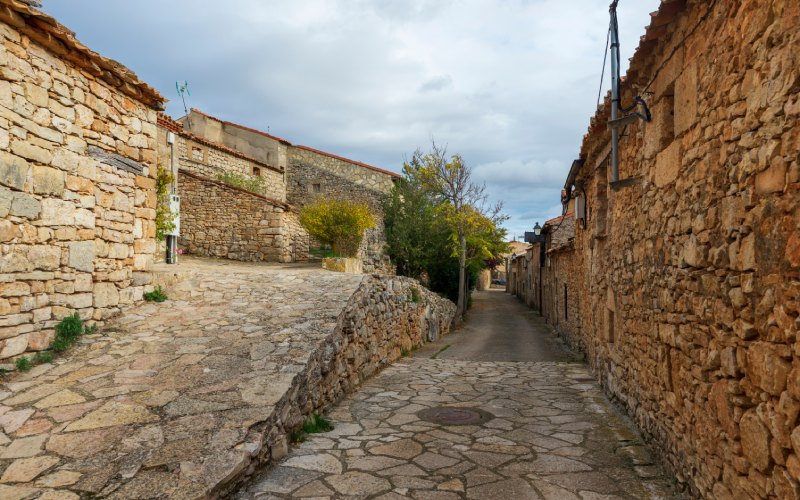 The interior of the medieval Rello | Shutterstock
The majestic wall of Rello
If Rello stillpreserves the medieval essence hundreds of years later, it is precisely because of itsimposing wall. The entire area where the settlement is located is completely fortified. The wall is flanked by various towers and topped with battlements, which are perfectly preserved. In fact, of all the villages and towns in Soria established on a rock, such asMedinaceli,Calatañazoror Peñalcázar,Rello is the one that has best preservedits entire walled enclosure.
The interior of the medieval Rello | Shutterstock
Although there is little documentation about the origin of Rello, it contains a very important historical legacy under the vestiges of its stone walls. The settlement of the wall is said todate back to the 12th century, at a time characterised by continuousChristian and Musliminvasions. This being so, it is not surprising that it was decided to create a fortified perimeter to protect the inhabitants of the municipality. Later, in the 15th century, thefortresswas reformed, when Rello had already reached the lordship of theCount of Coruña.
Rello Castle
At one end of the wall is the Rello Castle. It is believed that it could have beenbuilt in the 15th century;although some historians point out its existence already in the 11th century. Today you can still see the remains of thekeep, which washalf destroyed by a lightning, a cistern and the wall that separated the castle from the rest of the old town.
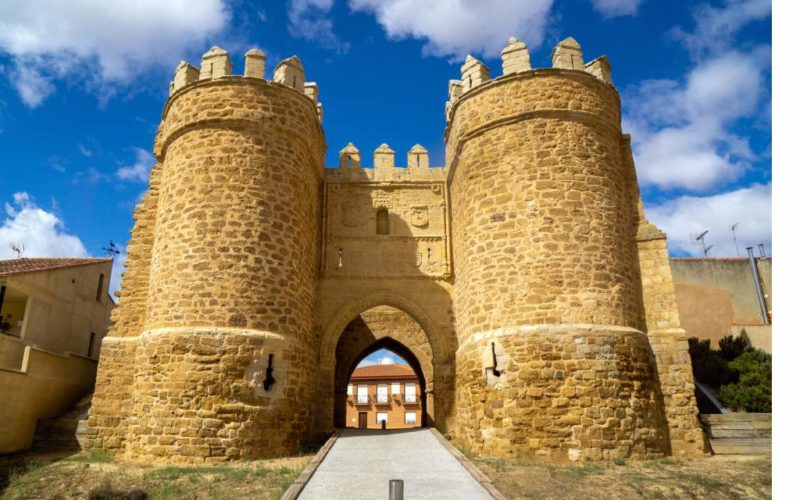
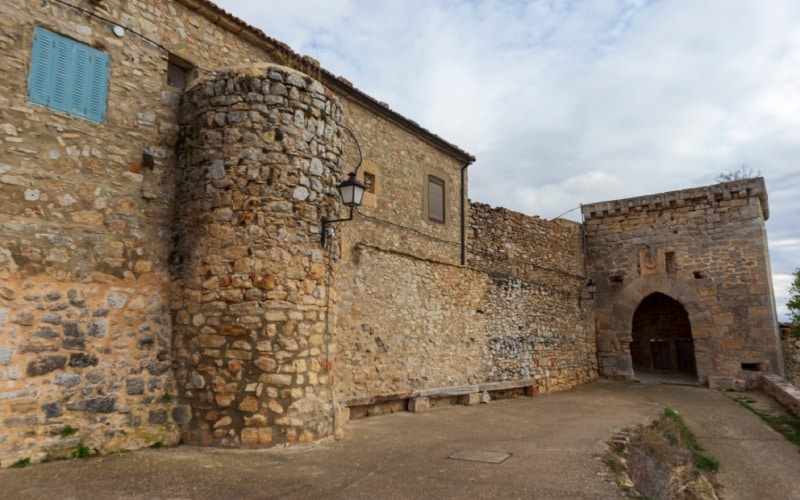 Entrance to Rello Castle | Wikimedia
Entrance to Rello Castle | Wikimedia
It can be accessed through two fortified doors. Both contain a heraldiccoat of armswith an eagle, from the former Count of the village, Lorenzo Suárez de Mendoza; the 4th Count of La Coruña. He was a nobleman who was a direct descendant of Iñigo López de Mendoza, Marquis of Santillana. In 1580 he was appointed byPhilip IIas the fifth Viceroy of New Spain.
“El Rollo de Rello es de yerro"
"El Rollo de Rello es de yerro”
It is strange to walk through its streets and not hear: “el rollo de Rello es de yerro”. This tongue twister refers to the iron bombard in the village’smain square, a 15th centurypiece of artillery before the cannon. It constitutes an identity element for the municipality.
El Rollo de Rello | Wikimedia
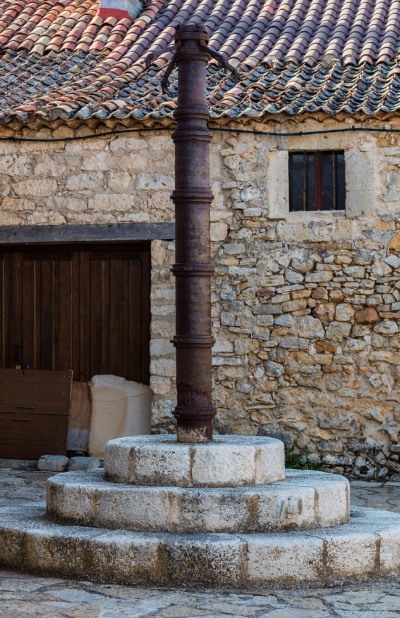 El Rollo de Rello | Wikimedia
The Rollo represented the administrative category of thevillageof Rello. Also, according to its inhabitants, this iron bar was a place of atonement for the faults committed by prisoners; serving as an example and lesson for the people of that time. In fact, the word “yerro” means a fault or crime committed out of ignorance or malice; against divine and human laws.
The Muslim Watchtower of Tiñón
The Muslim Watchtower of Tiñón
Legend has it that thecaudillo Almanzorwent there to die on his return to Medinaceli from Calatañazor; where he had been defeated. The watchtower of Tiñón is another of the things to see in Rello; as it represents one of themost significant elements of the municipality. Indeed, it may be the most appreciated of them all because of thehistoricalvalue it acquires.
Muslim watchtower of Rello | Wikimedia
To understand the meaning of the watchtowers, one must go back to theMuslim era in the Iberian Peninsula, during the 10th century. Almost two hundred years after the conquest of the territory, Islam retreated to the Duero Valley; following the advance of the Christian kingdoms to the south. Faced with this problem, the Caliphate decided to reform itsdefensive systemsby building anew system of surveillance and military observationthroughfortified towers, known asatalayas. The main objective of their construction was to provide a high and secure site; from which to control the territory in case of enemy invasion.
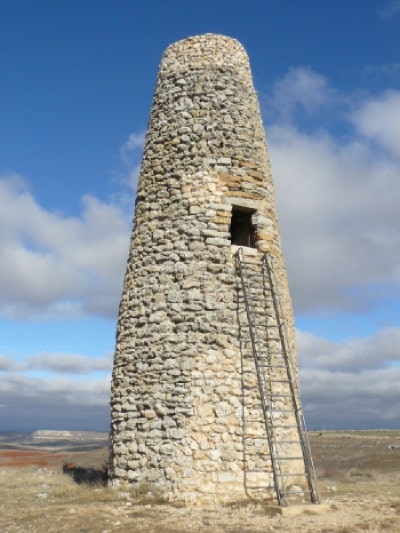 Muslim watchtower of Rello | Wikimedia
At present, there are more than twenty Muslim watchtowers in the province ofSoria, strategically located in the Duero Valley. These towers thus formed an integral part of the fortified route of the Islamic cities. In the case of the Watchtower of Tiñón, it is dated between the9th and 10th centuries.
Torre del Agua (Water Tower)
Torre del Agua (Water Tower)
On the southern side of the wall there is a circular tower that controls access to the Escalote River; which was used tocollect water. Hence its name, the Torre del Agua (Water Tower). In 2012 it was declared anAsset of Cultural Interestwith the category of Monument. Its location, subordinate to thewallin the direction of the river, makes some authors doubt its Islamic chronology and whether it was really another watchtower. However, the characteristics of its constructionlink it to the Muslim period,due to its circular plan and cylindrical elevation.
The beauty of the scenery of Los Altos de Barahona
The beauty of the scenery of Los Altos de Barahona
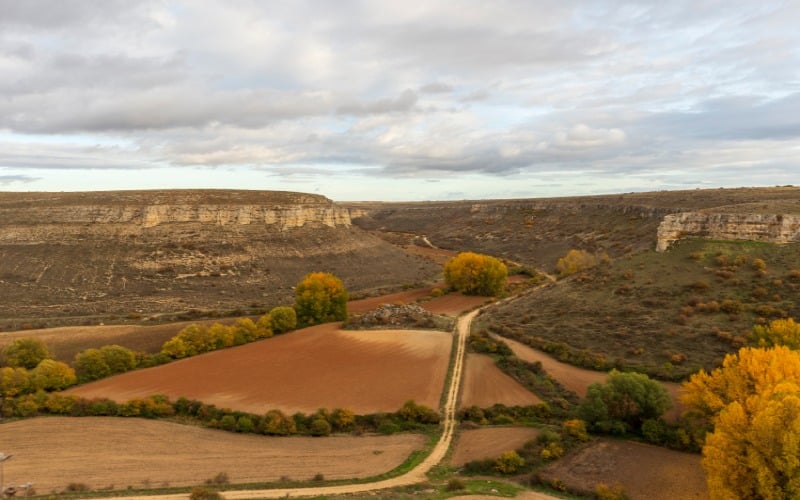 The views from the highest point of the wall of Rello | Shutterstock
The privilege of a village like Rello is that it not only possesses the artistic and historical beauty of its streets, but alsoreceives therich sceneryof Altos de Barahona, where its wall is located. Its views are impressive both from the top of its walls and from the road that leads to the region.
The views from the highest point of the wall of Rello | Shutterstock
Despite being a great unknown to many, the Altos de Barahona are considered the most important moorlands in Spain; with great ornithological value. Thus, the place is designated as aSpecial Protection Area for Birds;as well as being declared aSite of Community Interest (SCI).It also forms part of theNatura 2000 Network. In this area you can also visit othertownssuch as Torrevicente, Barcones, Marazovel, Alpanseque and Pinilla del Olmo.
Источник: Fascinating Spain