The Alcázar de Segovia, the fairy tale castle par excellence
• Fascinating Spain
• Castile and León
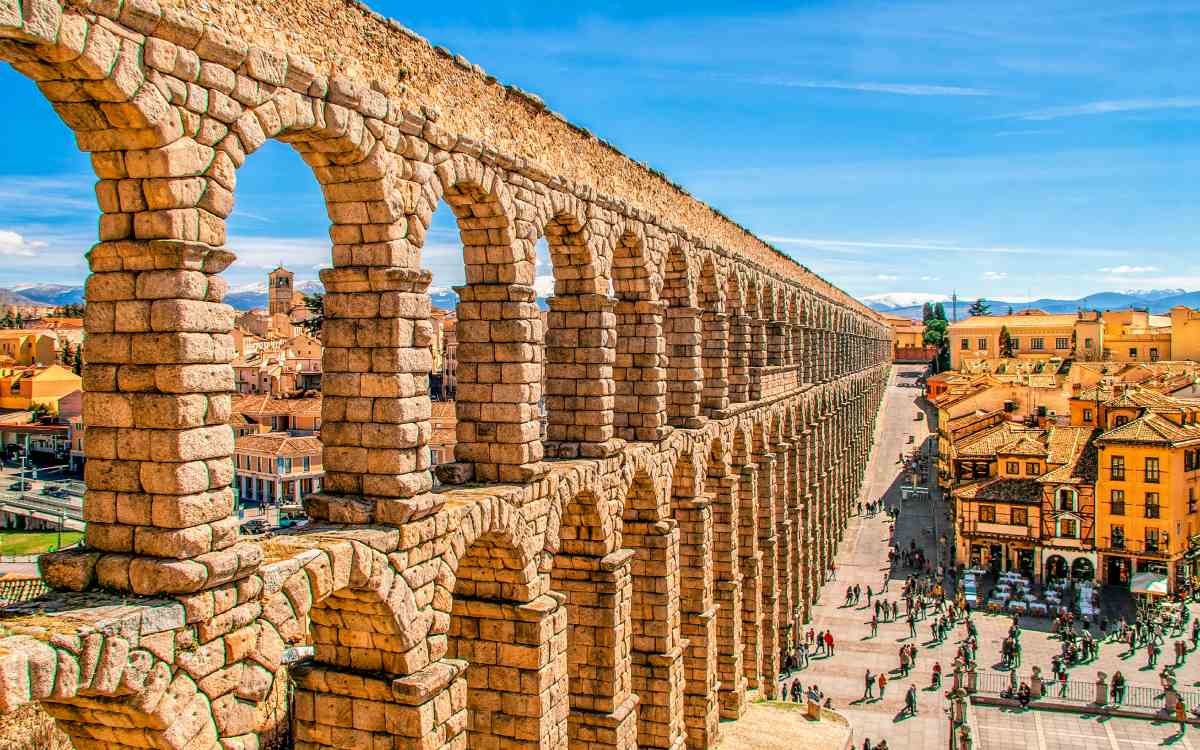
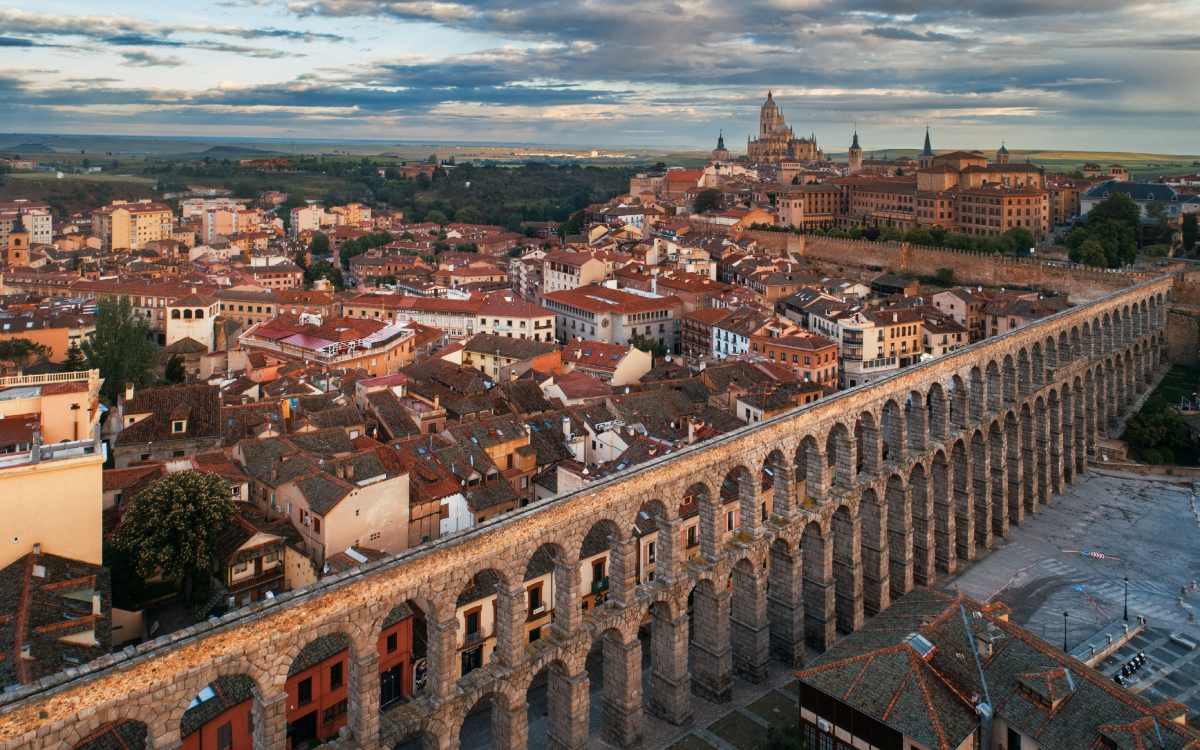
Segovia, located in the south of the Castilla y León region where the Eresma, Ciguiñuela and Clamores rivers meet, has plenty of outstanding features. Both the old city centre and itsaqueductwere declaredWorld Heritage Sitesby UNESCO in 1985. Additionally, its cathedral, the Nuestra Señora de la Asunción y de San Frutos, was the last of its kind in Spain to be built in theGothicstyle. Its beautiful contours have made it worthy of the name The Lady of Cathedrals. However, perhaps what amazes visitors the most isthe fairy tale fortress that inspired Walt Disney himself: the Alcázar de Segovia.
A brief history of the Alcázar de Segovia
A brief history of the Alcázar de Segovia
There are many enjoyable lookout points at the Alcázar de Segovia. | Shutterstock
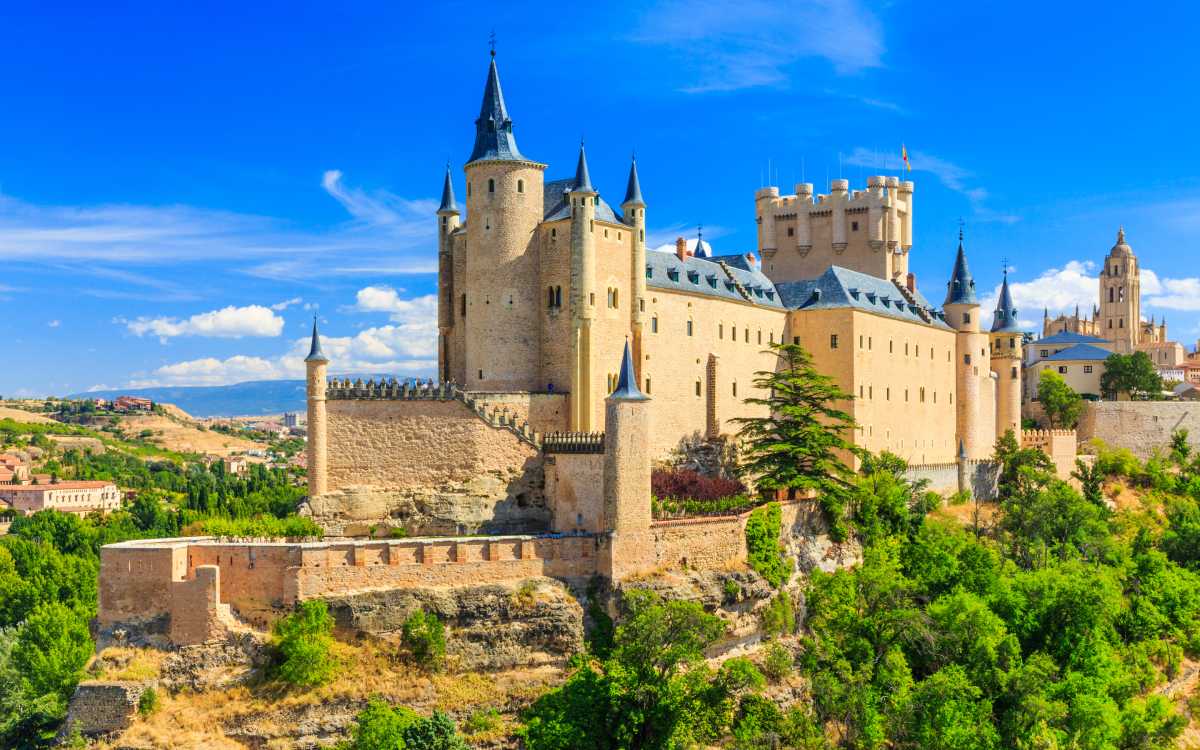 There are many enjoyable lookout points at the Alcázar de Segovia. | Shutterstock
TheAlcázar de Segovia was constructed at the beginning of the 12th centuryand the castle is one of Spain’smost visited monuments. It should be noted that the first documents in which the words “castillo deSegovia” and “Alcaçar” appear date from the period between 1124 and 1139. Additionally, the granite stones used in its construction are similar to ones from the aqueduct, which indicate that there may have already existed a structure during theRomanperiod.
A total of 22 monarchs have passed through this fortificationand it has been the site of royal weddings, battles and other events. The Alcázar de Segovia has served as a Roman fort, a militaryfortress, a royal palace, a stateprison, the guardian of the royal treasury and the Real Colegio de Artillería. Furthermore, on the first floor of this castle, the Archivo General Militar was installed in 1898, where it has remained ever since.
Although the name Alcázar comes from Arabic, it has no other known link to this civilisation. In fact,the castle’s true history began during the Spanish Reconquistaand it has subsequently undergone various refurbishments.
What to see at the Alcázar de Segovia
What to see at the Alcázar de Segovia
If the visitor is wondering what to see at the Alcázar de Segovia, the list is long. Indeed, justthe sight of the castle from afar is marvellous in itself, but it is worth exploring both its inside as well as its outside.
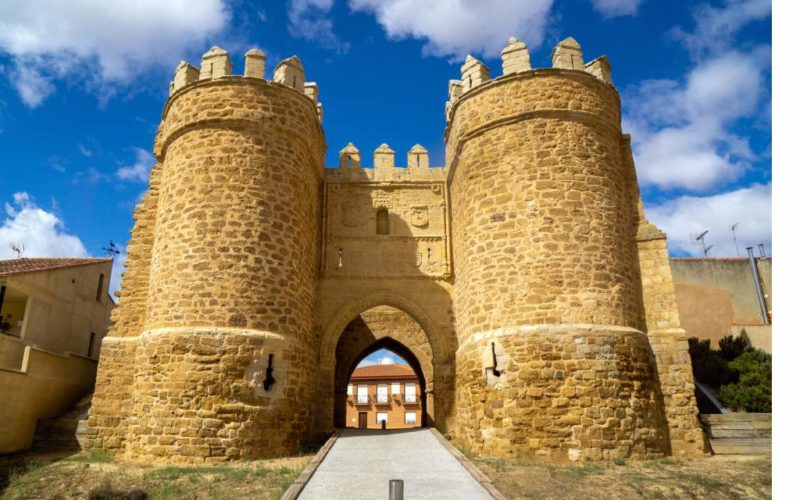
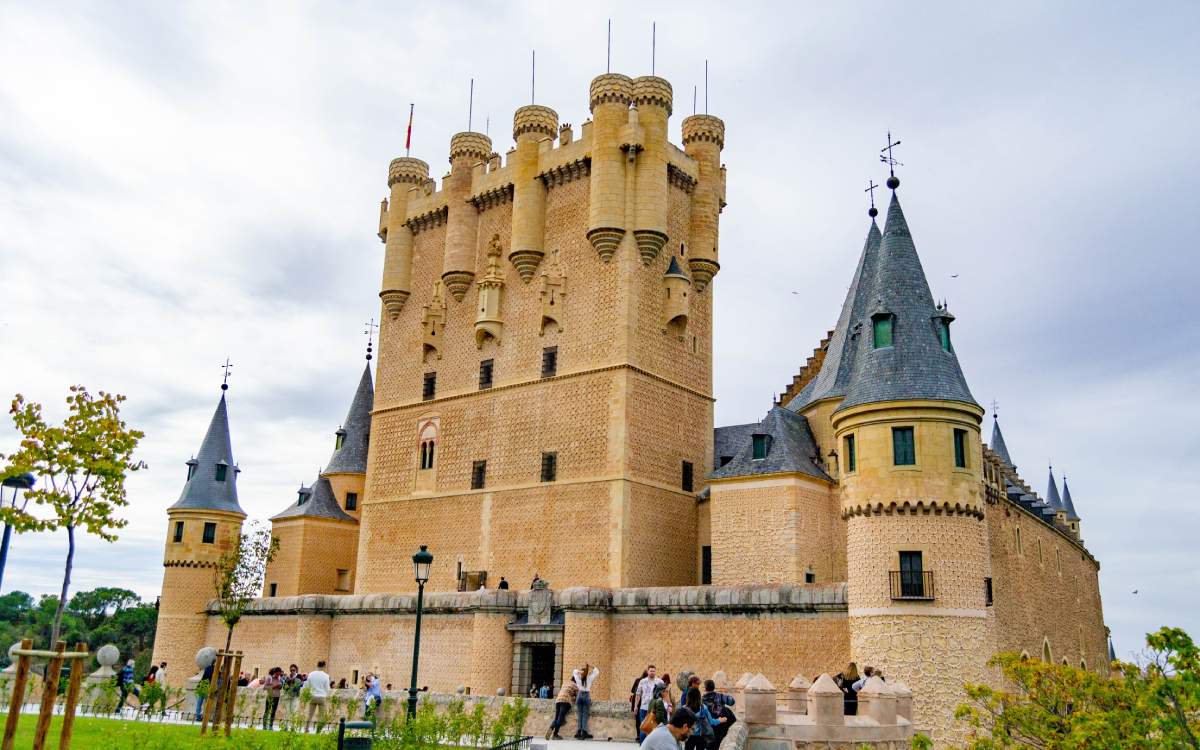 Entrance to the Alcázar. | Shutterstock
What to see outside the fortification
What to see outside the fortification
Entrance to the Alcázar. | Shutterstock
Located in the exterior area of thecastle, thePatio de Armas is where numerous events have taken place throughout its long history. The patio was designed in the Herreran style, an architectonic style prominent in late SpanishRenaissancearchitecture. Though constructed by Francisco de Mora under orders of king Felipe II in 1587, thepatio’s design was clearly influenced by Juan Herrera.
Also found outside the castle is theTorre del Homenaje or Torre de Juan II, constructed between 1440 and 1465. Placed upon an older, thirteenth-centurytower, the current one rises 80 metres in height and has a lookout point at its summit. To reach the top, one must climb precisely 152 steps, but it is well-worth the effort. Once atop, the panoramic views ofSegovia on offer are captivating.
There is a26 metre-deep defensive trenchlocated in this part of the Alcázar, which can also be visited. Excavated over centuries, the stones removed from this area were subsequently used in the fortification’s construction. It should be added that years ago a drawbridge once spanned this trench, though nowadays it is a permanent stonebridge.
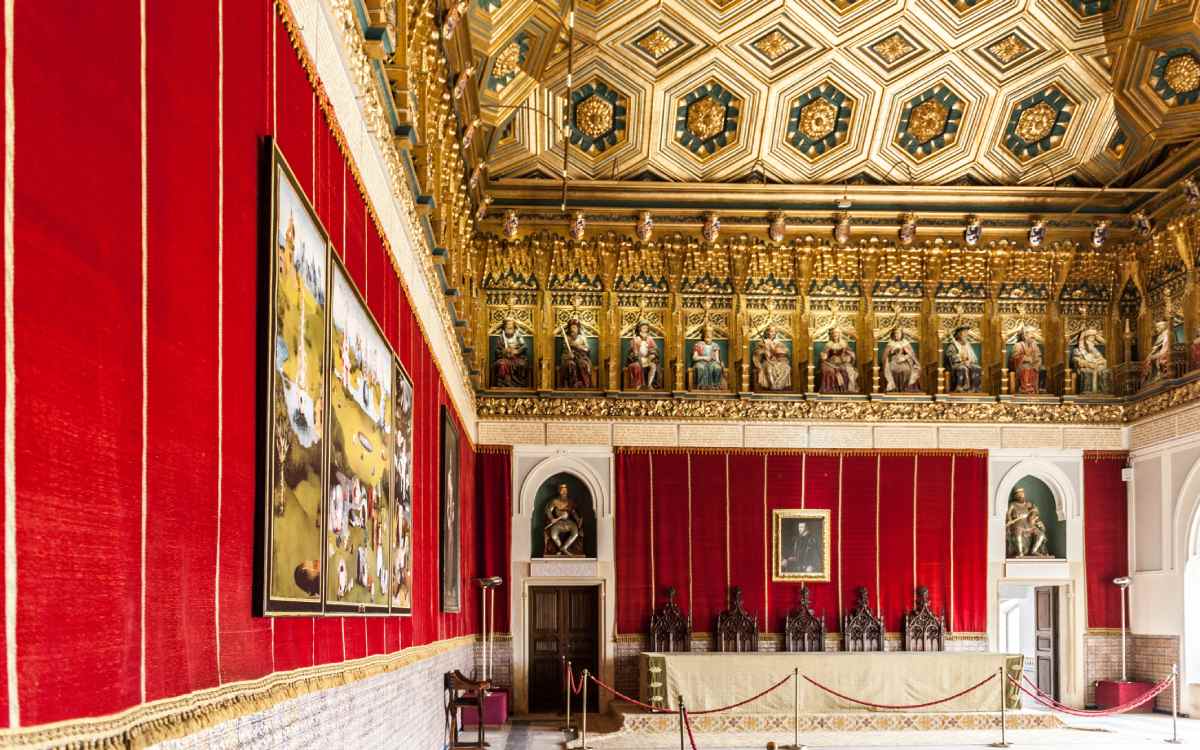 Interior of the Alcázar. | Shutterstock
What to see inside the castle
What to see inside the castle
Interior of the Alcázar. | Shutterstock
The interior of the Alcázar de Segovia containsa chapel that the monarchs once used to attend mass. Additionally, there are several noblehallsincluding the Sala de Ajimeces, which served as the castle’s main hall for years.
The fortification’s interior also includes theSala de la Chimenea and the Sala de la Galera. In the first of these rooms, among other things, there is a depiction of how the fortress appeared before the refurbishment of the roofs. In the Sala de la Galera, it should be noted that, due to a fire that occurred in 1862, everything has been reconstructed with theexception of the original lower frieze.
Also in this area of the castle, one may visit the Sala de las Piñas, whose stained glass depicts Alfonso VII together with his daughter Berenguela. The Sala del Trono contains decoration credited to king Enrique IV, while the body armour on display there came from Urones de Castroponce. Althoughthe original was destroyed in the fire, it has since been replaced by an identical one from the same maker.
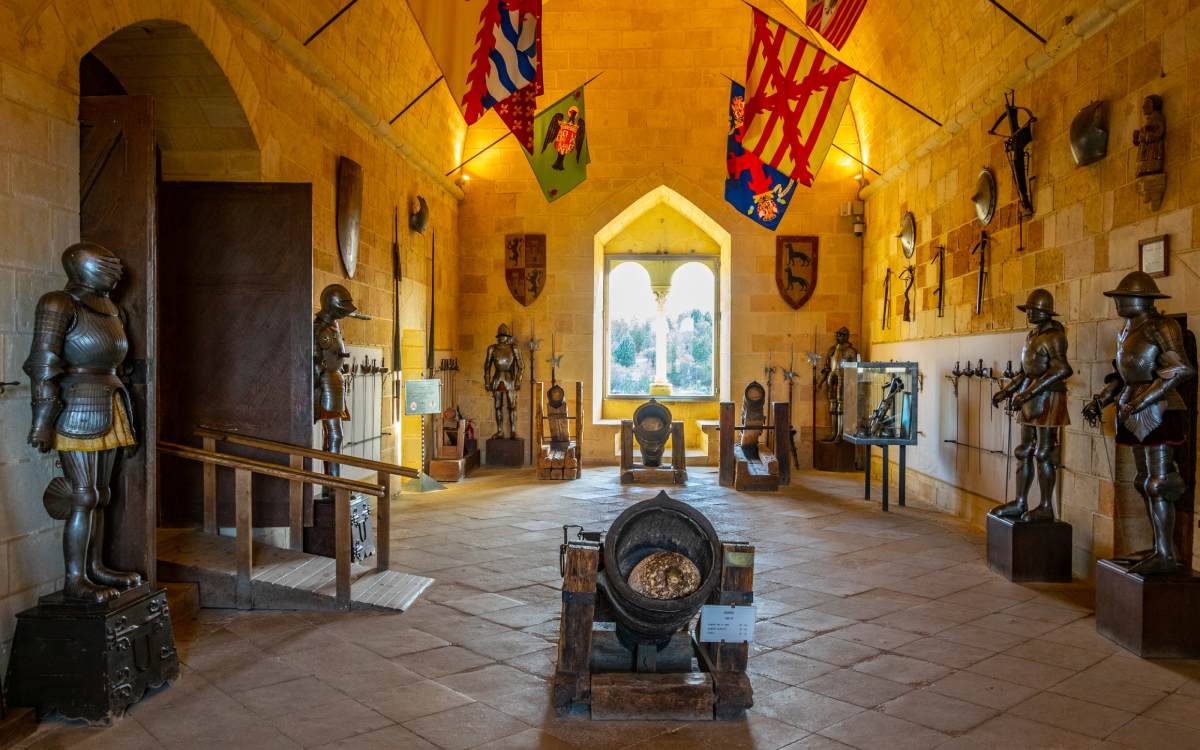 Interior of the Alcázar de Segovia. | Shutterstock
Interior of the Alcázar de Segovia. | Shutterstock
In theSala de Armas, located on the ground floor of the Torre del Homenaje, one may find suits of armour, medieval mortars, swords and old banners. For its part, the Cámara del Tesoro once stored the kingdom’s property deeds.
Of course, the previously mentionedReal Colegio de Artillería museum, which is located next to the Patio de Armas, and theArchivo General de Segoviashould not be missed either.
How to visit the Alcázar de Segovia
How to visit the Alcázar de Segovia
The Alcázar de Segovia seen from San Marcos field. | Shutterstock
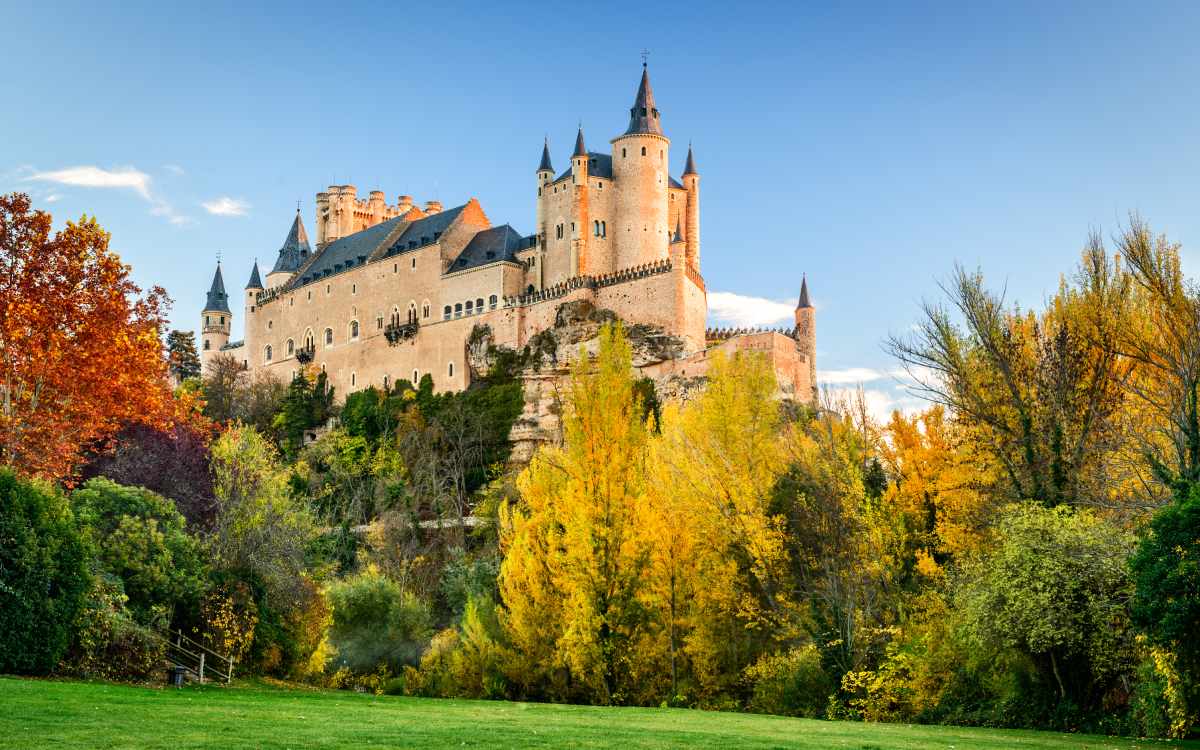 The Alcázar de Segovia seen from San Marcos field. | Shutterstock
TheAlcázar de Segovia opens its doors to the public everyday of the week. From April toOctober, visiting hours are between 10a.m. and 8p.m. while from November to March, doors open between 10a.m. and 6p.m. On the 24th and 31st of December, visiting hours are from 10a.m. to 2p.m. Thepalaceand the museum can be visited in approximately 45 minutes and it should be noted that visits to the Torre de Juan II are limited to no more than 25 minutes.
It is recommended to purchase tickets onlinein order to avoid long queues. Nevertheless, guided tours of the fortress can only be purchased on site at the ticket window. Tickets for guided tours can be bought up to five minutes before any tour, which lasts approximately three quarters of an hour. The last guided tour during the summer season begins at 6:30p.m., whilst the last tour during the winter season begins at 4:00p.m.
You can also read this article inSpanishandFrench.
Follow us onFacebook!
Источник: Fascinating Spain