The Covachos beach, walking on the water at low tide
• Fascinating Spain
• Cantabria
It is really difficult to choose among the many incredible landscapes thatCantabriaoffers. But in Soto de la Marina, very close to the municipality ofLiencresand itsnatural park, there is a very special beach. It is the beach of Covachos.Isolated, solitary, majestic and wild, Covachos is considered by many as themost beautiful beachin Cantabria.
The keys of the Covachos beach
The keys of the Covachos beach
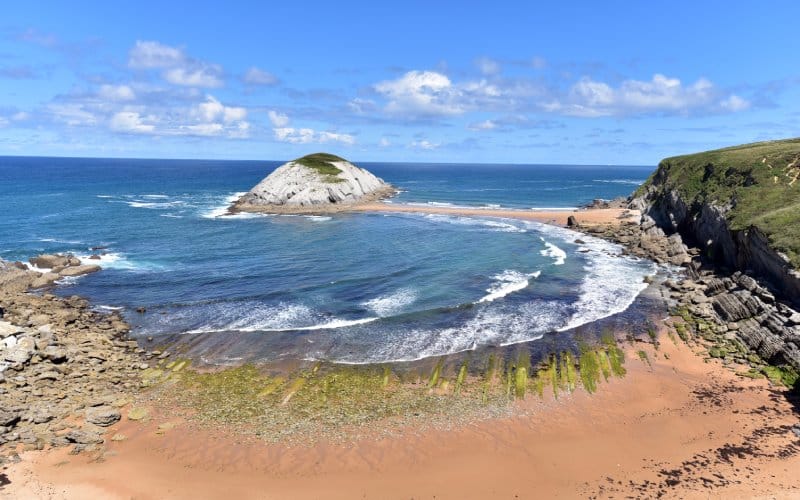 Covachos beach at low tide attached to the island of Castro. | Shutterstock
Covachos beach at low tide attached to the island of Castro. | Shutterstock
This nudistbeach of golden sandcovers a length of 50 meters long by 10 meters wide and is surrounded by a cliff. It reveals itself practically all year round as a place of low occupancy. But here’s the catch:access is not easy, as it is necessary to go down some stairs that disappear at the end of the section, leaving the explorer at the mercy of a rope to descend. Be careful!
However, the place will more than reward the adventure. Not only is it an isolated and wild beach, but it has some unique elements. First of all, afreshwater waterfall, of mysterious origins, falls from the cliff onto the sand. Among the limestone rocks surrounding Covachos, there are also some caves, the reason for the origin of the beach’s name. But the most characteristic of Covachos is undoubtedly the CastroIsland. When the tide is low, a sandy path makes its way through the water and connects the beach and the island. The visitor can thus walk towards Castro, almost as if walking on water.
It is this factor,the high tide and low tide, of great importance to go to Covachos. At low tide it is possible to see some of its best kept wonders, the road to the island, thewaterfalland thecaves. However, when the tide rises, the way back to the stairs becomes more difficult, to the point of having to swim. For this reason, it is important to pay attention to the oscillations of the sea before this visit.
A spectacular views of the crystalline waters of the Covachos beach. | Shutterstock
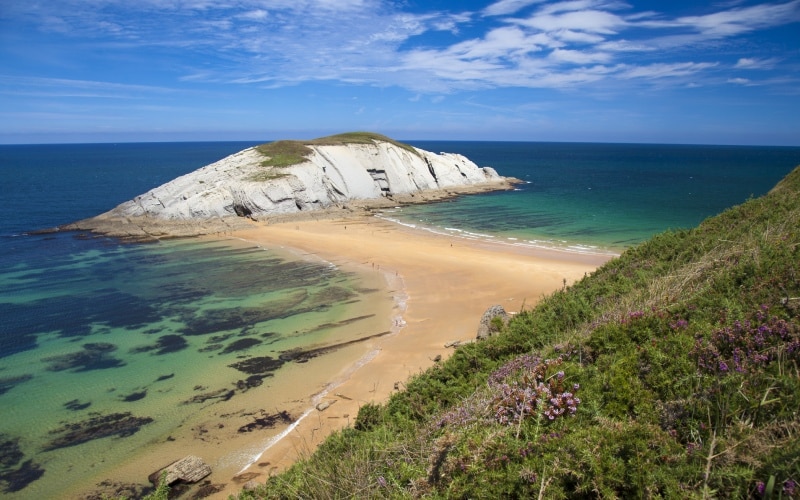 A spectacular views of the crystalline waters of the Covachos beach. | Shutterstock
Spots near the Covachos beach
Spots near the Covachos beach
For those who do not dare to make the trip to Covachos there is a quieter and equally paradisiacal option. This isthe beach of Arnía, which can be accessed, once climbed the stairs, walking from the beach of Covachos. You only have to walk about 10 minutes and better if it is next to the path that runs along the cliff to enjoy stunning views. From Arnía it is possible to glimpse one of the icons of this beach, the rocky islets of the Urros deLiencres.
Arnía Beach at sunset. | Shutterstock
Both beaches are located within Soto de la Marina, in the municipality of Santa Cruz de Bezana. Here, in Soto de la Marina, was born in 1700 the colonizer José Escandón, viceroy of Mexico and conqueror of Nueva Santander. Thechurchesof Mompía and Prezanes, the seminary of Corbán, the site of Rostrío or the ancestral home of La Canal are some of the most significant monuments in the area. The beach of San Juan de la Canal, with a blue flag -a quality distinction-, is also part of Soto de la Marina.
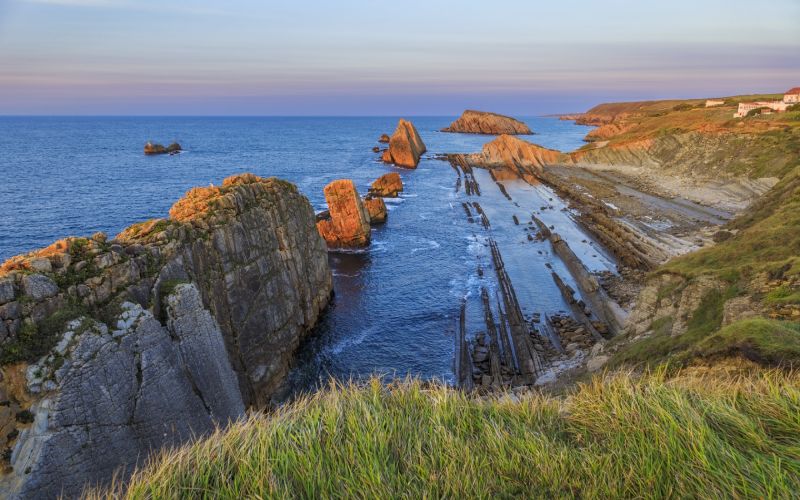 Arnía Beach at sunset. | Shutterstock
These beaches are also part of Costa Quebrada, a coastal stretch of great geological importance. Costa Quebrada extends from the Magdalena Peninsula inSantanderto Cuchía beach in Miengo. The coastal forms of thiscoastlinereveal a set of features that allow us to witness geology in action and discover the origin and evolution of this land. Thus,cliffs, arches, islets, islets, dunes, beaches…A beautiful route that passes through these beaches, as well as others such as Cerrias, Somocuevas or Portio, can be appreciated for about 20 kilometers
But, in addition, Covachos beach is very close from theNatural Parkof theDunes of Liencres. Declared a natural park in 1986, this enclave is located at the mouth of the Pas river in the estuary of Mogro in the municipality of Piélagos.Its 195 hectares include the beaches of Valdearenas and Canallave -also beaches of Costa Quebrada- and the dunes of Liencres. These have an important geomorphological interest and are home to a multitude of fauna and flora.
Liencres Dunes Natural Park. | Shutterstock
A refreshing adventure
A refreshing adventure
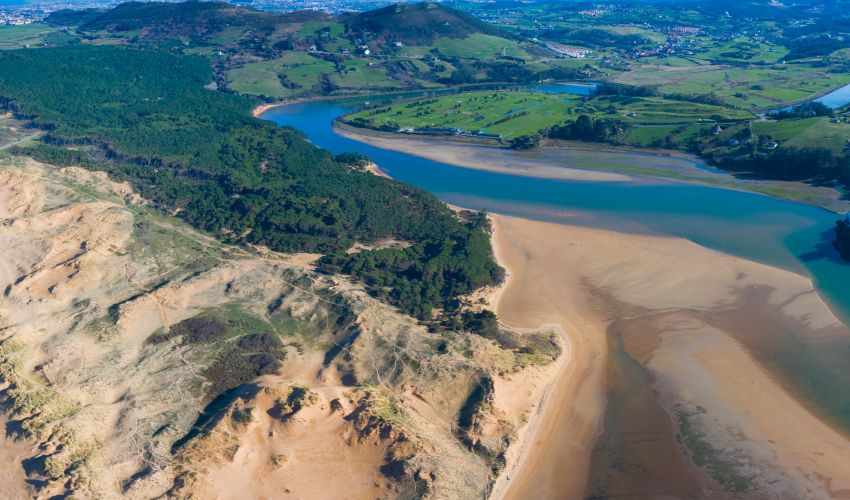 Liencres Dunes Natural Park. | Shutterstock
Covachos beach allows its visitors tocool off, and also because it does so in a veryspecial environment. Where have you ever seen a freshwater waterfall falling on the sand of abeach? And an island that is accessed through a secretsand road?Covachos offers these unique features that are difficult to find in other beaches. An adventure inCantabriain which the effort will be worthy.
Источник: Fascinating Spain