The flea market in Madrid that never gets old
• Fascinating Spain
• Community of Madrid
Sundays are for waiting, for nostalgia… for breathing free. InMadrid, Sundays have a different and unique connotation: they are forfinding what we never sought, for grabbing abeerin La Latina, for getting lost in a crowd crossing through the street of La Ribera de los Curtidores. In other words, Sundays are the day of the Rastro, and this tradition goes back in time for so long that its echoes slowly fade through the years.
The perfect place to thrift in Spain
The perfect place to thrift in Spain
A bloody Rastro from the Middle Ages
A bloody Rastro from the Middle Ages
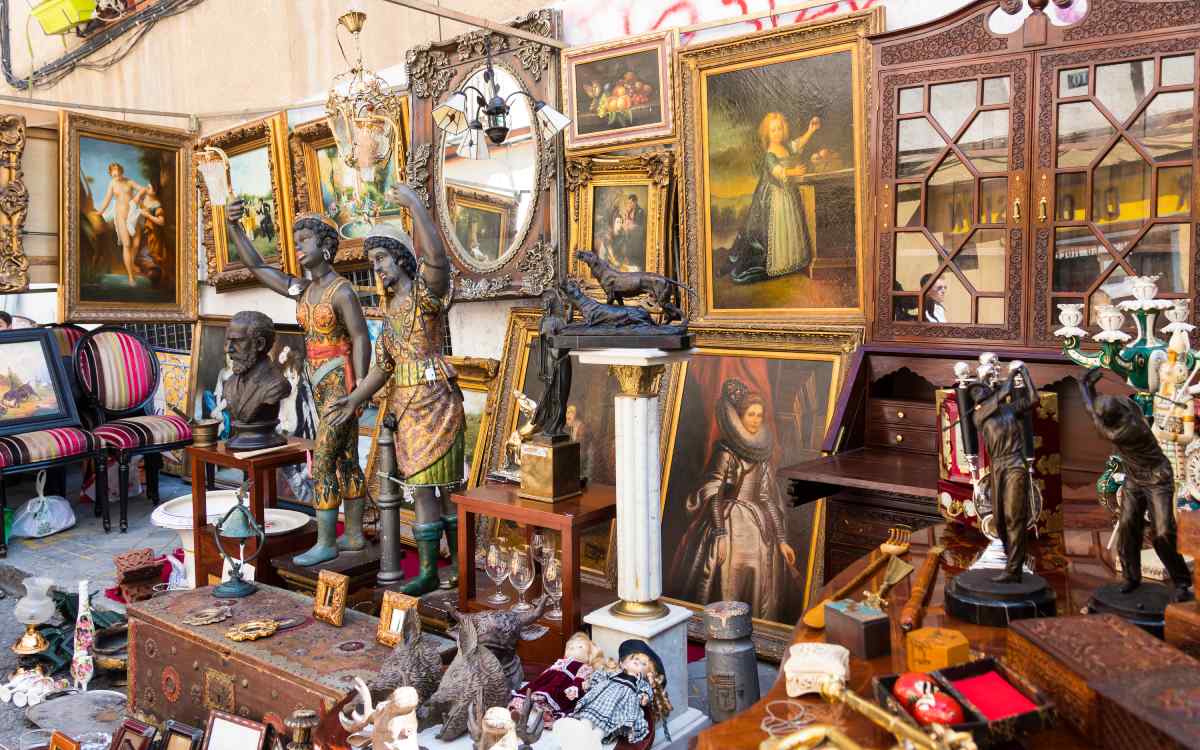 A stall in the Rastro. | Shutterstock
A stall in the Rastro. | Shutterstock
El Rastro is a flea market that wakes up in the streets of La Latina and Lavapiés at the end of each week. It also refers tothe shopping area of La Ribera de los Curtidoresand the adjacentstreets, which are open on weekdays too. Here, antique shops, old and unique bookshops, and thrift stores open a world full of possibilities.
Before it became the Rastro we know today, this place was something completely different. In the late 15thcentury, they built a slaughterhouse right here, next to thesquareof Cascorro. Later on, more slaughterhouses were set up in the area. They came with their respective tanneries, where the skin of the animals was tanned. That’s where the name Curtidores — literally meaning “tanners”— comes from, since the workers carried around the bleeding corpses of the animals, leaving behind a red trace, a red “rastro”. This is probablythe origin of the name Rastro itself.
Eventually, this area would attract more traders. At first, only camethose that worked with products related to animal fat or leather, for instance shoes or candles. Later on, with the increase of population and the establishment of Madrid as the capital city, many othertradersdecided to move there. The birth of this Sunday flea market goes back to 1740, when Rastro became a spot for thrifting all kinds of objects.
A walk through Madrid’s Rastro
A walk through Madrid’s Rastro
Madrid’s Rastro. | Shutterstock
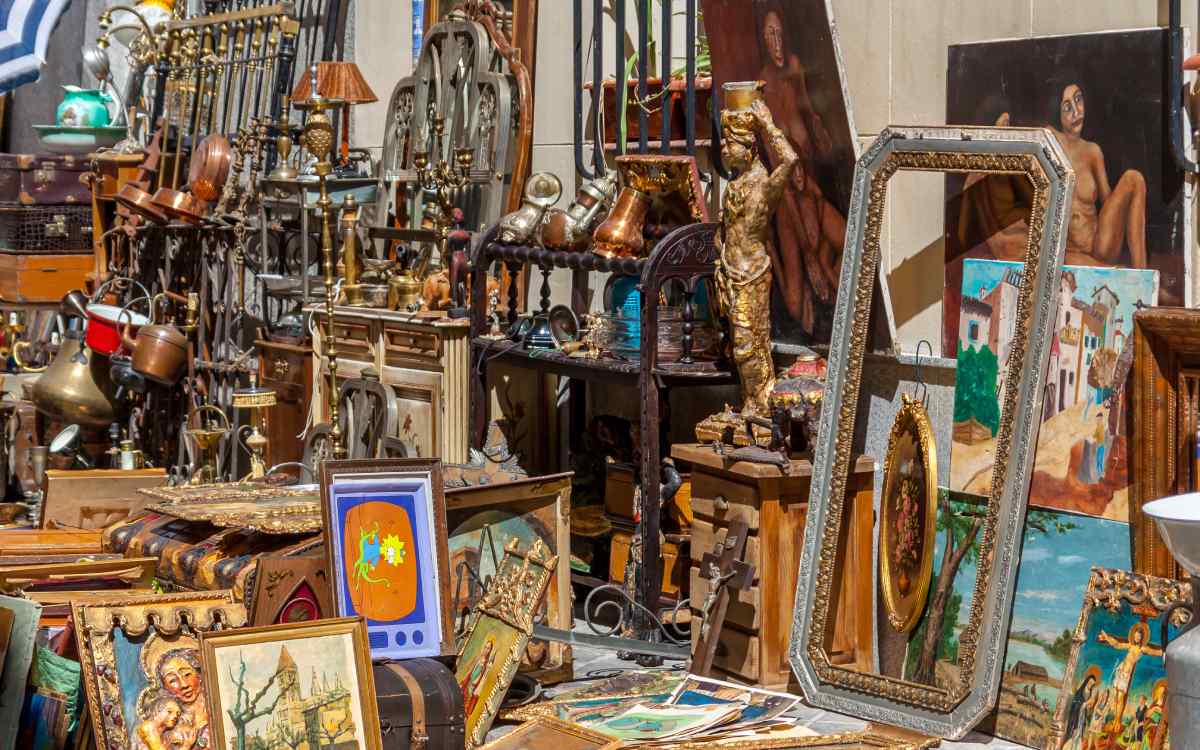 Madrid’s Rastro. | Shutterstock
It’s been more than 280 years since Rastro, declareda Cultural Heritage site of Madrid, started to come to life in the area of La Latina andLavapiésevery Sunday between 9 am and 3 pm. Although chaos and disarray might be the backbone of this flea market, it still follows —well, more or less— an orderly structure.
The first thing one should know about Rastro is perhaps the fact that its heart lies in the square of Cascorro andit stems from La Ribera de Curtidores—the market’s stalls spreading down this samestreet. Here we’ll be able to find almost everything we want: an antique lamp, beautiful earrings, cameras, furniture… This might be the reason why the sense of order is not exactly a distinctive feature of the area.
The square of Campillo Nuevo is another of Rastro’s main landmarks. In it, we can travel back in time through collectable cards, letters and old magazines. In the square of General Vara del Rey close to Campillo Nuevo, they sell antiquities, vinyl records and porcelain dolls, among other things. Likewise, the first and third Saturday of each month theRastro Saturdaysare held here. Just like the regular Rastro, this flea market offers antiquities, vintage products, and collectible items, along withgastronomyand entertainment.
A market of surrealism
A market of surrealism
A stall in the Rastro. | Shutterstock
Madrid’s Rastro is “thePrado Museumturned inside out”, in words of the Spanish journalist Luis Carandell. “To find order in the Prado Museum and chaos in Rastro”, wrote the novelist Francisco Umbral. “In Rastro everything is alive, and there we will findnot only traces of our childhood and youth, but also of the life of our parents and grandparents”, claimed Victoria Durán.
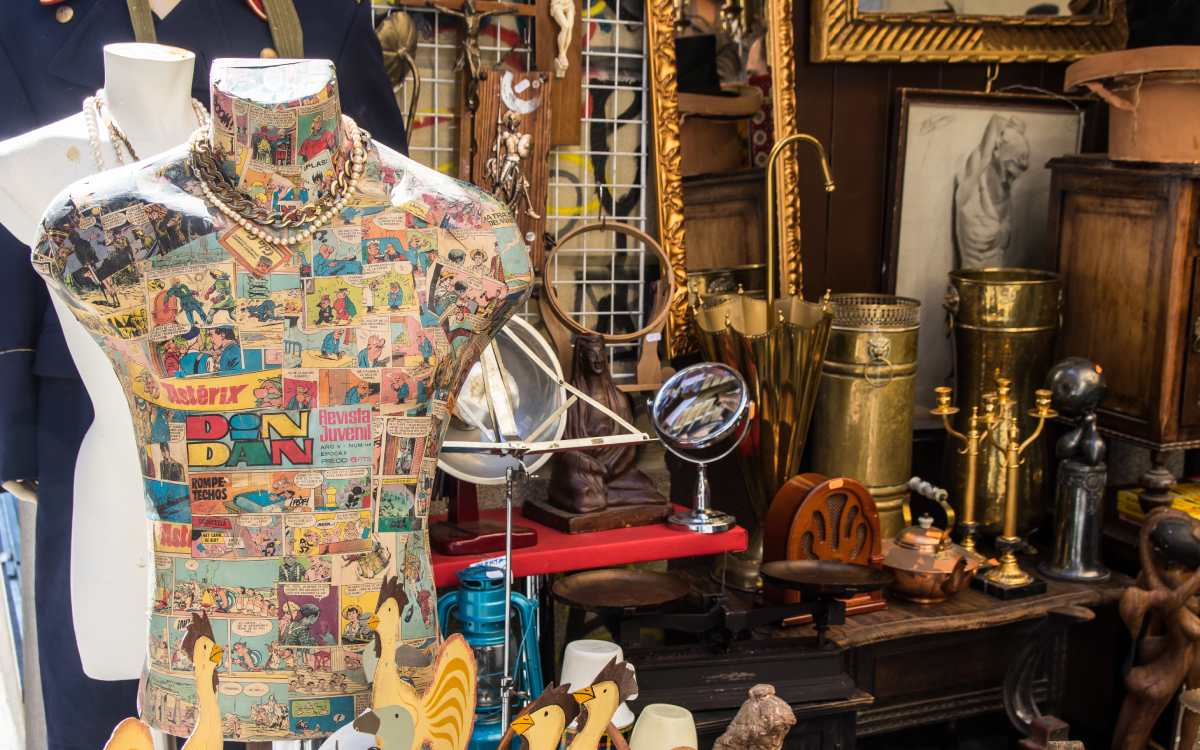 A stall in the Rastro. | Shutterstock
As you can see, this flea market hasmore than a few mentions in literature; there is art crawling through these streets every Sunday, in all the different accents mixing up in the air, in the finding of a dear object long lost, in the sounds of street musicians brightening the morning… To walk along the stalls is to travel to a time where an eighteenth-century chair lives together with the lost shirt of a former football player: it’ssurrealismin the shape of a flea market.
Источник: Fascinating Spain