The Gran Pozo MTDE, the second deepest well in the world, is in Cantabria
• Fascinating Spain
• Cantabria
It was thesummerof 2016 when several speleologists from the groups Espeleo Club Ábrigu and the Club Cántabro de Exploraciones Subterráneas had gone out to prospect in the vicinity of the municipality of Ruesga, inCantabria. That’s when it happened. “We discovered a small fissure between the rocks, between which we noticed a strong current of air”, declared the speleologist Sergio Ruiz in an interview for the COPE radio station. Because of its proximity to other large caves already discovered, they thought that there might be something interesting in that fissure. However, they could never have imagined the size of the discovery. After several days of exploration, they came across an enormous natural shaft, the Gran Pozo MTDE.
A well longer than the Eiffel Tower
A well longer than the Eiffel Tower
The well, also known as Torca del Porrón, is undoubtedly thedeepest in Spain. It surpasses by almost 100 meters the previous holder of this position, its neighboring well Los Pasiegos. With 435 meters of vertical drop, its length is much greater than that of the EiffelTower, which makes it thesecond deepest well in the world, only behind the one located in the Velebita grotto in Croatia. All this in terms of those discovered by humans and speaking of a totally vertical drop. That is, without any ledges or steppeddescents. In this second case, the Gran Pozo MTDE would hold the not inconsiderable position number 11.
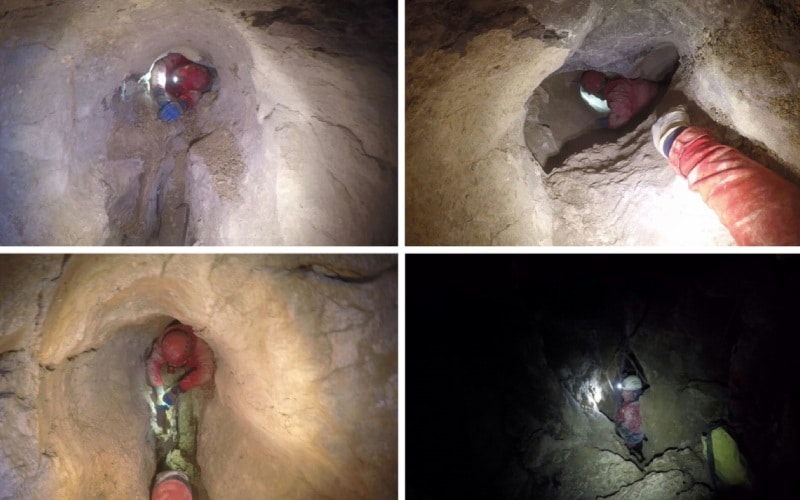 Speleologists investigating the access to the Gran Pozo MTDE. | Cantabrian Club of Underground Explorations
Speleologists investigating the access to the Gran Pozo MTDE. | Cantabrian Club of Underground Explorations
To access the Torca del Porrón, it is first necessary to negotiate another small shaft of about seven meters. Once in front of the cave,it takes at least an hour and a half to descend its wallsand about three hours to climb back up. This is a feat suitable only for experienced cavers in good physical condition. Thesubwaydrilling ends when you reach the so-called Sala Maldita, which in turn belongs to the Torca del Tejón.
New species in the Gran Pozo MTDE?
New species in the Gran Pozo MTDE?
In the aforementioned interview, Sergio Ruiz indicated that theundergroundareas “are environments that have evolved in a totally different way to the outside, sothis evolution creates microfaunathat develop parallel to those outside and it is easy to discover new species”. Five years after that discovery, theCantabrian Club of Underground Explorationstells Fascinating Spain that “we have obtained a good scientific article on a relict invertebrate endemic to the Asón area: the Cantabrodesmus lorioli”, a species of millipede.
Gran Pozo MTDE |Cantabrian Club for Underground Exploration
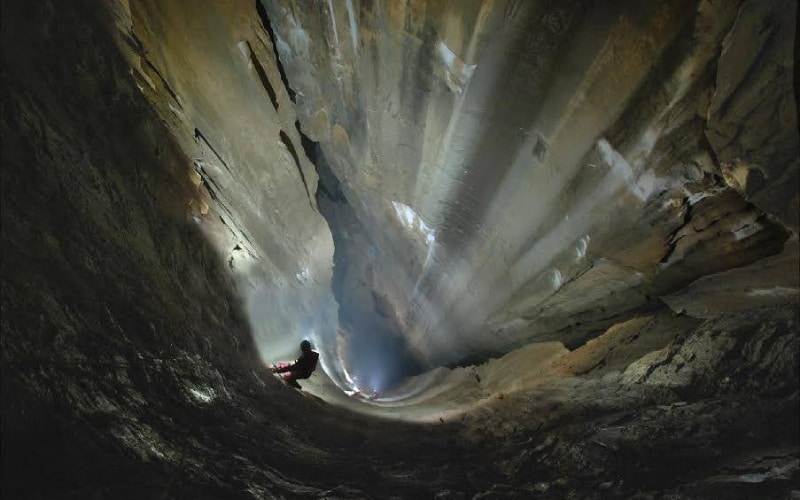 Gran Pozo MTDE |Cantabrian Club for Underground Exploration
Is it possible to visit the Gran Pozo MTDE?
Is it possible to visit the Gran Pozo MTDE?
Now, the Torca del Porrón cannot be visited by the general public, as it iseconomically impossible. It would also be a huge alteration of thelandscape. “In addition to dangerous in every way” indicate from the exploration club. “If it is true that for the purposes of the speleological world is right now free of permits to visit by specialized groups who want to meet this challenge,” they add. They also warn that “it is necessary more than just desire to do it, since it requires a preparation equivalent to facing high peaks with adequate means”.
An area under exploration
An area under exploration
Exploration of the Gran Pozo MTDE has already been completed, but the areain which it is located is a cavity mine. This is due to its location in the Porracolina karst massif, made up of limestone strata, combined with strips of sandstone and impermeable materials. The Porracolina belongs, in turn, to the easternCantabrian mountain range, which covers themassifsof Castro Valnera, Alto Asón and Sierra de Hornijo, as well as the Collados del Asón Natural Park.
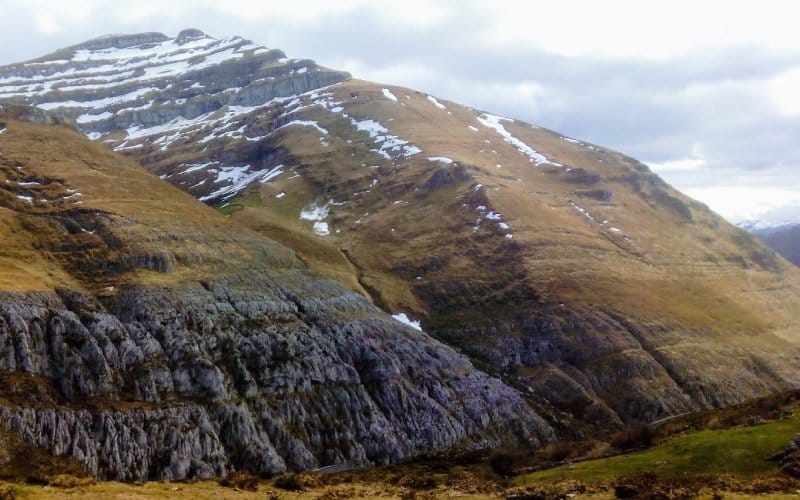 Area of the Porracolina karst massif. |Cantabrian Club for Underground Exploration
Area of the Porracolina karst massif. |Cantabrian Club for Underground Exploration
As already mentioned, in the vicinity of this impressive cave there is also the Los Pasiegos well, 345 metersdeep. According to the Cantabrian Club of Underground Explorations, it is also important to point out the existence in the vicinity of other wells such as the Juhue, 302 meters deep, the Negro, 340 meters deep, or the Buldo well, with a drop of 314 meters. Aparadisefor speleologists inCantabriaandwho knows what is yet to be discovered.
Источник: Fascinating Spain