The ultimate must-visit places in Girona
• Fascinating Spain
• Catalonia
Gironais one of those cities that steals your heart from the very first look. A short stroll through the Barri Vell, its historic old town, is enough to realise you are inone of Europe’s most splendid medieval cities. But far from stagnating in past glories, the city has continued to evolve and add new attractions. Here are 7 must-visit places in the city of Girona.
7 must-visit places in Girona
7 must-visit places in Girona
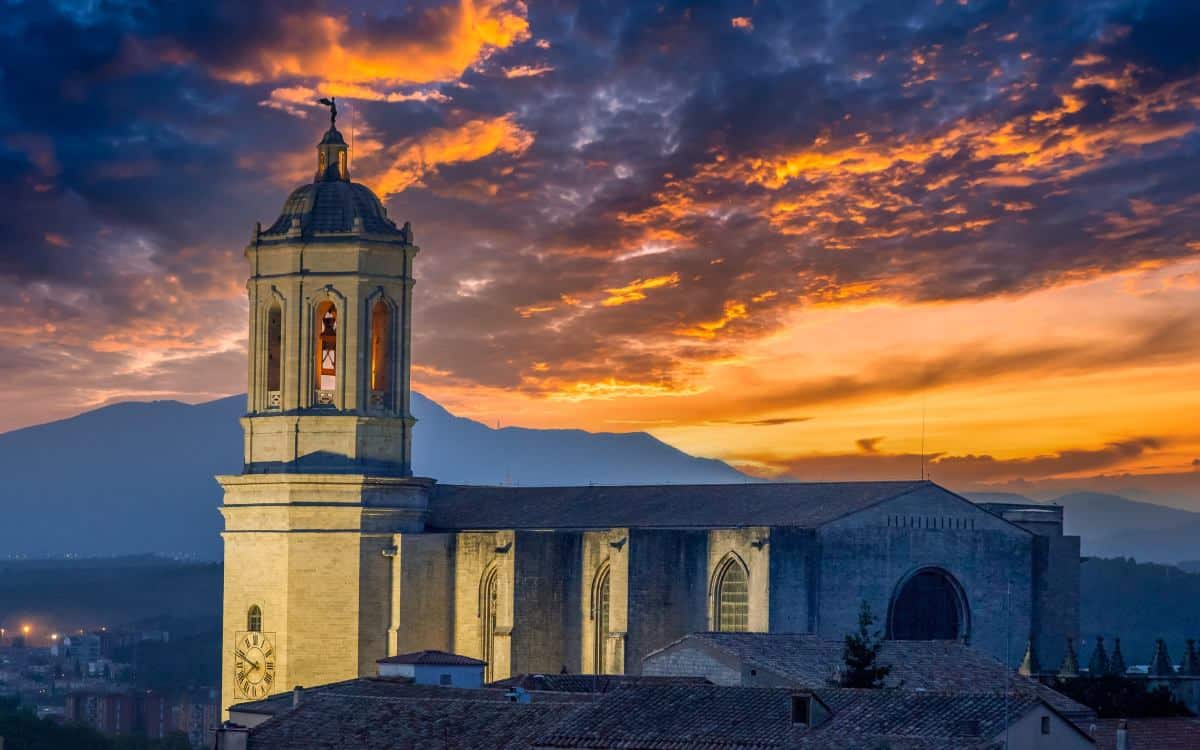 Santa María Cathedral. | Shutterstock
The Cathedral: Girona’s iconic landmark
The Cathedral: Girona’s iconic landmark
Santa María Cathedral. | Shutterstock
Usually, towers or Gothic pinnacles are the most visible features of a city from a distance. What is more surprising is when the entirecathedral, visible in all its grandeur, dominates the urban landscape. This is the case with the Cathedral of Santa Maria, whichshines brightly atop the 90 stepsseparating it from the street.
Its nave is the widest in the world in theGothicstyle, at nearly 23 meters. In other architectural styles, it issurpassed only by St. Peter’s Basilica in the Vatican. Located in the heart of the ancient Roman Gerunda, the cathedral blends Romanesque, Gothic, and Baroque elements into a single temple. The impressive staircase, dating back to the 17th century, forms an indivisible unit that rises above visitors.
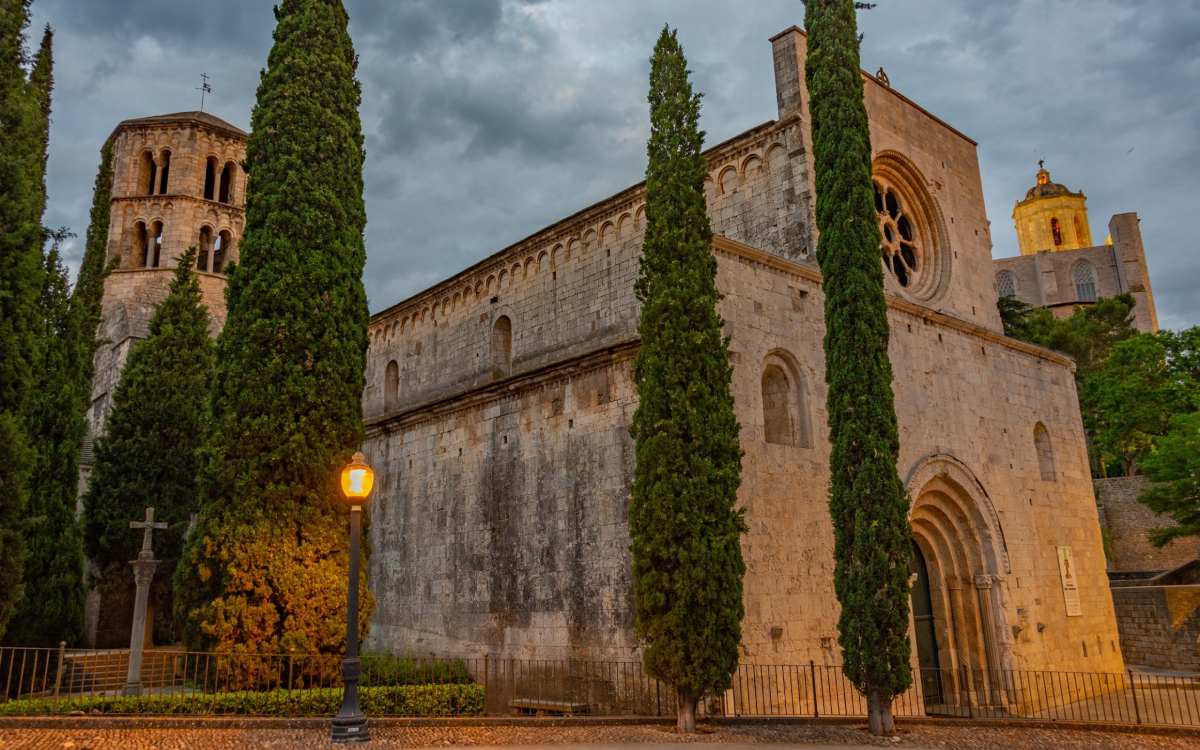 Sant Pere de Galligants Monastery. | Shutterstock
Sant Pere de Galligants: Romanesque elegance of Girona
Sant Pere de Galligants: Romanesque elegance of Girona
Sant Pere de Galligants Monastery. | Shutterstock
Over a thousand years have passed since the start of the construction of thismonastery, an ancient Benedictine abbey, and one of the finest examples of Romanesque art preserved in the city. On the outside, the octagonal bell tower and the rose window are striking features.Inside, a world of contemplation and spirituality opens up, where the dim light seems to speak to us.
The cloister invites us to imagine the life of the small community that once inhabited these walls. The intricate carvings of the capitals, featuring surprising animals and geometric patterns, presenta total enigma that challenges our imagination but captivates uswith their amazing shapes. This monastery ceased its religious functions in 1835, but it remains one of the most intriguing monuments of Catalan Romanesque architecture.
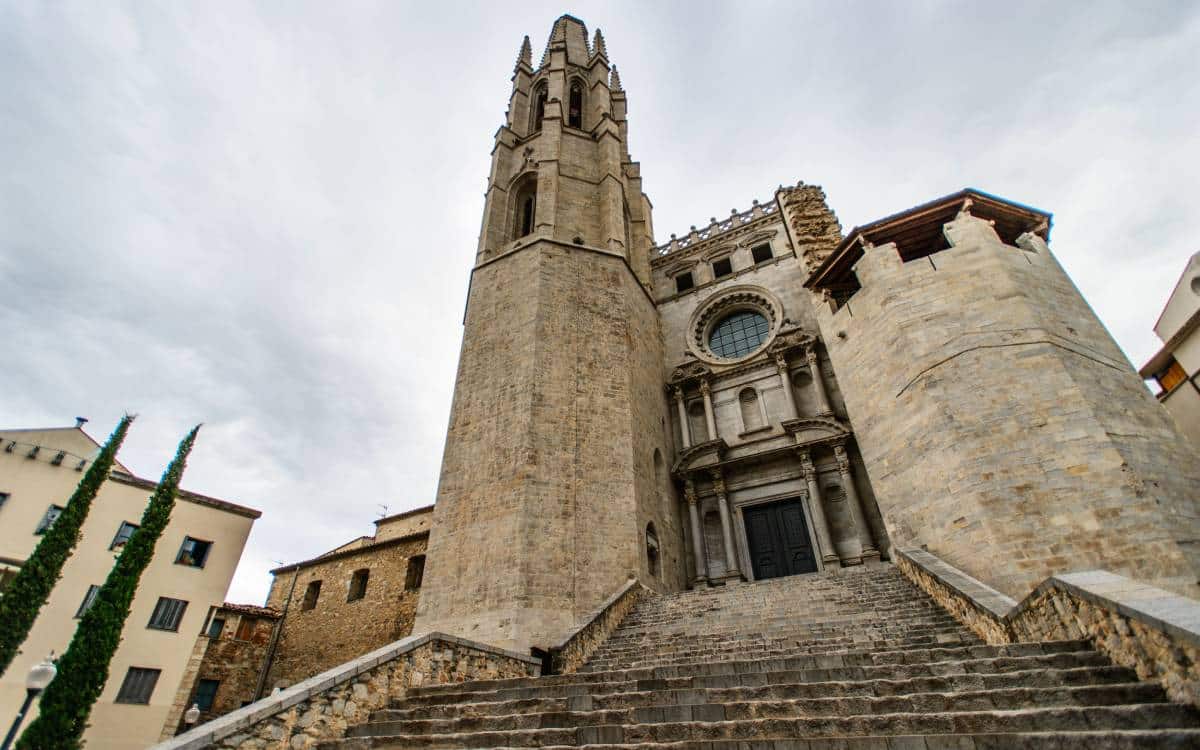 Sant Feliu Church. | Shutterstock
Sant Feliu: The Origins of Christianity
Sant Feliu: The Origins of Christianity
Sant Feliu Church. | Shutterstock
Sant Feliu Church, also known as Sant Fèlix, is a collegiatechurchthat takes us back to the earliest days of Christianity and the city itself. Laden with history and mysticism, it further enriched the monumental heart of the old town.The building we see today is primarily Gothic, crowned by a slender bell tower next to the river. For a long time, it was the main temple of the city.
Saint Felix, an important local martyr, was honoured with a temple built at the site of his death, attracting pilgrims from everywhere. This church’s atmosphere captures the attention of all visitors withits unique balance between architectural grandeur and spiritual tranquility. Sant Feliu is a corner that invites tourists to pause for a while and connect with the city’s soul.
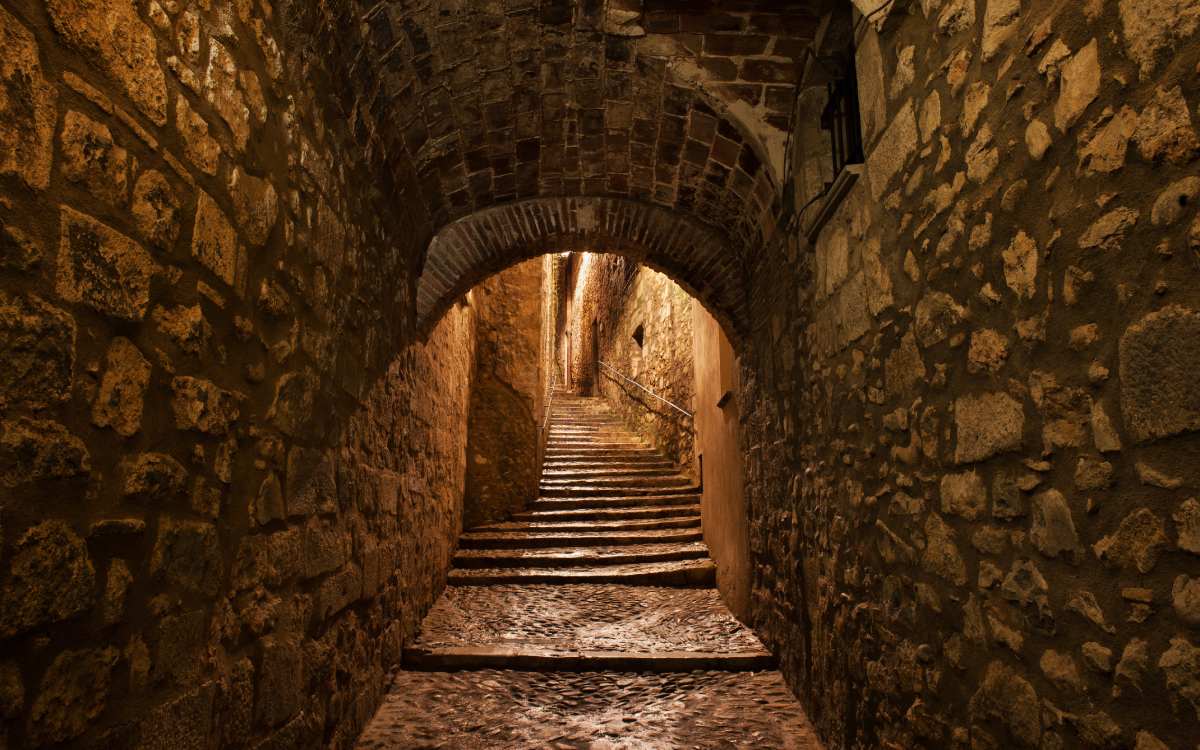 El Call. | Shutterstock
El Call, one of the best-preserved Jewish quarters in Europe
El Call, one of the best-preserved Jewish quarters in Europe
El Call. | Shutterstock
“Call” is the Catalan term for theJewish quarter. The one in Girona isone of the best-preserved in Europe, reflecting the city’s rich cultural heritage during the Middle Ages. This maze of narrow cobblestone streets, hidden courtyards, and stone houses offers the possibility to walk through a setting that has barely changed for centuries.
Between the 12th and 15th centuries, Girona was home to a prosperous Jewish community that left an indelible mark. The Call was the epicentre of their daily life,where commerce, religion, and knowledge intertwined. The city was, for instance, one of the most important centres of Kabbalah, the Jewish mystical tradition, and it was in these streets that figures like Nachmanides, one of the greatest scholars of all time, lived.
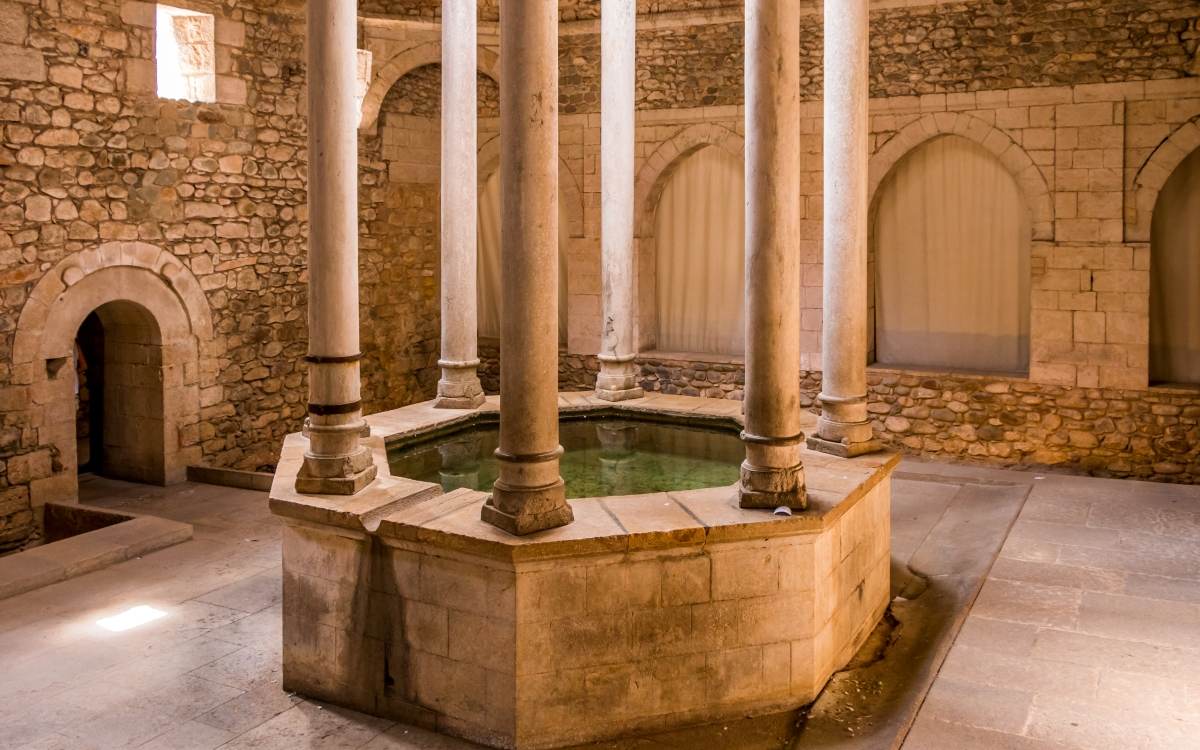 Arab baths. | Shutterstock
The small oasis of the Arab baths
The small oasis of the Arab baths
Arab baths. | Shutterstock
TheArab bathsare a great remnant of Spain’s medieval past and, without any doubt, one of the most remarkable wonders of Girona City. Despite their name, they are not of Arab origin but rather imitate the style of Islamic baths. These public baths, built in the 12th century, served asa place for gathering, socialising, and hygiene for the population, a custom inherited from Roman and Muslim traditions.
The building is quite austere on the outside, but inside it isa magical place where light and stone come together in perfect harmony. The visual highlights are the frigidarium capitals, the cold room with its central fountain that draws our gaze upward to the splendid octagonal dome. Here, small windows filter light, creating an atmosphere of serenity that withstands the passage of centuries.
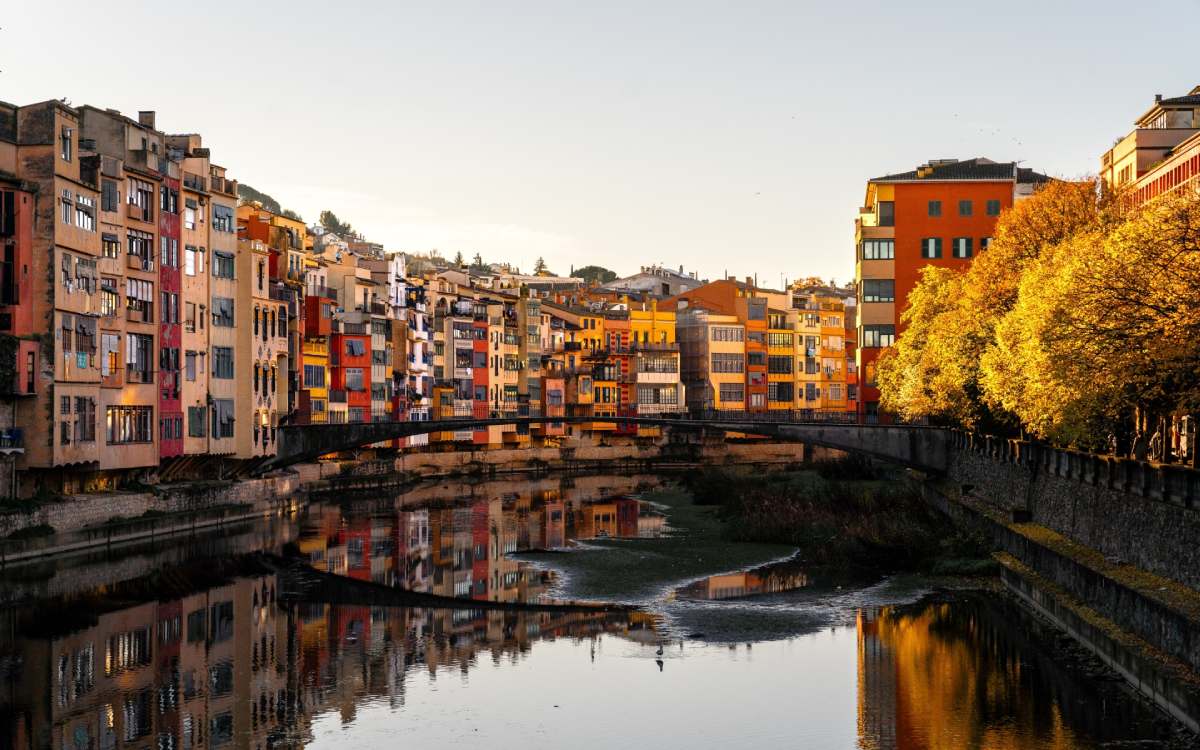 Houses over the Onyar River. | Shutterstock
The hanging houses over the Onyar River
The hanging houses over the Onyar River
Houses over the Onyar River. | Shutterstock
Despite the symbolic power of the cathedral and other medieval remains, Girona’s most iconic image isthe vibrant, colourful houses over the Onyar River. These hanging houses attract all eyes and cameras with the beauty of their colour palette, which is actually the result of an intervention in the 1980s.
The Onyar houses have been here a long time and tell us about the city’s story. Only one is painted white and can also be visited by tourists: the Masó House. It preserves the memory of several generations and is a temple dedicated to the modernist style. Another irreplaceable element of this part of the city is the bridges. One particularly draws the attention of everyone:the red iron bridge, created by the GustaveEiffelcompany.
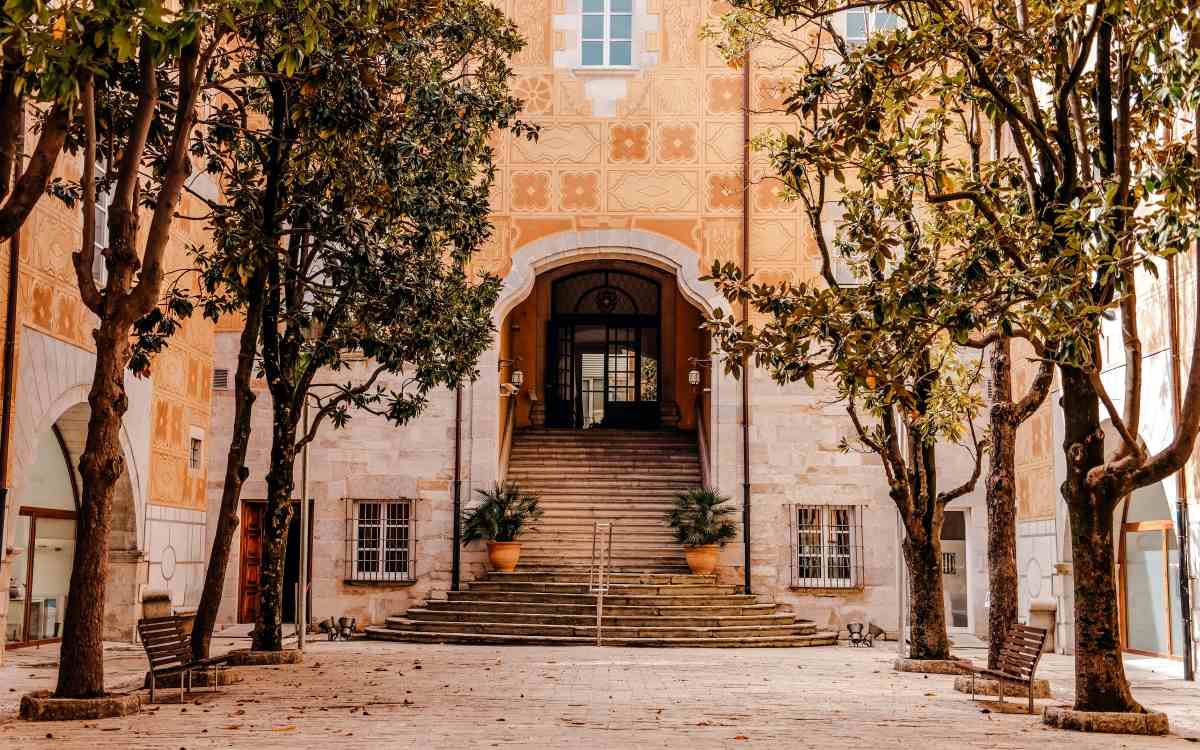 The Antic Hospital de Santa Caterina. | Shutterstock
Baroque elegance in the Antic Hospital de Santa Caterina
Baroque elegance in the Antic Hospital de Santa Caterina
The Antic Hospital de Santa Caterina. | Shutterstock
The city’s growth during the modern era led the authorities to build a new hospital in the 17th century. The last of the must-visit places in Girona City is one of the most prominent spaces of Baroque Girona. This beautiful monumentspares no beauty or elegance despite its sobriety. It features a central courtyard, an adjacent church, and a very austere facade with almost no decoration.
Besides the fine craftsmanship in the stonework and the beauty of the sgraffito decorations, there are more gems, such as the former pharmacy, withan extraordinary collection of over 300 ceramic jars, vases, and albarelli, all with labels written in Latin. There are also herbariums, mortars, ancient surgical instruments, and many more wonders in what is one of the most interesting places in the city of Girona.
You can also read this article in Spanishhere.
Источник: Fascinating Spain