What to see in Grand Canary Island: the nature, tradition and history of its most fascinating places
• Fascinating Spain
• Canary Islands
It is said that this island is a miniature continent. Its landscapes range from getting lost among the countless sand dunes to roaming the deep ravines or taking a peek from the breath-taking cliffs overlooking the ocean. But there is even more to see inGrand CanaryIsland such as wandering the primeval forests, relaxing on idyllic beaches or discovering quaint villages full of charm. An island, in short, replete with contrasts without losing any of its authenticity.
What to see in Grand Canary Island: enchanting villages
What to see in Grand Canary Island: enchanting villages
 Teror. | Shutterstock
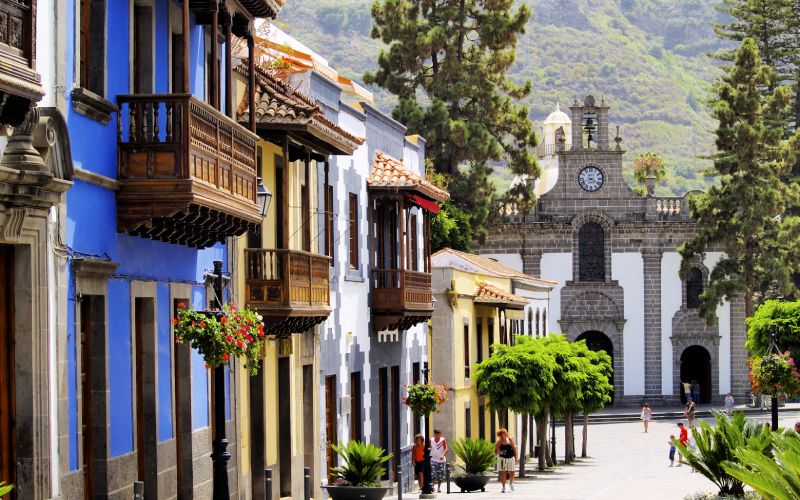
This island is dotted with fascinating villages. Strolling through them is to embody the Canary essence with its traditional white façade architecture, colorful shutters and wooden balconies. These are villages in the true sense of the word, places without the bustle where the weary traveller is invited to enjoy the calm.
Teror, land of the patron saint
Teror, land of the patron saint
Teror. | Shutterstock
One could say Teror isthe heart of Grand Canary Island, though not geographically speaking. Here rises the basilica to the patron saint: the Virgin del Pino. The story goes that the Virgin appeared there in 1481 while the Castillians were still conquering the island. Soon afterwards, a small temple was erected, from which only the baptismal font remains. What can be seen today was not constructed until the seventeenth century.
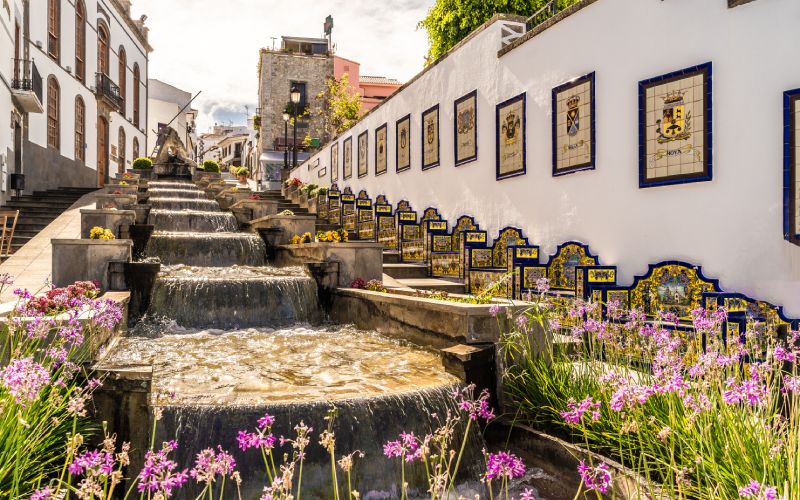 Firgas. | Shutterstock
Teror is one of those must-see villages on Grand Canary Island, and not solely for its divinely inspired images of its patron saint and the splendor of the Marian shrine. Simply taking a stroll through the old town is a true delight. The main square and calle Real (Royal Road) offer a series of magnificent examples of this unique Canary architecture.
Firgas, the village of water
Firgas, the village of water
Firgas. | Shutterstock
Two unexpected treasures for the visitor are hidden at Firgas. Here, the slopes have been transformed into walkable waterways full of symbolism. On Grand Canary Island, water is the focus. The renowned waters sourced from the natural springs in the area flow down in a series of cascades and tiny stone pools. A few meters away from the Canary walk, enormous mosaics can be seen on the ground representing the best of each Canary island.
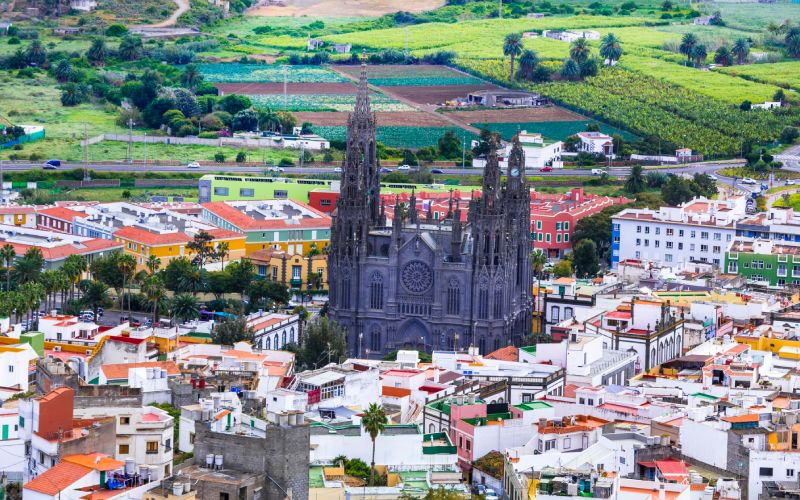 Arucas. | Shutterstock
It is worth prolonging the tour to discover other little treasuresfrom this village such as Saint Roque church with its observation point and La Casa de la Cultura (Municipal Cultural center). If that is not enough walking for one person, then there are also marvelous hiking paths surrounding the village.
Arucas, much more than rum
Arucas, much more than rum
Arucas. | Shutterstock
When one speaks of Arucas, one speaks of rum for it is upon this drink which rests much of Arucas’ fame. And to find out why, one must travel back in time. Europe’s first rum distillery was opened here and is still its largest. The distillery can be visited in addition to a museum commemorating the role of rum production in the town.
 Fataga. | Shutterstock
However,there is much more to Arucas like its charming colonial historic center. At its heart lies the imposing neo-gothic Iglesia de San Juan Bautista (Saint John the Baptist church), built with the dark stones found on the island. Though being one of the more impressive places of worship on theCanary islands, it is not the oldest. Surprisingly, it is just over a century old.
Fataga, a village surrounded by a thousand palm trees
Fataga, a village surrounded by a thousand palm trees
Fataga. | Shutterstock
This is one of those placid villages where life seems to come to a standstill. The immaculate white color of its homes stand out from a distance like a bright star. Fataga is a landscape of ravines as well as tropical vegetation arising from a small oasis called the Valle de las Mil Palmeras (valley of a Thousand Palm trees). This small village is the place for those searching for serenity and a trekker´s delight. Beyond its calm allure, Fataga also has the historical footnote of being one of the last bastions of resistance against the conquering Castillians.
 Port of Mogán. | Shutterstock
Villages with a maritime flair: Mogán and Puerto de las Nieves
Villages with a maritime flair: Mogán and Puerto de las Nieves
Port of Mogán. | Shutterstock
One of the most photogenic ports on Grand Canary isMogánmainly due to itswhitewashed houses with colorful shutters and the bougainvillea flowers which decorate the streets. A small canal network crossed by bridges and a cozy golden sand beach complete the picture-perfect postcard. Nevertheless, the picturesque Puerto de las Nieves has nothing to envy with its natural pools, its black sand beaches and the towering cliffs overlooking the ocean. On a side note, the best sunsets on Grand Canary can be enjoyed from here.
The capital´s true value: essential spots in Las Palmas de Grand Canary
 Saint Anne’s Cathedral. | Shutterstock
The capital´s true value: essential spots in Las Palmas de Grand Canary
Saint Anne’s Cathedral. | Shutterstock
The city was founded in 1478 when Captain Juan Rejón initiated the conquest of these lands by the Castillians. In the following years,Las Palmas de Gran Canariagained relevance as a commercial trading center and became the islands’ capital city. The capita’s flourishing economy certainlycaught the attention of pirates and corsairs, among them Francis Drake and Pieter van der Does, who did not hesitate to attack and plunder the town.
The founding core of the city is the Vegueta neighborhood. Here one can stilltake a walk through streets that recall past glory days and discover architectural jewelslike La Catedral de Santa Ana (Saint Anne’s cathedral). Works on it began in 1497 and its mix of styles reveals that its construction was not done hastily. In fact, construction work did not finish until the late twentieth century. Another magnificent building that cannot be missed is the Casa de Colón (Columbus Center). This sixteenth century mansion embodies the best of traditional Canary architecture and there is now a museum showcasing the city’s history and the sea voyages of that illustrious sailor from whom the museum takes its name. Incidentally,Columbusnever lived there.
There is still much more to visitsuch as El Obispado (The Diocese), Las Casas Consistoriales (City Hall), La Casa Regental (Regent´s House), La Ermita de San Antonio Abad (Abbot Saint Anthony hermitage) and El Gabinete Literario (Literary Bureau) among others. Vegueta represents 500 years of history written in stone walls, making it reason enough to be one of the first places to visit in Grand Canary.
 Canteras Beach. | Shutterstock
Canteras Beach. | Shutterstock
And if one needs to regather strength during the visit,Las Palmas de Gran Canaria has the ideal place to rest and kick back: la playa de las Canteras (Canterasbeach) A two-kilometer stretch of beach in the city with still waters as a result of the natural rock barrier protecting the beach from high tides and surging waves. A beach to leave the world behind, take a dip and discover the majesty of the sea bottom while snorkelling. Other marvelous beaches that deserve a visit on Grand Canary are Maspalomas, Amadores, Anfi del Mar, Tufia and Guguy , all of which are genuine beach paradises.
Natural areas to see on Grand Canary
Natural areas to see on Grand Canary
Mother nature has been especially generous to Grand Canary. And to admire all its beauty, the island is strewn with vantage points with somewhat curious names such as Degollada de las Yeguas (The Mares’ Slit Throat), Pico de los Pozos de la Nieve (Snow Wells Peak), La Sorrueda (Sisterwheel) and El Guriete among many others. But the optimal way to relish the island’s landscapes is to plunge right in.
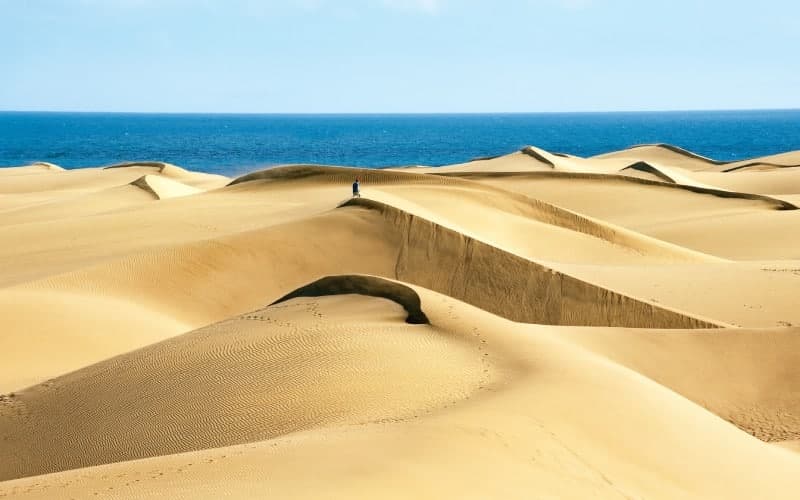 The dunes at Maspalomas. | Shutterstock
The infinite dunes at Maspalomas
The infinite dunes at Maspalomas
The dunes at Maspalomas. | Shutterstock
On the southern part of the island along the ocean lies a 400 hectare preserve ofgolden sand dunes.A landscape that embraces, seduces and captivates anyone who contemplates it. A protected environment with unparalled natural value. It is well worth forgetting about the time and making ones’s way to thelighthouse, which has been guiding sailors since 1890.
El Roque Nublo, the emblem of Grand Canary
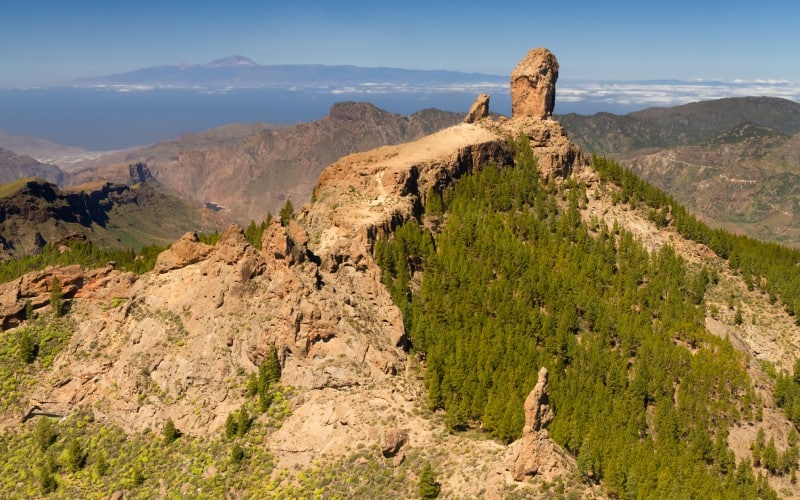 Roque Nublo. | Shutterstock
El Roque Nublo, the emblem of Grand Canary
Roque Nublo. | Shutterstock
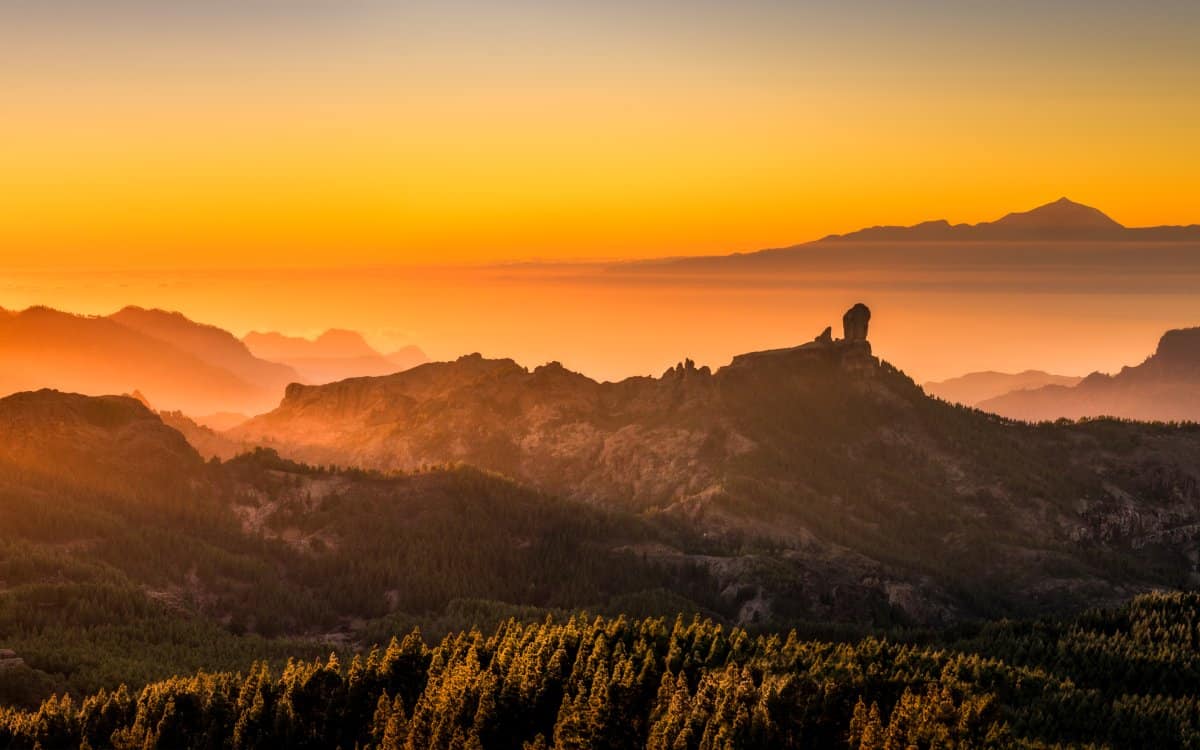
A place of worship for the ancient indigenous inhabitants, this imposing eighty meter tall vocanic monolith sits on a mountain rising to more than 1800 meters above sea level. Though not the highest point of the island, it is charged with symbolic value. ReachingRoque Nublorequires a little hike , but the unforgetable scenery is well worth the effort. And at the foot of the rock, perched almost impossibly on a volcanic slope and surrounded by almond trees, another of those charming villages: Tejeda.
A walk among the ravines: Guayadeque and las Vacas
A walk among the ravines: Guayadeque and las Vacas
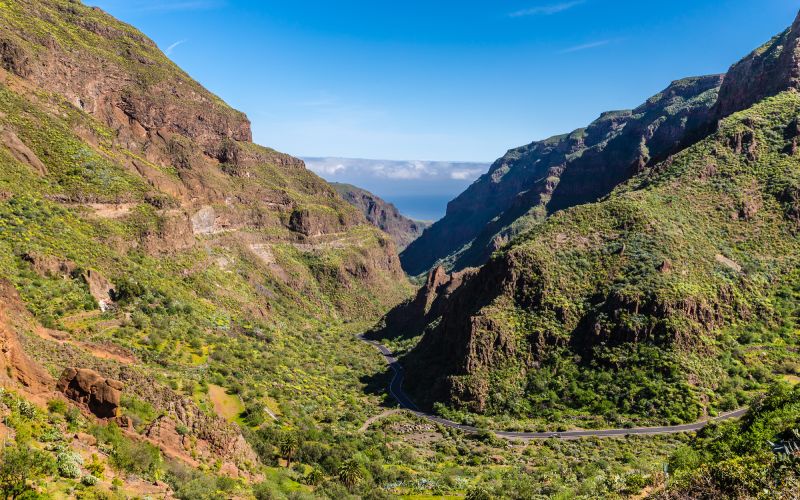 The ravine of Guayadeque. | Shutterstock
The ravine of Guayadeque. | Shutterstock
The ravine of Guayadeque is said to be a natural monument. Its eleven kilometer long stretch is a series of magnificent scenery that conceals an important component of the island’s biodiversity as well as its history. Walking the trails is to follow the tracks of the ancient inhabitants through caves, funerary sites and cave paintings. At the same time, thebarranco de las Vacas(Cows’ Canyon) is one of the most picturesque spots on the whole island. A canyon molded by the force of water forming a winding and whimsical landscape.
Other unique places: the crater of Bandama and the Tilos de Moya
Other unique places: the crater of Bandama and the Tilos de Moya
The crater of Bandama. | Shutterstock
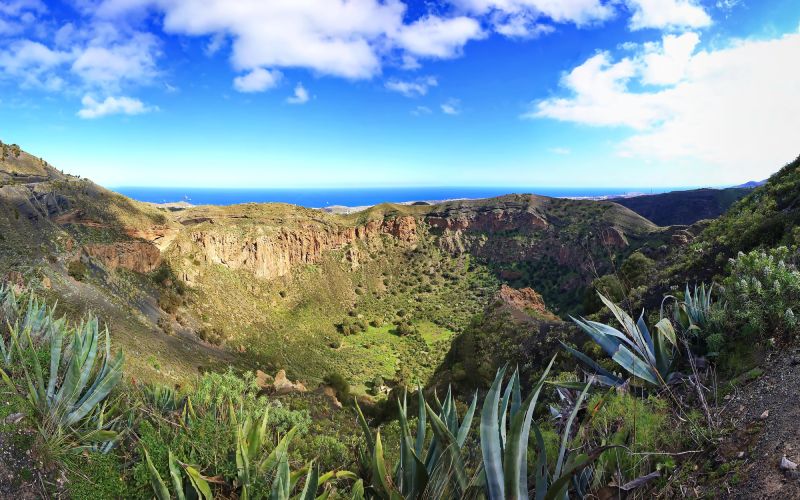 The crater of Bandama. | Shutterstock
The list of places on Grand Canary of natural beauty may be endless. Though it is worth noting two more. Firstly, the crater at Bandama, the result of a vocanic collapse with a stunning three-kilometer perimeter and a chasm more than 200 meters deep. Curiously, its name is derived from the surname of a Flemish merchant, Van Damme, who bought the crater in order to plant vineyards in it.
The Natural Reserve deLos Tilosat Moya is quite different. An ideal place for trekking. But its uniqueness lies in the fact that it isone of the last remaining laurel forests on the island.
An historical look at the island: Risco Caído and Cueva Pintada
An historical look at the island: Risco Caído and Cueva Pintada
The monastery of Valerón. | Shutterstock
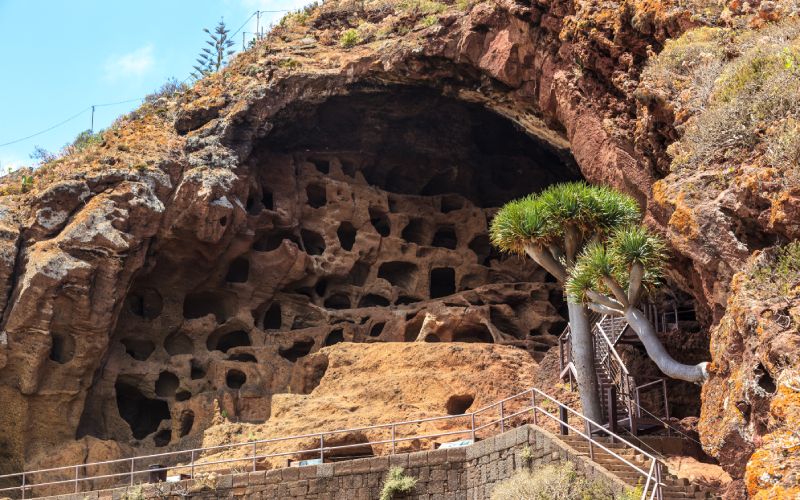 The monastery of Valerón. | Shutterstock
Though there is no precise record of when the first inhabitants arrived on Grand Canary,there is a fair amount of archaeological remains found throughout the island. Risco Caído (Fallen Crag) and las Montañas Sagradas (The Sacred Mountains), both a history lover’s must-see, are designatedUnesco World Cultural Landscapes.
Excavatedcavesin the rock let us imaginehow these ancient people who came from North Africa had to adapt to the peculiar terrain of the island. The most remarkable cave is located at Risco Caído, a ceremoial site with openings by which the sunlight mysteriously marks the solstices and equinoxes. Another archaeological site impossible not to mention is the one located at Gáldar.
There one will discover La Cueva Pintada (The Painted Cave), containingone of the most extraordinary examples of cave artto be found throughout the Canary islands in addition to the archaic remains of an early settlement nearby. To finish this walk through the history of Grand Canary, one should make a stop at the monastery of Valerón. It is an astonishing collection of 350 excavated holes in a wall of rock. Its purpose was far from ceremonial as they were used as little pantries to keep and store grains.
Источник: Fascinating Spain