What to see in Segovia: wonders to experience at least once in life
• Fascinating Spain
• Castile and León
The city of Segovia summons the imagination. History and legend mark its streets and its architecture, all of which reveal countless tales of kings, noblemen and even theDevil. The city’s blend ofmajestic centuries-old monuments with a vibrant cozy modernitymay surprise the visitor. Here is a taste of the authentic marvels the city of Segovia has to offer.
Segovia’s glorious heritage and alluring ambience
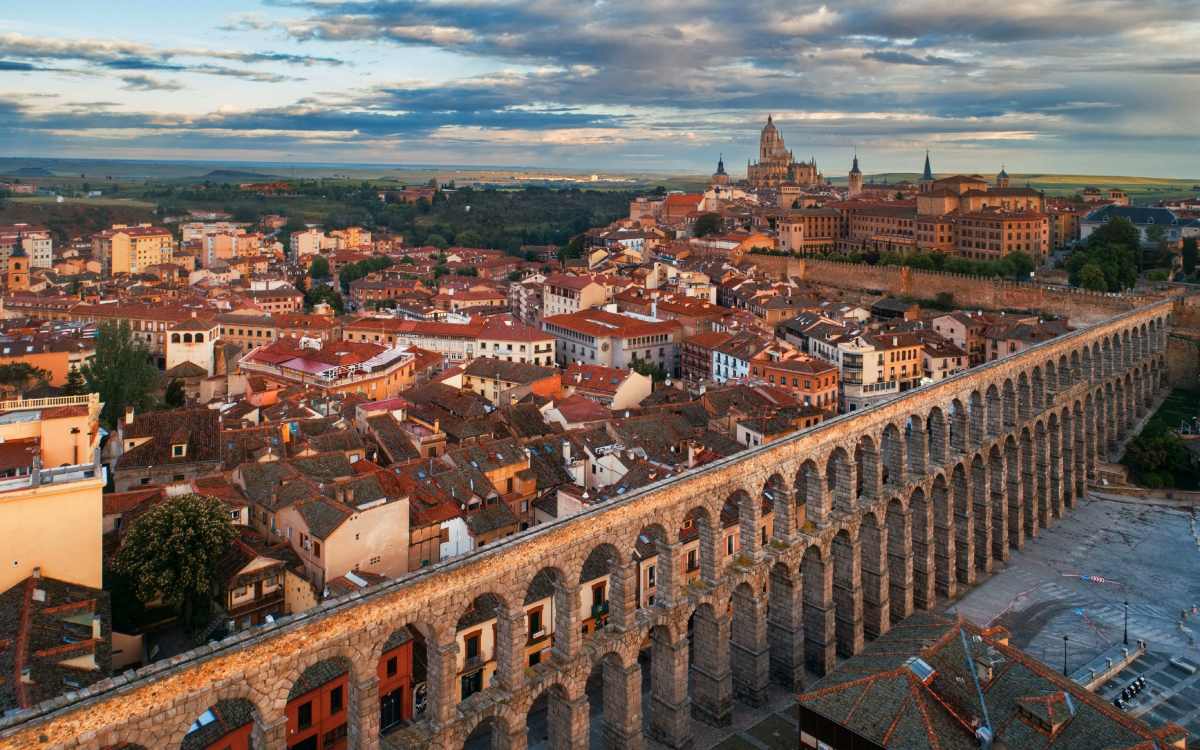 The Roman aqueduct. | Shutterstock
The Roman aqueduct, a bridge to antiquity
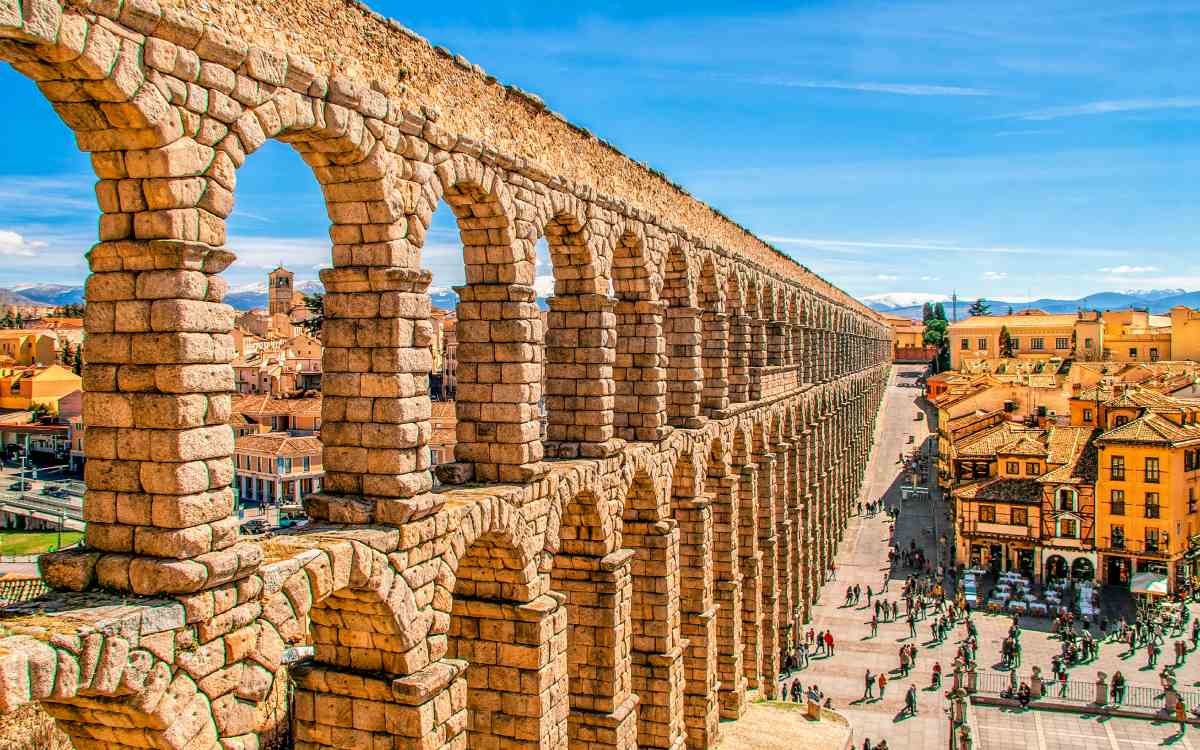
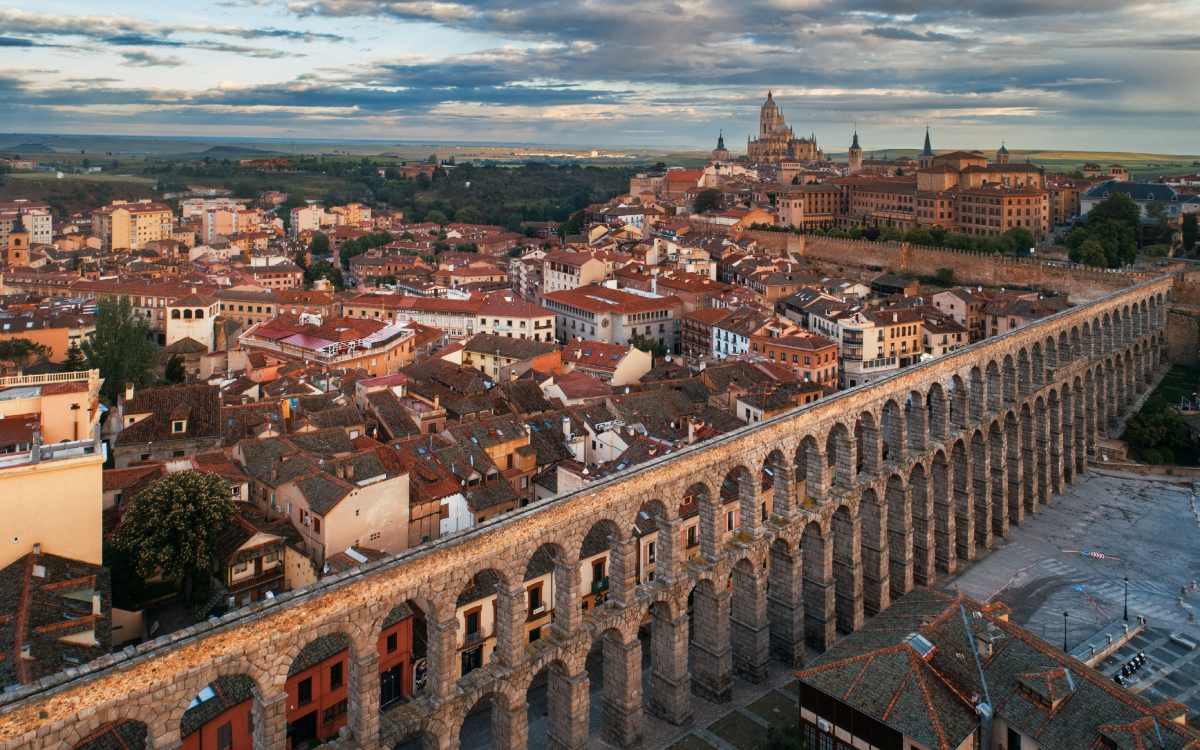
Not only is Segovia’saqueducta masterpiece of Roman engineering, it isthe emblematic soul of the city. Its 167 arches rise gracefully through the heart of the city, and not a speck of cement is to be seen. It has devilishly weathered the centuries and the elements. Starting from the Fuenfría spring, the aqueduct’s most renowned section lies at the extraordinary arcade above Azoguejo Square.
Observing these timeworn stones, one canalmost hear the whisperings of millennia agoand feel an intimate connection with a civilisation that understood grandeur as an act of permanence. It might surprise some to know that until recently, cars freely travelled under its arches or that the aqueduct continued to supply water to the city until 1973.
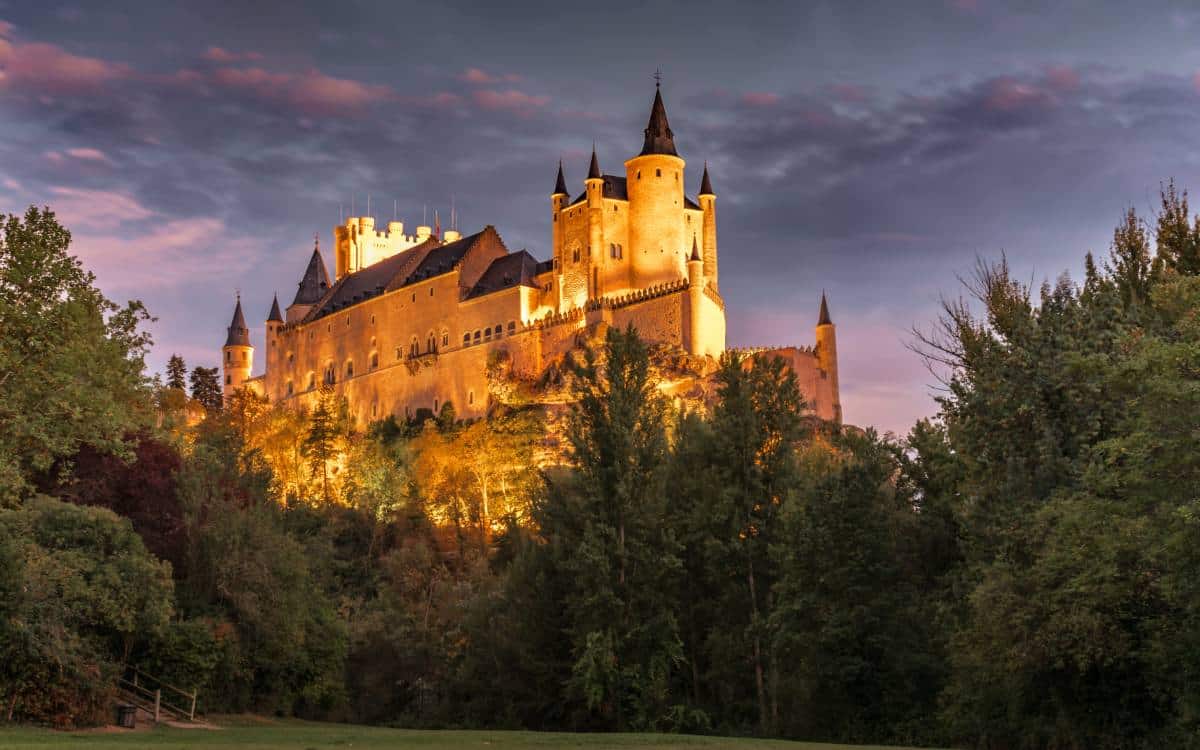 Segovia’s Alcázar. | Shutterstock
The Alcázar of Segovia, a dreamy castle
Imagine a fairy tale castle with pointed turrets stretching skyward and a mighty silhouette looming over the land. Indeed, this is theAlcázar of Segovia,a fortress that has witnessed coronations, conspiracies and illusions of conquest. The panoramic views of the unfolding countryside from the castle’s lofty tower are simply breathtaking.
The castle’s intricately decorated salonsevoke the splendour of the monarchs who once resided here. Royal residence of Castilian kings dating back to the 12th century, the castle’s old tower also served as the crown’s treasury. Indeed, the fortress was also the site of one of the first royal archives and a royal armoury. The Alcázar of Segovia is undoubtedly a place to immerse oneself in Segovia’s storied history.
The Cathedral of Segovia, our lady caressing the sky
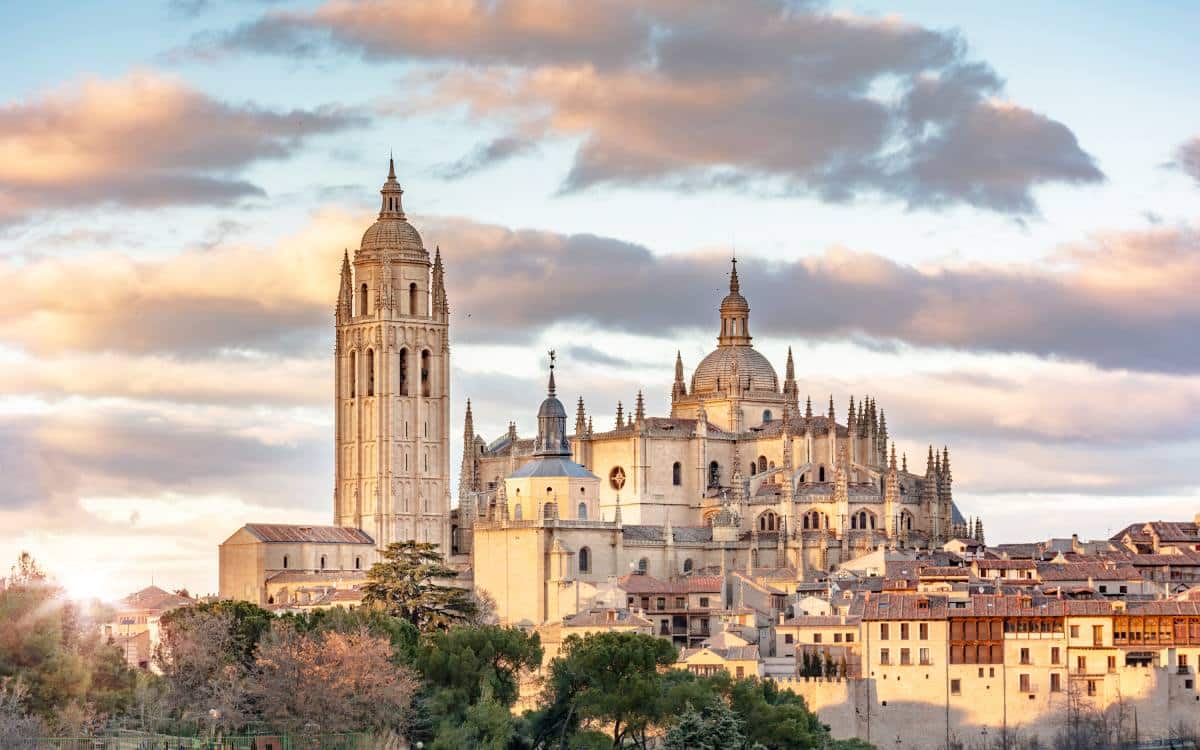 The Lady of Cathedrals. | Shutterstock
Commonly known as theLady of Cathedrals, Segovia’s Cathedral of Our Lady of the Assumption and of Saint Fructus is a masterpiece of the late flamboyant Gothic style due to its sheer size and elegance, attested to by its exquisite soaring tower and the otherworldliness of its stained glass interiors bathed in daylight. From the chapels to the choir,everything about this cathedral summons awefor those who constructed it.
After the destruction of the old Santa María Cathedral in 1521 during the Revolt of the Comuneros, King Carlos I of Castile commissioned the reconstruction of what would becomeone of the most beautiful examples of this late Gothic style. Some original treasures were conserved from the old temple, such as the flamboyant Gothic cloister and the pipe organ, which was subsequently replaced in the 18th century for the current one.
San Antonio el Real, a quiet retreat
King Enrique IV originally commissioned the construction of a pleasure palace in 1455 on the site that subsequently became an enclosed sanctuary. The San Antonio el Real Monastery isanother exceptional example of Gothic architectureand one of Segovia’s true wonders. Its artistic legacy has been conserved and bestowed to posterity, making the monastery an extraordinary museum in its own right.
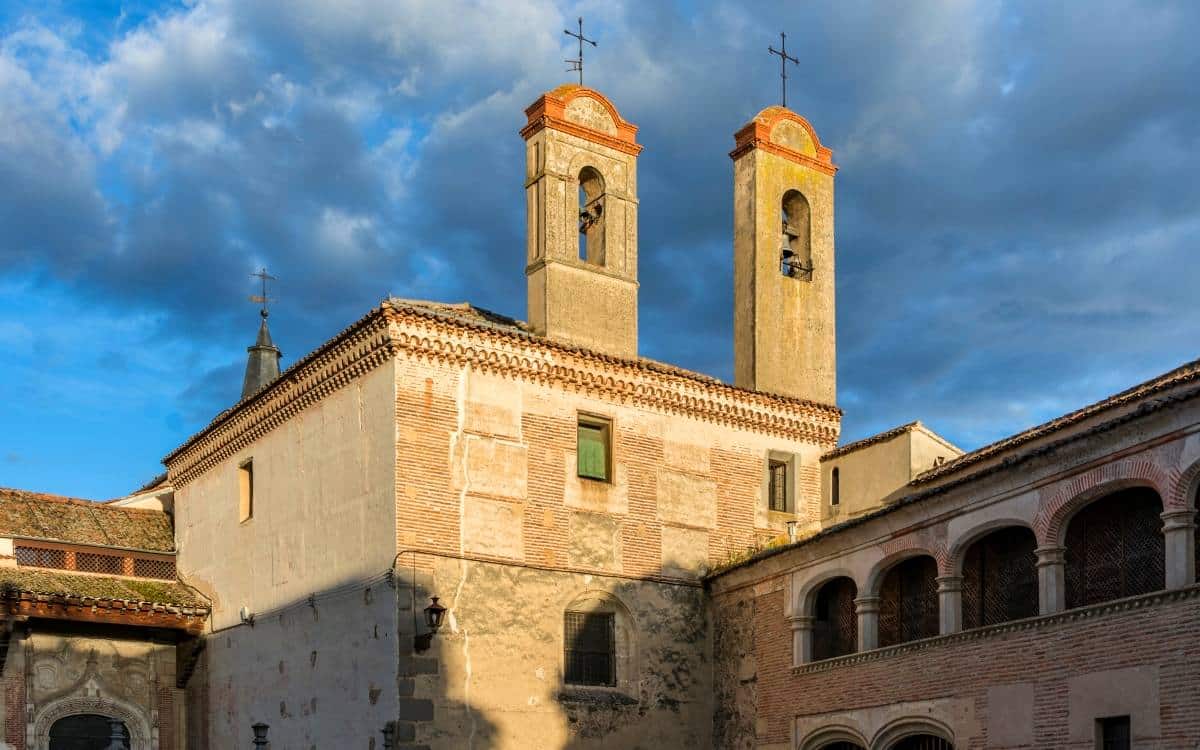 San Antonio el Real Monastery. | Shutterstock
Beyond the artistic opulence found inside the monastery, the building itself is a magnum opus, exemplified by the vivid Mudéjar coffered ceilings of the Main Chapel, the Isabelline Gothic-styled façade, andthe stunning white and red hues of the cloister. What started as a kingly retreat came to be one of the most sacred architectural jewels ofSegovia.
The historic embrace of Segovia’s town wall
Once an impenetrable stone barrier, today the extraordinary old citywallof Segovia appears more as a warm embrace, one that both protects the city and tells a story. Construction of the wall had been under way by the 11th century when King Alfonso VI of León conquered the town from the Moors. This colossal structure served during times whenSegovia served as a strategic stronghold. The pure granite of its wall, with its 80 towers and five gates, extends up to three kilometres.
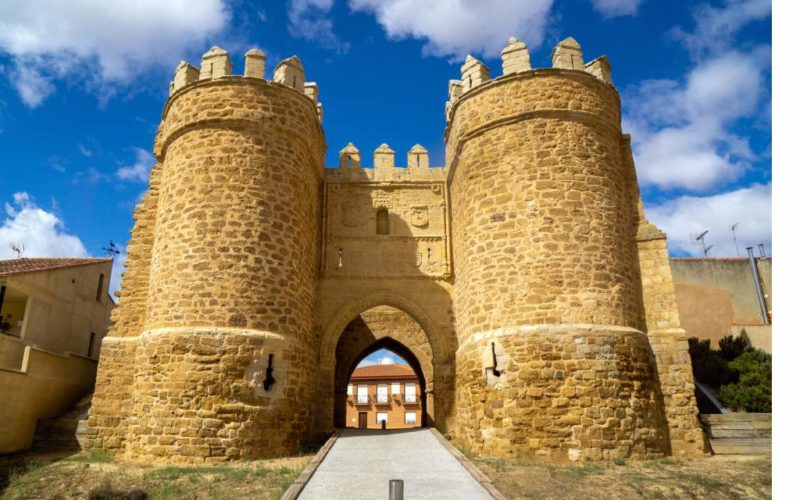
Of the three gates still conserved today, Saint James’ Gate and its four wickets present a splendid illustration of theMudéjar style. Passing through the old town gates is like stepping into a past world of merchant caravans andthe bustle of diverse cultures crowding the town’s streets. Tombstones from Segovia’s ancient Roman necropolis are known to have been reused in the construction of the town wall, thus preserving even the oldest elements from Segovia.
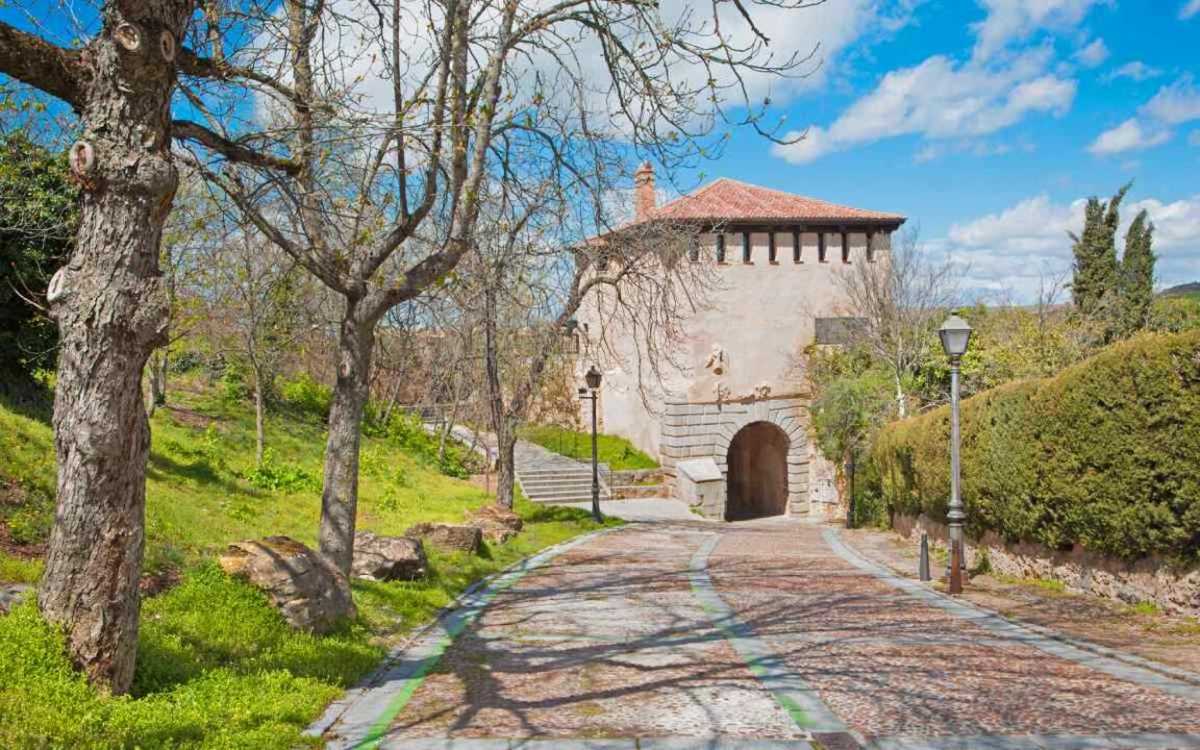 Saint James’ Gate. | Dreamstime
The indelible memory of the Jewish Quarter
Although Segovia’s entire old town is a treasure trove and deservedly aWorld Heritage Site, the old Jewish Quarter’srich and illustrious cultural legacyis truly remarkable. The tightly packed homes in theJewish Quarterformed small enclosures where the community’s daily life took place, while the rougher façades of its buildings reveal evidence of defensive measures having been taken. What survives today is a labyrinth of narrow, cobblestoned streets imbued with an aura of mystery.
Among the city’s five synagogues, the Main Synagogue, subsequently converted into a Christianchurch, stands out. TheSephardiccommunity’s cultural and commercial splendour contrasted sharply with the ill treatment they suffered under Christian control. Beginning in the 15th century, repression against Jews led to their restricted movement within ghettos and their eventual expulsion or forced conversion. Some notable figures like Abraham Senior, Rabbi of Castile and notable banker, chose the latter.
You can also read this article in Spanishhere.
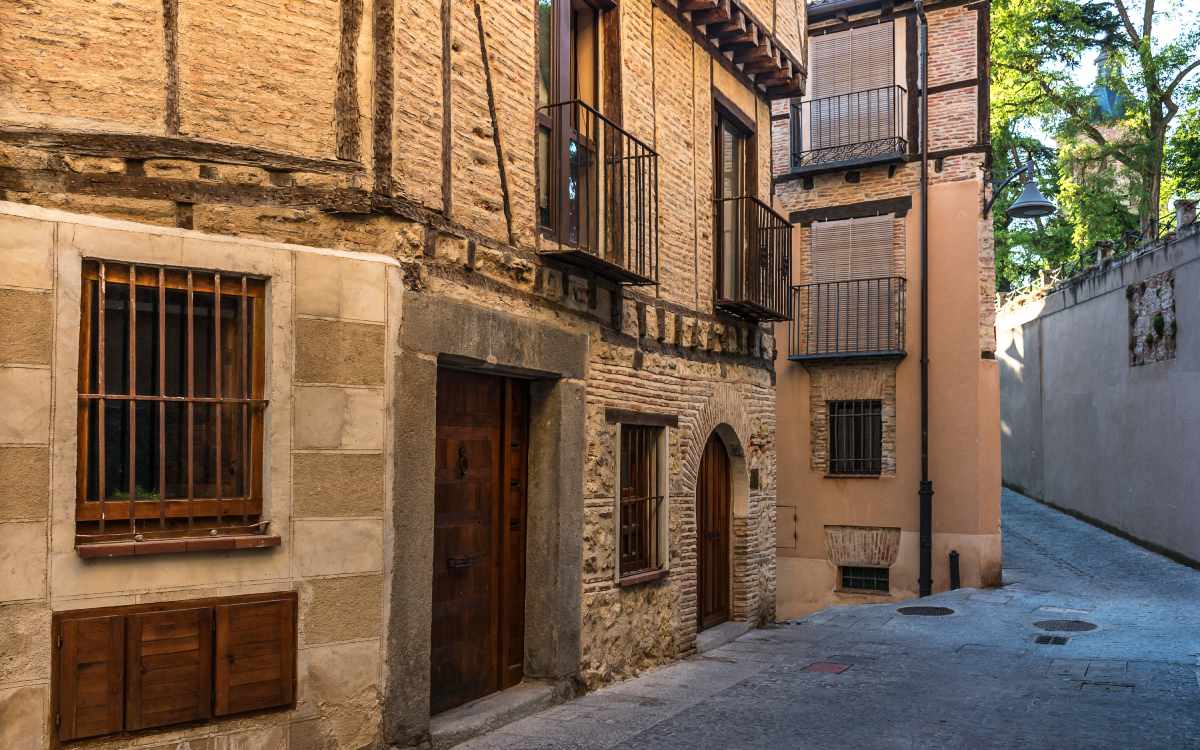 Segovia’s Jewish Quarter. | Shutterstock
Источник: Fascinating Spain